


What Is a Refrigeration Unit and How Does It Work?

A Refrigeration Unit is more than a cold metal box. It is a controlled heat-transfer system that removes heat from a space, product, or process. You may find one behind a supermarket display, inside a restaurant cold room, or mounted on a refrigerated truck. Its work is quiet, but its purpose is critical: keeping food safe, medicines stable, and industrial materials within precise temperature limits.

Willis Haviland Carrier, a pioneering engineer in cooling technology, described air conditioning as “the control of the purity, humidity, movement, and temperature of air.” His words help explain the wider responsibility of modern refrigeration. A dependable Refrigeration Unit must manage temperature, airflow, pressure, moisture, and energy use together. It usually relies on a compressor, condenser, expansion device, and evaporator. Refrigerant circulates through these components, absorbing indoor heat and releasing it outside. The cycle repeats.

The process sounds simple. It is not always simple. A blocked condenser can raise operating pressure, while a damaged door seal may force the compressor to run constantly. Small faults become expensive problems. I have seen how a few degrees of temperature drift can damage an entire storage batch. That reality deserves attention. This guide explains how a Refrigeration Unit works, what each component does, and which practical signs suggest trouble. It also considers efficiency, maintenance, and safe professional servicing. No system is perfect. Even a well-designed unit needs inspection, accurate measurements, and honest judgment.
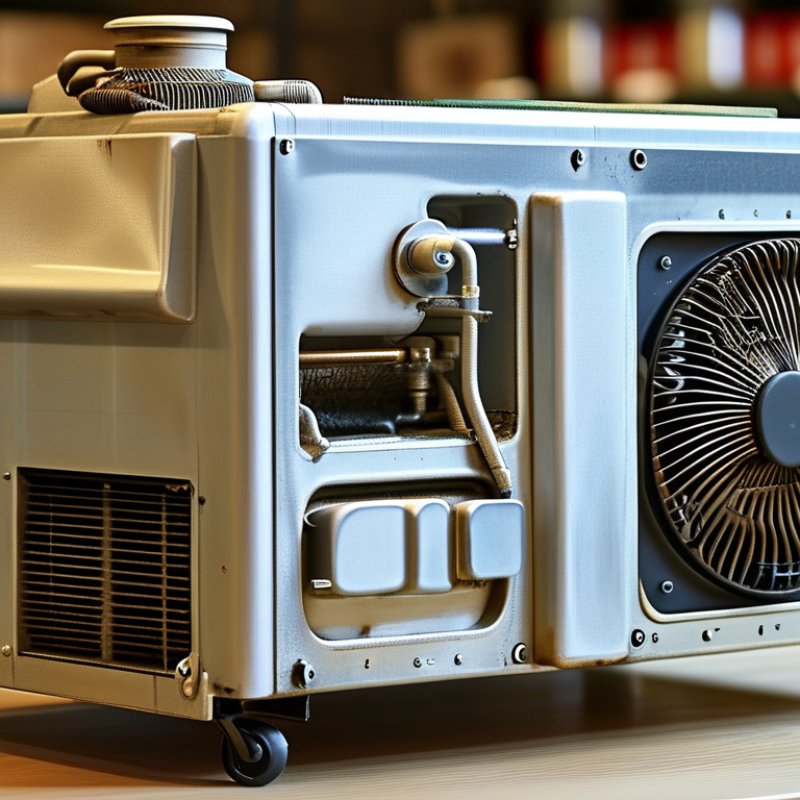
What Is a Refrigeration Unit and How Does It Work?

Definition and Core Purpose of a Refrigeration Unit

What Is a Refrigeration Unit and How Does It Work?

A refrigeration unit is a mechanical system that removes heat from an enclosed space. Its core purpose is temperature control, not the creation of cold. The unit absorbs unwanted heat and releases it into another area, usually the surrounding air. This process protects food, medicine, equipment, and other temperature-sensitive materials.

The system moves refrigerant through several working parts. The evaporator absorbs heat inside the cabinet or room. The compressor raises the refrigerant’s pressure and temperature. The condenser then releases heat outside the cooled space. An expansion device lowers the refrigerant’s pressure before the cycle begins again. Small details matter here. Poor airflow can reduce performance, even when the compressor operates normally.

In practical service work, technicians check temperatures, pressure readings, electrical connections, airflow, and unusual sounds. A warm door seal may allow moisture to enter and force longer running cycles. Dust on the condenser can create similar problems. The phrase “making cold” sounds simple, but it can hide these operating conditions. Correct sizing also matters; an oversized unit may cycle too often, while an undersized unit may run continuously. Some assessments remain uncertain without measured data, so reliable diagnosis should follow the unit’s specifications and actual site conditions.

What Is a Refrigeration Unit and How Does It Work? - Definition and Core Purpose of a Refrigeration Unit

Data Dimension System Element or Topic Definition and Function Typical Information
Basic Definition Refrigeration unit A mechanical system that removes heat from a controlled space, product, or process and rejects that heat to a warmer surrounding environment. Transfers heat; it does not create cold.
Core Purpose Temperature control Maintains a target temperature to preserve food, protect equipment, support manufacturing processes, or provide conditioned air. Target temperature depends on the application.
Heat-Absorbing Component Evaporator The refrigerant absorbs heat from the refrigerated space while evaporating at a low pressure and low temperature. Located inside or near the cooled space.
Pressure-Raising Component Compressor Draws in low-pressure refrigerant vapor, compresses it, and delivers high-pressure, high-temperature vapor to the condenser. Requires electrical or mechanical energy.
Heat-Rejecting Component Condenser Releases heat from the refrigerant to air or water, causing the high-pressure vapor to condense into a high-pressure liquid. May be air-cooled or water-cooled.
Pressure-Reducing Component Expansion device Reduces the pressure of the liquid refrigerant and meters its flow into the evaporator. Common forms include thermostatic expansion valves and electronic expansion valves.
Operating Cycle Vapor-compression cycle The refrigerant repeatedly evaporates, is compressed, condenses, and expands to move heat from the cold side to the warm side. The cycle is continuous while cooling is required.
Refrigerant Working fluid A fluid selected for its pressure-temperature characteristics so it can absorb and reject heat efficiently through phase changes. Selection depends on safety, efficiency, operating range, and environmental requirements.
Typical Temperature Range Medium- and low-temperature applications Medium-temperature systems commonly maintain chilled spaces near 0–5°C, while frozen-storage systems are often designed around −18°C or lower. Actual settings vary by product, load, humidity, and design.
Control System Thermostat and sensors Monitors temperature and controls compressor operation, fan operation, defrost cycles, and safety functions. Helps maintain stable conditions and reduce unnecessary energy use.
Heat Rejection Air or water discharge The unit rejects the heat absorbed from the refrigerated space plus the compressor’s input energy. The condenser must have adequate airflow or water flow.
Common Applications Cold rooms, display cases, transport, and process cooling Used wherever products, spaces, or industrial processes must remain below ambient temperature. Examples include food storage, laboratories, data equipment, and manufacturing.
Energy Performance Coefficient of Performance (COP) COP compares the useful cooling capacity to the energy input. A higher COP generally indicates greater cooling efficiency under the tested conditions. Performance changes with outdoor temperature, load, set point, and maintenance.

Main Components and Their Functions

A refrigeration unit removes heat from an enclosed space and releases it outside. Its performance depends on several connected components, not one powerful machine. The compressor raises refrigerant pressure and temperature. Then, the condenser coil rejects heat, often with help from a fan. The refrigerant becomes a high-pressure liquid.

The expansion valve controls refrigerant flow into the evaporator. Pressure drops there, and the refrigerant becomes cold. The evaporator coil absorbs heat from air, liquid, or stored products. A fan then moves cooled air across the space. The controller monitors temperature and starts or stops the compressor when needed. Small errors matter. A loose sensor can create unstable temperatures.

The International Energy Agency’s The Future of Cooling report projects global space-cooling electricity demand could more than triple by 2050, reaching about 6,200 TWh annually. This highlights why component efficiency and maintenance deserve close attention. The U.S. Department of Energy also identifies airflow, coil cleanliness, and correct refrigerant charge as important efficiency factors.

In field inspections, a blocked condenser often feels surprisingly hot, while the evaporator shows uneven frost. That visual clue helps technicians investigate airflow, sensors, and pressure readings. Yet frost alone does not prove low refrigerant. That assumption can lead to the wrong repair. Controls, insulation, door seals, and defrost systems also influence reliable operation.

How the Refrigeration Cycle Transfers Heat

What Is a Refrigeration Unit and How Does It Work?

A refrigeration unit moves heat rather than creating cold. Its sealed system circulates refrigerant through four main stages. The cycle starts in the evaporator, where low-pressure refrigerant absorbs heat from air, food, or stored products. As the refrigerant warms, it changes from a liquid into a vapor.

The compressor then draws in this vapor and raises its pressure. Pressure increases temperature too. The hot vapor travels to the condenser, where fans or surrounding air remove heat. The vapor condenses into a high-pressure liquid. This heat may feel surprisingly strong near the condenser coil.

Next, the liquid passes through an expansion device. Its pressure drops suddenly, and its temperature falls. The cold refrigerant returns to the evaporator, ready to absorb heat again. This repeated movement forms the refrigeration cycle.

Airflow matters. Dusty coils, blocked vents, or a loose door seal can reduce heat transfer and increase running time. In practical maintenance work, surface temperature alone can mislead technicians. Pressure readings, airflow, coil condition, and product temperature should be checked together. Small errors matter. A system may appear cold while operating inefficiently. I once underestimated the effect of restricted airflow during a routine inspection; the cabinet temperature looked acceptable, but the compressor ran almost continuously. Refrigeration performance depends on balanced components, correct refrigerant charge, and careful measurement.

How the Refrigeration Cycle Transfers Heat

A vapor-compression refrigeration cycle absorbs heat in the evaporator, adds compressor work, and rejects the combined energy in the condenser. The representative values below are expressed per kilogram of refrigerant and satisfy the energy balance: 150 + 35 = 185 kJ/kg.

Types of Refrigeration Units and Their Applications

A refrigeration unit removes heat from an enclosed space and releases it outdoors. Most systems circulate refrigerant through four stages: compression, condensation, expansion, and evaporation. The evaporator absorbs heat, while the condenser rejects it. Simple in theory. Installation is not.

Different refrigeration units suit different applications. Household and small commercial units commonly use compact vapor-compression systems for cabinets, display cases, and under-counter storage. Walk-in coolers use larger condensing units and insulated panels, supporting restaurants, laboratories, and food distribution sites. Transport refrigeration units maintain temperatures inside trucks and containers, despite door openings, vibration, and changing weather. Industrial facilities may use ammonia or carbon dioxide systems for cold storage and process cooling. Absorption units, powered mainly by heat, can serve sites with available waste heat or limited electricity.

The International Institute of Refrigeration reported that refrigeration accounts for approximately 17% of global electricity consumption (The Role of Refrigeration in the Global Economy, 2019). The UNEP and IEA estimated that space-cooling energy demand could more than triple by 2050 (Cooling Emissions and Policy Synthesis Report, 2020). These figures make unit selection important, but efficiency ratings alone can mislead. A smaller system may struggle during peak loading. An oversized system may cycle poorly and waste energy. Field measurements, door-use patterns, ambient temperature, and maintenance records should guide the decision. There is no universal best type. Performance depends on the site.

Factors Affecting Efficiency, Maintenance, and Safety

A refrigeration unit removes heat from an insulated space and releases it outdoors. Its compressor raises refrigerant pressure, while the condenser rejects heat. The expansion device then lowers pressure, and the evaporator absorbs heat again. This cycle seems simple. Efficiency is not.

Poor airflow, dirty condenser fins, damaged door seals, and excessive frost force longer compressor operation. The International Energy Agency reports that space cooling used about 2,000 TWh of electricity in 2018. Its Future of Cooling report projects demand could more than triple by 2050. Small losses, repeated across facilities, become significant. Technicians should record suction pressure, discharge pressure, coil temperatures, and power consumption during service. Temperature logs also reveal problems before stored products warm noticeably. A forgotten door can matter.

Maintenance must include coil cleaning, fan inspection, drain checks, seal testing, and calibrated sensor verification. The U.S. Department of Energy identifies airflow and control performance as important contributors to refrigeration efficiency. Yet a clean coil does not guarantee a safe system. Refrigerant leaks can reduce cooling and create pressure or exposure hazards. The UNEP 2022 Assessment Report notes that improved cooling efficiency can substantially reduce future refrigerant-related emissions. Technicians need suitable recovery equipment, ventilation, and documented procedures. Many food-safety standards use 5°C as a chilled-storage benchmark, but local requirements may differ. No checklist is perfect. Human judgment still matters.

Powder Coat Booths

For those larger-sized parts, or smaller quantity runs, we have 2 independent powder coat booths and ovens. The quality, durability and affordability of today’s powder coating finishes make this the process of choice for world-class companies.

Powder coating advantages over other forms of coating are many. Materials used in the Powder coating process can be metals and non-metals that come in a multitude of thicknesses, textures, colors, etc. Another of Powder coating’s biggest advantages over conventional coatings is its ability to create finishes in many different textures. Powder Coating Booths allow us the ability to apply these advantages to large products.

Wet Paint Line

Tri-State Fabricators runs a full-service conveyor line for painting. Wet painting can provide protection or decoration to many different part styles. From start to finish, every project is easier to undergo random and point-based inspection by our skilled painting team.

Advantages to our Wet Paint Line are these lines start with product prep and ends with a thorough inspection of a high quality finished product. Our ability to complete large and small projects with a superior finish and doing so in a timely and economical fashion. This passes along the savings in production to our customers. When powder coating ins not an option, our Wet Paint Line gets the job done right the first time.

Wet Paint Booths

When the parts get big and heavy we roll-out our custom paint racks and oversize booth. By utilizing our partnerships with all the major paint brands, we can match virtually any color with wet paint.

The advantages of having access to a Wet Paint Booth are many. Large projects of many different shapes can be loaded into the booth. The Wet Paint Booth offers an environment that is much more controlled than a typical parts painting operation.

Not only are they used because of their controlled environment, but they’re are also advantageous when it comes to applying paint to parts that are needed in industries that require specialty coatings such as medical, aerospace, etc.

Military CARC

Our military forces have some very high standards when it comes to the finish of their vehicles and equipment. From the first pre-treatment step to final coat, it takes a great deal of knowledge and experience to protect the men and women of our armed forces. They deserve only the best, and Tri-State Fabricators provides it.

All of our processes are closely monitored by our staff and management teams. Both of which are highly trained in the processes of metal fabrication and finishing. Tri-State Fabricators’ goal is to always fully satisfy each and every customer, including the military. We will always put a 110% into what we do.

Glass-Bead Blasting

Abrasive media blasting is an excellent way to remove old paint, rust, and increase the paint/powder adhesion. Glass beads produce a much smoother and brighter finish than angular abrasives; leaving the part clean yet without any dimensional change. Chemically inert and environmentally friendly, we can recycle our beads approximately 30 times; making them a more preferred method of metal cleaning or surface finishing.

Advantages to Glass Bead Blasting are many. Glass bead blast media is used when a project is needing rough surfaces need to become smooth for applications of coatings such as paint. It is typically used to clean paint and rust from a product surface without deforming the surface it is being used on. Overall, compared to many other blasting media, Glass Bead Blasting is a very economical choice and those savings are always passed on to our customers.

Part Washing

Tri-State Fabricators utilize a zinc phosphate wash to clean and etch the material to ensure the best paint adhesion possible. The unique design of our 3-stage wash system does the work like a 5-stage. From Cleaning and rinsing to conversion coating and post-treatment, Our Part Washing process is a complete service and works throughout the fabrication service and the finishing service.

Along with the previously mentioned benefits, Curing is a vital chemical reaction that leaves the product finish hard and relatively safe from mild abrasion and aggressive corrosion. This process can be done in more than one way; ambient air-dry or in curing ovens at temps that exceed 240°.

Burn-Off Oven

From fixing paint mistakes (someone else’s of course) to simply cleaning our paint line hooks, our burn-off oven is put to good use. After a quick burn-off, a little clean up, and a fresh coat of paint, your parts will look better than new.

Why does our Burn-Off Oven work so well? Because super heating the air around parts turns the materials into ashes. From paint and powder coatings to rubber and machining oils, high temps do the job without degrading the integrity of the part.

Masking

Masking is a vital part of producing high quality products. We have die-cut masking patterns to protect machined surfaces as well as a wide range of plugs and caps to protect threaded holes and bolts. We provide permanent and temporary masking.

Masking allows the selected sections of a product to be protected from a fabrication or finishing service. This can be with both chemicals when etching and tapes, paints when only finishing just a section of the product. Masking is great in aiding the customization process of a project.

Screen Printing

Screen printing is a photographic process that transfers artwork onto a porous nylon screen which allows colored ink to flow through the screen and be deposited on an aluminum or plastic component. We can generally have just about any design created onto a screen for your parts.

Some of the advantages of Screen Printing are, brand recognition for your business displaying on your products, assembly instructions, product warnings/hazards, etc. Tri-State Fabricators produces Screen Printing of the highest quality so you know it’s durable.

Metal Finishing

Metal Finishing is the art of treating the exterior portion of product, often metal but can also be made of other materials, so that the surface is clean and free of any debris. Then the process of applying coats or either paint of powder coat takes place. This coating process improves the quality of the product in both appearance and resistance to wear and corrosion.

Tri-State Fabricators, Inc., understands that a project typically isn’t complete until a high-quality finish has been added to your product. This is why our painting and powder coating teams continuously inspect the products throughout the Metal Finishing process.