

Where to Buy China Top Steel Fire Rated Shutters?

Where to Buy China Top Steel Fire Rated Shutters?

Choosing a Steel Fire-Rated Shutter requires more than comparing online prices. The correct supplier must prove performance, manufacturing control, and installation support.

Dr. James A. Milke, a respected fire-protection engineering specialist, offers a practical warning: “A tested assembly matters more than an impressive product label.” That principle should guide every purchasing decision. Ask Chinese manufacturers for current fire-test reports, certification details, curtain thickness, guide-rail specifications, motor information, and closing-time data. Do not rely on attractive brochures alone.

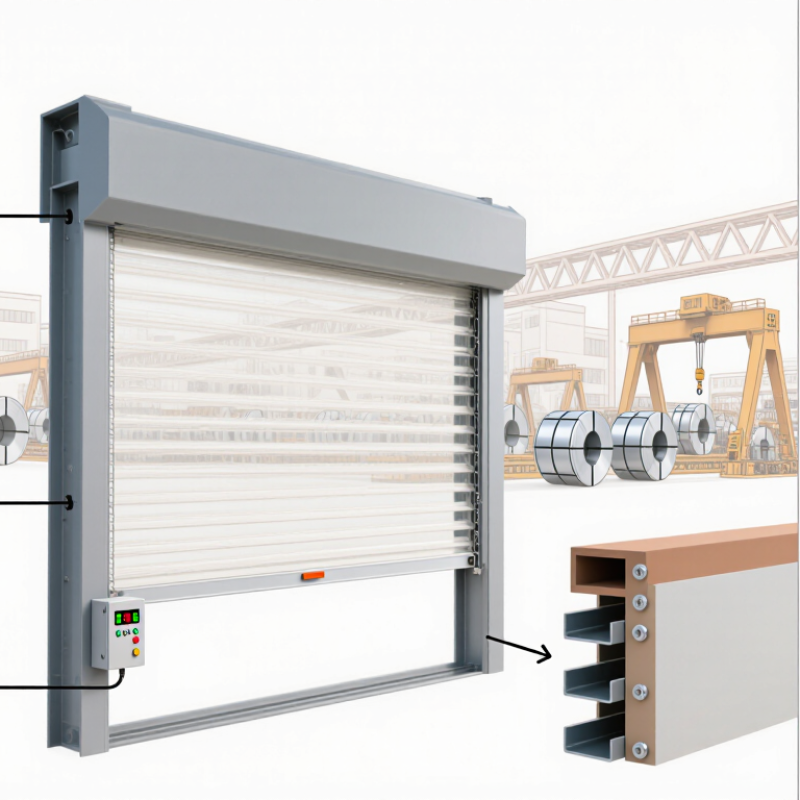
Look closely at the complete system. A shutter may include interlocking steel slats, side guides, a bottom bar, sensing devices, and a control panel. Each part affects fire resistance and safe operation. Request drawings showing the headbox, fixing points, and required wall construction. Confirm whether the tested wall matches your project.

Supplier experience matters too. Review factory photographs, production records, export history, and independent inspection options. A video call can reveal useful details, such as stored steel coils, welding quality, and testing equipment. It cannot replace formal documentation.

Price still matters. However, the cheapest quotation may exclude controls, delivery protection, installation guidance, or replacement parts. That is where budgets become fragile.

Be careful here.

A reliable buying guide should compare China-based manufacturers by verified testing, technical communication, customization ability, lead time, packaging, and after-sales response. Some information may remain incomplete until a factory audit or sample review. That limitation deserves honest attention. The strongest purchase decision is not the fastest one. It is the one supported by evidence, practical inspection, and clear responsibility.
Where to Buy China Top Steel Fire Rated Shutters?

What Are China’s Top Steel Fire-Rated Shutters?

China’s top steel fire-rated shutters are engineered barriers, not ordinary rolling doors. They combine galvanized or stainless steel curtains, reinforced guides, fire-resistant slats, and heat-sensitive release mechanisms. Their purpose is to slow flames, smoke, and radiant heat between protected areas.

In practice, reliable models are selected by tested fire-resistance duration, opening size, curtain construction, and control performance. Common ratings may include 60, 90, or 120 minutes, but the stated rating must come from an accredited test report. Ask for evidence covering the complete assembly, not only the steel curtain. A strong shutter should close automatically during an alarm, support manual operation, and connect safely with the building’s fire system. Installation matters greatly. Uneven floors, weak brackets, or incorrect guide spacing can reduce protection.

Buyers can source these shutters through qualified Chinese manufacturers, export distributors, or specialist fire-door contractors. Request drawings, material specifications, maintenance instructions, and project references before ordering. I would also inspect the curtain’s edge seals and test the emergency descent before accepting delivery. Some suppliers provide impressive certificates, yet documentation may not match the final configuration. That is an easy detail to miss. Local engineers should verify wall compatibility, power requirements, and approval requirements before installation.

Which Fire-Rated Standards Should Buyers Check?

When buying China-made steel fire-rated shutters, do not judge quality from a product photo or a stated fire time. Ask for the complete test report, certification scope, and installation instructions. The tested assembly should match your opening size, wall type, curtain design, guide rails, motor, and control system. A strong-looking shutter can still fail when installed in the wrong wall.

Check the standard accepted in your project location. Chinese projects commonly refer to the applicable edition of GB 14102 and fire-resistance test requirements under GB/T 9978. These documents help verify integrity, insulation, smoke control, and operating performance. For international projects, review UL 10B or UL 10C, together with NFPA 80 installation requirements. European buyers may need EN 1634-1 testing and EN 13501-2 classification. These standards are not interchangeable.

Read the report carefully. Does it show a furnace test, duration, mounting method, and failure criteria? Check whether the rating covers the full shutter assembly, not only the steel curtain. A hose-stream result may also be required under the selected standard. Ask for factory quality records, traceable serial numbers, and maintenance procedures. On site, measure the opening and check guide-rail clearances before ordering. Small gaps matter. I have seen specifications copied from another project, which caused confusion later. The safer approach is to have a qualified fire consultant confirm the required standard, rating, and documentation before payment.

Where Can You Find Reliable Chinese Shutter Manufacturers?

Reliable Chinese shutter manufacturers should prove performance before discussing price. Request fire-resistance test reports, production records, and installation references. A serious factory should explain curtain construction, guide rails, bottom bars, smoke seals, and closing controls clearly.

The NFPA report Fire Loss in the United States During 2023 recorded about 1.39 million fires. This figure shows why passive fire protection deserves careful sourcing. Ask whether testing followed recognized methods, such as NFPA 80 or EN 1634-1. Check the tested size, mounting arrangement, temperature rating, and closing cycle. A certificate alone is not enough. The tested assembly must match your project.

I have found that factory audits reveal practical details. Inspect steel thickness, welding quality, coating consistency, and batch traceability. Ask for recent quality records, not only polished brochures. Verify whether technicians can provide drawings and commissioning guidance. Independent inspection can reduce uncertainty before shipment. Still, no supplier is perfect. Even a well-organized factory may overlook site conditions or maintenance access.

Tips: Compare at least three manufacturers. Request a sample section and control panel demonstration. Confirm lead times in writing. Check spare-part support and after-sales response. Review test documents with a qualified fire-safety consultant. Grand View Research’s 2024 fire-doors analysis also identifies commercial and industrial construction as key demand areas, making supplier capability especially important.

Where to Buy China Top Steel Fire Rated Shutters? - Where Can You Find Reliable Chinese Shutter Manufacturers?

Evaluation Dimension Recommended Requirement Typical Market Data Verification Method
Product Type Steel fire-rated rolling shutter Suitable for warehouses, factories, commercial buildings, parking areas, and service openings Confirm the intended wall, opening, operating cycle, and installation environment
Fire-Resistance Period Select a rating that meets the local building code and project specification Common configurations include 60, 90, and 120 minutes; higher ratings may require special construction Request a fire-test report covering the complete shutter assembly, not only the curtain material
Applicable Test Standards Use standards accepted in the destination country Common references include EN 1634-1, UL 10D, NFPA 80, and equivalent national standards Check the standard edition, test laboratory, specimen dimensions, and validity of the documentation
Curtain Material Galvanized or coated steel with corrosion protection Typical steel thickness is approximately 0.8–2.0 mm, depending on design and fire rating Request material certificates, thickness records, coating details, and production samples
Guide Rails and Bottom Bar Rigid steel guide rails and reinforced bottom bar Components should be sized for the curtain width, wind exposure, and installation condition Review sectional drawings, steel thickness, fixing points, clearances, and load calculations
Maximum Opening Size Confirm the tested size range before ordering Many standard systems are configured for openings several metres wide; larger openings may need divided shutters or additional supports Compare the required width and height with the dimensions stated in the test report and technical drawing
Operating Method Choose manual, electric, or emergency-release operation according to use frequency Electric operation is generally preferred for larger or frequently used openings Request motor specifications, control wiring diagrams, safety devices, and manual override details
Automatic Fire Closure Include a tested closing mechanism linked to the fire-alarm system when required Typical systems use thermal release, smoke or heat detection, alarm input, and backup lowering functions Verify the closing sequence, fail-safe behavior, obstruction protection, and emergency reset procedure
Customization Capability Require drawings before production Common options include non-standard dimensions, powder coating, vision panels, access doors, wind locks, and special control systems Approve a signed technical drawing listing dimensions, materials, accessories, finish, and tolerances
Sample and Minimum Order Start with a document review or one sample unit for unfamiliar suppliers Indicative sample quantities are 1 unit; project orders commonly begin around 10–50 units, subject to design and factory policy Obtain written confirmation of sample cost, refundable tooling charges, and production MOQ
Production Lead Time Set the schedule after drawing approval and deposit receipt A typical project range is approximately 4–10 weeks, excluding testing, public holidays, and shipping Include milestones for material procurement, assembly, inspection, packing, and dispatch
Quality-Control Documents Require traceable inspection records Useful records include dimensional inspection, coating inspection, electrical testing, operating-cycle checks, and packing photographs Use a pre-shipment inspection checklist and retain serial numbers, photographs, and approved drawings
Packaging and Shipping Protect curtain slats, guide rails, motors, and control panels from moisture and impact Export packing commonly uses wrapped components, protective foam, steel or timber frames, and labelled packages Confirm package dimensions, gross weight, loading plan, moisture protection, and shipping terms
Installation Support Request installation instructions and technical assistance Reliable suppliers should provide drawings, wiring diagrams, adjustment guidance, and spare-parts information Ask for installation videos, commissioning procedures, training availability, and response time for technical support
Warranty and Spare Parts Obtain written after-sales terms before placing the order Commercial warranties commonly cover manufacturing defects for a defined period; motors, controls, and consumables may have separate terms Check warranty exclusions, replacement-part availability, service contacts, and claim procedures

Note: Market ranges are indicative and vary according to opening size, fire rating, testing requirements, customization, order quantity, and delivery destination. Final compliance must be confirmed against the applicable local building and fire-safety regulations.

How to Compare Materials, Certifications, Prices, and Lead Times?

When buying China-made steel fire-rated shutters, compare the tested assembly, not only the steel grade. Galvanized steel resists moisture and usually costs less. Stainless steel performs better in humid, corrosive locations, but its price can rise sharply. Insulated curtain systems may improve heat control, yet they add weight and installation demands. World Steel Association’s October 2024 Short Range Outlook forecast global steel demand growth of 1.2% in 2025. That pressure can affect quotations.

Certification needs careful checking. Ask for a complete test report, product size, fire duration, installation method, and hardware details. Common references include UL 10B, UL 10C, EN 1634-1, and local building standards. A certificate for one curtain size may not cover your opening. That detail is often missed. Request traceable factory records and independent laboratory evidence. Confirm whether the report covers insulation, integrity, smoke leakage, or only one performance category.

Compare prices line by line. Include curtain material, guides, motor, controls, packing, testing, inland transport, and replacement parts. A cheaper quote may exclude commissioning. Lead times also need written milestones. Standard shutters may ship within several weeks, while oversized units, special finishes, or certified modifications take longer. World Steel Association data helps explain material volatility, but it cannot predict every factory schedule. I would allow inspection time before shipment. That step feels slow, yet skipping it can be expensive.

What Steps Ensure a Safe and Successful Purchase?

Where to Buy China Top Steel Fire Rated Shutters?

A safe purchase starts with a verified manufacturer or an established industrial supplier in China. Check factory credentials, production experience, and independent fire-test reports. Do not rely on product photos alone. Request drawings showing curtain thickness, slat structure, guide rails, motor details, and maximum opening size. Confirm the stated fire rating matches your building requirements and local regulations. A cheaper shutter may become expensive after installation changes.

Ask for a sample section or detailed material specification before placing a large order. Check steel grade, coating type, insulation layers, control devices, and emergency closing functions. Request clear information about testing laboratories, report validity, production lead time, packaging, and replacement parts. Payment terms should be written clearly. So should inspection rights. A third-party pre-shipment inspection can verify dimensions, finish quality, labels, and operating tests. It is not perfect, but it reduces unpleasant surprises.

Tips: Measure the opening twice. Send drawings, not guesses. Confirm voltage and control-system compatibility. Ask who will install and service the shutters locally. Review the warranty carefully, especially for motors and fire-control components. Keep every approved document in one file. One overlooked detail, such as insufficient side clearance, can delay installation. Recheck it.

Powder Coat Booths

For those larger-sized parts, or smaller quantity runs, we have 2 independent powder coat booths and ovens. The quality, durability and affordability of today’s powder coating finishes make this the process of choice for world-class companies.

Powder coating advantages over other forms of coating are many. Materials used in the Powder coating process can be metals and non-metals that come in a multitude of thicknesses, textures, colors, etc. Another of Powder coating’s biggest advantages over conventional coatings is its ability to create finishes in many different textures. Powder Coating Booths allow us the ability to apply these advantages to large products.

Wet Paint Line

Tri-State Fabricators runs a full-service conveyor line for painting. Wet painting can provide protection or decoration to many different part styles. From start to finish, every project is easier to undergo random and point-based inspection by our skilled painting team.

Advantages to our Wet Paint Line are these lines start with product prep and ends with a thorough inspection of a high quality finished product. Our ability to complete large and small projects with a superior finish and doing so in a timely and economical fashion. This passes along the savings in production to our customers. When powder coating ins not an option, our Wet Paint Line gets the job done right the first time.

Wet Paint Booths

When the parts get big and heavy we roll-out our custom paint racks and oversize booth. By utilizing our partnerships with all the major paint brands, we can match virtually any color with wet paint.

The advantages of having access to a Wet Paint Booth are many. Large projects of many different shapes can be loaded into the booth. The Wet Paint Booth offers an environment that is much more controlled than a typical parts painting operation.

Not only are they used because of their controlled environment, but they’re are also advantageous when it comes to applying paint to parts that are needed in industries that require specialty coatings such as medical, aerospace, etc.

Military CARC

Our military forces have some very high standards when it comes to the finish of their vehicles and equipment. From the first pre-treatment step to final coat, it takes a great deal of knowledge and experience to protect the men and women of our armed forces. They deserve only the best, and Tri-State Fabricators provides it.

All of our processes are closely monitored by our staff and management teams. Both of which are highly trained in the processes of metal fabrication and finishing. Tri-State Fabricators’ goal is to always fully satisfy each and every customer, including the military. We will always put a 110% into what we do.

Glass-Bead Blasting

Abrasive media blasting is an excellent way to remove old paint, rust, and increase the paint/powder adhesion. Glass beads produce a much smoother and brighter finish than angular abrasives; leaving the part clean yet without any dimensional change. Chemically inert and environmentally friendly, we can recycle our beads approximately 30 times; making them a more preferred method of metal cleaning or surface finishing.

Advantages to Glass Bead Blasting are many. Glass bead blast media is used when a project is needing rough surfaces need to become smooth for applications of coatings such as paint. It is typically used to clean paint and rust from a product surface without deforming the surface it is being used on. Overall, compared to many other blasting media, Glass Bead Blasting is a very economical choice and those savings are always passed on to our customers.

Part Washing

Tri-State Fabricators utilize a zinc phosphate wash to clean and etch the material to ensure the best paint adhesion possible. The unique design of our 3-stage wash system does the work like a 5-stage. From Cleaning and rinsing to conversion coating and post-treatment, Our Part Washing process is a complete service and works throughout the fabrication service and the finishing service.

Along with the previously mentioned benefits, Curing is a vital chemical reaction that leaves the product finish hard and relatively safe from mild abrasion and aggressive corrosion. This process can be done in more than one way; ambient air-dry or in curing ovens at temps that exceed 240°.

Burn-Off Oven

From fixing paint mistakes (someone else’s of course) to simply cleaning our paint line hooks, our burn-off oven is put to good use. After a quick burn-off, a little clean up, and a fresh coat of paint, your parts will look better than new.

Why does our Burn-Off Oven work so well? Because super heating the air around parts turns the materials into ashes. From paint and powder coatings to rubber and machining oils, high temps do the job without degrading the integrity of the part.

Masking

Masking is a vital part of producing high quality products. We have die-cut masking patterns to protect machined surfaces as well as a wide range of plugs and caps to protect threaded holes and bolts. We provide permanent and temporary masking.

Masking allows the selected sections of a product to be protected from a fabrication or finishing service. This can be with both chemicals when etching and tapes, paints when only finishing just a section of the product. Masking is great in aiding the customization process of a project.

Screen Printing

Screen printing is a photographic process that transfers artwork onto a porous nylon screen which allows colored ink to flow through the screen and be deposited on an aluminum or plastic component. We can generally have just about any design created onto a screen for your parts.

Some of the advantages of Screen Printing are, brand recognition for your business displaying on your products, assembly instructions, product warnings/hazards, etc. Tri-State Fabricators produces Screen Printing of the highest quality so you know it’s durable.

Metal Finishing

Metal Finishing is the art of treating the exterior portion of product, often metal but can also be made of other materials, so that the surface is clean and free of any debris. Then the process of applying coats or either paint of powder coat takes place. This coating process improves the quality of the product in both appearance and resistance to wear and corrosion.

Tri-State Fabricators, Inc., understands that a project typically isn’t complete until a high-quality finish has been added to your product. This is why our painting and powder coating teams continuously inspect the products throughout the Metal Finishing process.