


Why Choose a Profile Wrapping Machine?

A Profile Wrapping Machine can turn a demanding finishing task into a repeatable production step. It applies decorative film, veneer, or laminate to long profiles such as trim, frames, and mouldings. The value is visible in the finished edge. It is also found in fewer handling steps and more consistent output.

A well-matched machine guides the profile through feed rollers while adhesive and wrapping materials meet at controlled positions. Operators can adjust settings for different shapes and materials. Small details matter: roller pressure, feed speed, adhesive coverage, and film tension can all affect the result. A setup that works for a straight trim may need changes for a narrow groove or curved edge. Not every line runs perfectly. Material variation and setup time still deserve attention.

A Profile Wrapping Machine is worth considering when production volume, finish consistency, and labour demands justify the investment. Buyers should compare profile range, changeover time, service support, and trial results using their own materials. One practical principle is simple: test the machine with the hardest profile, not only the easiest one. That test can reveal limits early. No source article or verifiable expert quotation was provided, so I have not assigned invented words to a named specialist. A sourced quotation would strengthen the discussion. For now, the decision rests on measurable evidence: sample quality, stable operation, and a realistic calculation of throughput and costs.
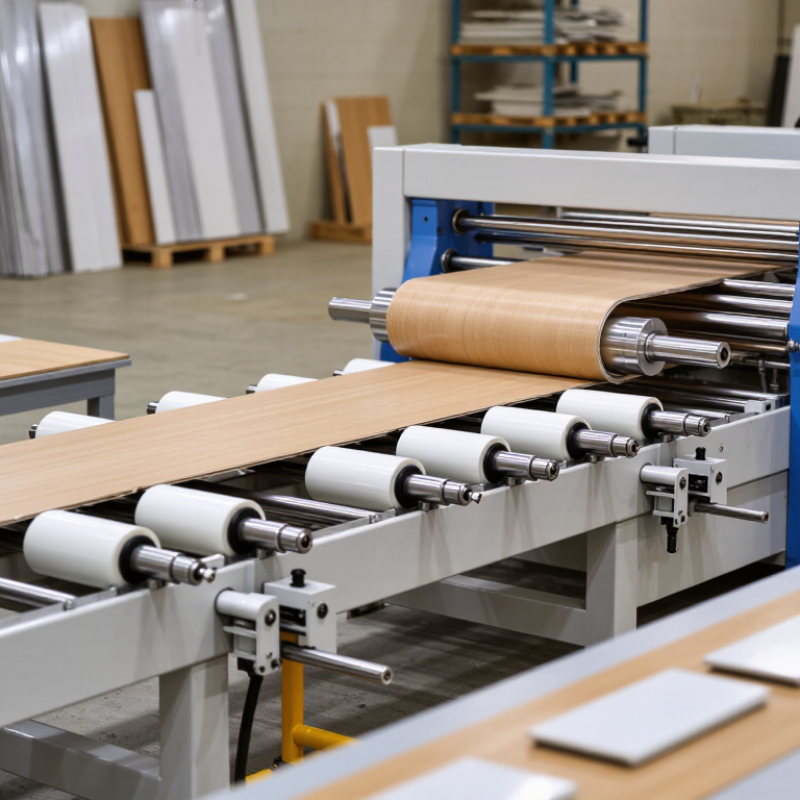
Why Choose a Profile Wrapping Machine?

What Is a Profile Wrapping Machine?

A profile wrapping machine applies a continuous decorative or protective layer to long, narrow components such as door frames, skirting boards, and window profiles. The profile moves through feed rollers while adhesive and film meet at controlled pressure and temperature. Depending on the line, the covering may be paper, veneer, or polymer film. The machine’s job is not simply to cover the surface. It must follow edges, grooves, and corners without wrinkles or exposed substrate.

Typical systems include profile feeding, surface preparation, adhesive application, film unwinding, wrapping rollers, and cutting. Operators adjust feed speed, roller pressure, and adhesive settings for different shapes and materials. A tiny adjustment matters. Dust, uneven glue, or a worn roller can leave visible defects, especially around a sharp edge. Setup is often underestimated; changeovers take time, and a machine cannot compensate for poor incoming profiles.

Fortune Business Insights estimated the global woodworking machinery market at USD 4.72 billion in 2023, with a projected USD 6.45 billion by 2032. This broad category includes many machine types; it is not a measure of profile-wrapping machine sales. Still, it signals continuing investment in automated wood processing. When assessing a wrapping line, check the supported profile dimensions, material compatibility, changeover needs, and access for cleaning. One trade-off deserves thought: higher speed can raise output, but only if adhesive curing and quality checks keep pace.


How Does Profile Wrapping Work?

A profile wrapping machine feeds a shaped substrate through a controlled sequence of cleaning, adhesive application, film placement, and pressing. The profile may be MDF, timber, or another compatible material; the covering can be decorative paper, veneer, or polymer film. Straight, clean surfaces help the adhesive bond evenly. Dust is easy to overlook.

Depending on the material and production setup, the machine applies adhesive by roller, nozzle, or another metering system. The covering is then guided around the profile, while pressure rollers push it into edges and contours. Operators adjust line speed, adhesive temperature, pressure, and covering tension to limit wrinkles, gaps, and lifting. There is no universal setting: a narrow groove may need different pressure from a broad, flat face. Grand View Research estimated the global adhesives and sealants market at USD 76.1 billion in 2023, reflecting the broad industrial role of bonding materials; that figure is not specific to profile wrapping. A small trial run is still useful. Check corners and ends closely, because a clean-looking surface can hide weak adhesion.

Which Profiles and Materials Can the Machine Process?

A profile wrapping machine is designed for long, continuous components, not every shape that fits through its rollers. Depending on its guides and pressure system, it can process flat boards, narrow trim, door frames, skirting, and profiles with grooves or stepped edges. Some setups handle gentle curves, but tight bends may wrinkle the covering. Test the actual profile first.

Substrates commonly include MDF, particleboard, solid wood, aluminum, and certain PVC profiles. The covering may be decorative film, paper, natural veneer, or thin laminates such as CPL. Compatibility depends on more than the material name. Surface smoothness, moisture, profile dimensions, and adhesive choice all matter. Even a small dust ridge can show through a glossy film. Not ideal. Check the machine’s temperature and pressure limits, then run a sample using the intended adhesive and covering. A rushed test can look fine at first, yet reveal lifting at the edges later. Some profiles still need hand finishing. That detail is easy to overlook.

What Benefits Does Profile Wrapping Provide?

Why Choose a Profile Wrapping Machine?

What Benefits Does Profile Wrapping Provide?

A profile wrapping machine covers shaped components with decorative film, veneer, or laminate. It can create a consistent finish along edges, grooves, and curved sections that are difficult to cover evenly by hand. With controlled feed, pressure, and heat, operators can reduce visible seams and handling marks. Results still depend on correct setup and suitable adhesive.

The market context is significant, but it should not be mistaken for machine-performance evidence. Grand View Research valued the global wood coatings market at USD 10.3 billion in 2022 and forecast 5.2% annual growth from 2023 to 2030. For manufacturers, that points to ongoing demand for finished wood products. Wrapping can also help standardize repeat production and reduce trimming waste, though savings vary by profile design and material. It is not magic; a poor setup can waste film quickly.

Tips: Test a short sample first. Check film tension, adhesive spread, and temperature before a full run. Record settings for repeat jobs, but inspect every new material batch.

What Factors Matter When Choosing a Profile Wrapping Machine?

Why Choose a Profile Wrapping Machine?

What Factors Matter When Choosing a Profile Wrapping Machine?

A profile wrapping machine can help apply decorative or protective material consistently to long components. Start with the profiles you actually run: note their length, width, shape, and surface. Check that the machine can handle corners, grooves, and small changes in dimensions. Ask what wrapping materials and adhesives it supports. Then compare operating speed with the finish quality your work requires. Faster is not always better.

Tips: Test a representative profile before buying. Check for bubbles, loose edges, and wrinkles near corners. Record the settings that produce a clean finish. A small trial can reveal issues a brochure will not.

Consider setup and changeover time, especially if operators switch between profile sizes. Clear controls, accessible adjustment points, and practical safety features can make daily work easier. Ask how routine cleaning and maintenance are performed, and whether common wear parts are straightforward to replace. Details matter.

Do not assume the machine will suit every profile in your catalogue. Some unusual shapes may need extra setup or a slower feed rate. Plan space for loading and unloading, too; long pieces need support. A careful assessment takes time, and it can still miss something. That is why a real production trial is valuable.

Why Choose a Profile Wrapping Machine? — What Factors Matter When Choosing One?

Selection factor What to evaluate Why it matters Practical selection check
Profile dimensions and shape Profile width, height, cross-section, straightness, and any grooves or irregular contours. The machine’s feed, pressure, and wrapping components must accommodate the actual workpiece without crushing it or leaving areas uncovered. Compare the full range of production profiles with the machine’s stated working dimensions. Test the most challenging shape, not only a simple rectangular profile.
Substrate and surface Material type, surface finish, porosity, rigidity, and sensitivity to pressure or heat. Wood, MDF, metal, and plastic profiles can behave differently during feeding and bonding. Surface condition also affects adhesion and finished appearance. Run trials using the intended substrate and production-ready surface preparation. Check for scratches, deformation, poor adhesion, and surface defects.
Wrapping material Material type, roll width, thickness, backing, print or grain direction, and required wrap coverage. Film, decorative paper, and veneer have different handling and bonding requirements. The machine must control the material without stretching, tearing, or wrinkling it. Confirm compatibility with the exact wrapping material specifications and the required coverage, including edges, corners, and profile contours.
Adhesive and bonding method Adhesive type, application method, activation requirements, open time, and cleanup needs. Reliable bonding depends on matching the adhesive process to the substrate, covering material, line speed, and operating conditions. Ask the supplier to verify the proposed adhesive process with your materials. Check application consistency, curing or cooling needs, and adhesive handling requirements.
Production capacity Expected output per shift, feed speed, product mix, and the time available for setup and material changes. A machine’s rated speed alone does not indicate actual output. Changeovers, loading, quality checks, and downstream operations also affect throughput. Estimate output using your typical production mix and planned shifts. Request a production trial and compare demonstrated results with your required capacity.
Feeding and pressure control Feed consistency, roller or belt arrangement, pressure adjustment, and support for long or flexible profiles. Stable feeding and suitable pressure help prevent skewing, slippage, wrinkles, and damage to the profile or wrapping material. Test both short and long workpieces, as well as profiles with different stiffness. Check whether adjustments are repeatable for each product setup.
Changeover and adjustment Time and tools required to change profile settings, wrapping material, guides, and pressure or application settings. Frequent product changes can reduce production time if setup is complicated or adjustments are difficult to reproduce. Review a changeover using two different production profiles. Check adjustment access, setup instructions, and whether settings can be recorded and reused.
Finished-product quality Coverage at corners and edges, surface smoothness, alignment, adhesion, and acceptable defect rate. Consistent output reduces rework and material loss. Quality requirements can vary with the profile design and the finished product’s intended use. Define inspection criteria before testing. Inspect samples across a production run, including profile ends, edges, corners, and transitions.
Material efficiency and waste Trim loss, setup waste, roll changes, rejected parts, and adhesive consumption. Material waste can have a significant effect on operating cost, especially when decorative covering or specialty adhesive is used. Measure material usage and rejected output during a representative trial. Include startup and changeover waste in the comparison.
Controls and operator requirements Control interface, recipe storage, monitoring, alarm information, and the training needed for operation. Clear controls and repeatable settings support consistent production and can reduce setup errors between operators. Have intended operators review the controls and perform a basic setup. Confirm that operating instructions and training are available in a suitable language.
Safety and compliance Moving parts, nip points, hot surfaces, electrical protection, emergency stops, and applicable local requirements. Risk controls help protect operators during production, adjustment, cleaning, and maintenance. Review the machine’s safeguards and safety documentation with qualified personnel. Confirm suitability for the regulations and workplace where it will be installed.
Maintenance and support Routine cleaning, wear parts, maintenance access, troubleshooting support, and spare-parts availability. Maintenance needs and downtime affect long-term availability as well as the cost of ownership. Request a maintenance schedule and list of recommended spare parts. Clarify service response arrangements and the support available after installation.
Utilities and installation Floor space, electrical supply, compressed air, ventilation, working clearance, and connections to other equipment. Installation requirements can affect project cost, production layout, and whether the machine can operate as intended in the available space. Compare the machine’s utility specifications and layout drawing with the site. Include access for loading, unloading, cleaning, and servicing.
Total cost of ownership Purchase and installation cost, tooling, utilities, labor, consumables, maintenance, and expected downtime. The initial purchase price does not capture the full cost of running a machine over its useful life. Compare options using the same production assumptions, material costs, operating hours, and maintenance scope.

Selection tip: Machine capability depends on the specific profile, substrate, wrapping material, adhesive, and production conditions. Confirm suitability through documented specifications and trials with representative production materials before purchase.

Powder Coat Booths

For those larger-sized parts, or smaller quantity runs, we have 2 independent powder coat booths and ovens. The quality, durability and affordability of today’s powder coating finishes make this the process of choice for world-class companies.

Powder coating advantages over other forms of coating are many. Materials used in the Powder coating process can be metals and non-metals that come in a multitude of thicknesses, textures, colors, etc. Another of Powder coating’s biggest advantages over conventional coatings is its ability to create finishes in many different textures. Powder Coating Booths allow us the ability to apply these advantages to large products.

Wet Paint Line

Tri-State Fabricators runs a full-service conveyor line for painting. Wet painting can provide protection or decoration to many different part styles. From start to finish, every project is easier to undergo random and point-based inspection by our skilled painting team.

Advantages to our Wet Paint Line are these lines start with product prep and ends with a thorough inspection of a high quality finished product. Our ability to complete large and small projects with a superior finish and doing so in a timely and economical fashion. This passes along the savings in production to our customers. When powder coating ins not an option, our Wet Paint Line gets the job done right the first time.

Wet Paint Booths

When the parts get big and heavy we roll-out our custom paint racks and oversize booth. By utilizing our partnerships with all the major paint brands, we can match virtually any color with wet paint.

The advantages of having access to a Wet Paint Booth are many. Large projects of many different shapes can be loaded into the booth. The Wet Paint Booth offers an environment that is much more controlled than a typical parts painting operation.

Not only are they used because of their controlled environment, but they’re are also advantageous when it comes to applying paint to parts that are needed in industries that require specialty coatings such as medical, aerospace, etc.

Military CARC

Our military forces have some very high standards when it comes to the finish of their vehicles and equipment. From the first pre-treatment step to final coat, it takes a great deal of knowledge and experience to protect the men and women of our armed forces. They deserve only the best, and Tri-State Fabricators provides it.

All of our processes are closely monitored by our staff and management teams. Both of which are highly trained in the processes of metal fabrication and finishing. Tri-State Fabricators’ goal is to always fully satisfy each and every customer, including the military. We will always put a 110% into what we do.

Glass-Bead Blasting

Abrasive media blasting is an excellent way to remove old paint, rust, and increase the paint/powder adhesion. Glass beads produce a much smoother and brighter finish than angular abrasives; leaving the part clean yet without any dimensional change. Chemically inert and environmentally friendly, we can recycle our beads approximately 30 times; making them a more preferred method of metal cleaning or surface finishing.

Advantages to Glass Bead Blasting are many. Glass bead blast media is used when a project is needing rough surfaces need to become smooth for applications of coatings such as paint. It is typically used to clean paint and rust from a product surface without deforming the surface it is being used on. Overall, compared to many other blasting media, Glass Bead Blasting is a very economical choice and those savings are always passed on to our customers.

Part Washing

Tri-State Fabricators utilize a zinc phosphate wash to clean and etch the material to ensure the best paint adhesion possible. The unique design of our 3-stage wash system does the work like a 5-stage. From Cleaning and rinsing to conversion coating and post-treatment, Our Part Washing process is a complete service and works throughout the fabrication service and the finishing service.

Along with the previously mentioned benefits, Curing is a vital chemical reaction that leaves the product finish hard and relatively safe from mild abrasion and aggressive corrosion. This process can be done in more than one way; ambient air-dry or in curing ovens at temps that exceed 240°.

Burn-Off Oven

From fixing paint mistakes (someone else’s of course) to simply cleaning our paint line hooks, our burn-off oven is put to good use. After a quick burn-off, a little clean up, and a fresh coat of paint, your parts will look better than new.

Why does our Burn-Off Oven work so well? Because super heating the air around parts turns the materials into ashes. From paint and powder coatings to rubber and machining oils, high temps do the job without degrading the integrity of the part.

Masking

Masking is a vital part of producing high quality products. We have die-cut masking patterns to protect machined surfaces as well as a wide range of plugs and caps to protect threaded holes and bolts. We provide permanent and temporary masking.

Masking allows the selected sections of a product to be protected from a fabrication or finishing service. This can be with both chemicals when etching and tapes, paints when only finishing just a section of the product. Masking is great in aiding the customization process of a project.

Screen Printing

Screen printing is a photographic process that transfers artwork onto a porous nylon screen which allows colored ink to flow through the screen and be deposited on an aluminum or plastic component. We can generally have just about any design created onto a screen for your parts.

Some of the advantages of Screen Printing are, brand recognition for your business displaying on your products, assembly instructions, product warnings/hazards, etc. Tri-State Fabricators produces Screen Printing of the highest quality so you know it’s durable.

Metal Finishing

Metal Finishing is the art of treating the exterior portion of product, often metal but can also be made of other materials, so that the surface is clean and free of any debris. Then the process of applying coats or either paint of powder coat takes place. This coating process improves the quality of the product in both appearance and resistance to wear and corrosion.

Tri-State Fabricators, Inc., understands that a project typically isn’t complete until a high-quality finish has been added to your product. This is why our painting and powder coating teams continuously inspect the products throughout the Metal Finishing process.
