


Why Choose a UPS System for Your Business?

A business rarely notices its power protection until the lights flicker, servers restart, or payment terminals suddenly go silent. An UPS System helps reduce these disruptions by supplying temporary backup power and conditioning incoming electricity. For offices, clinics, warehouses, and online retailers, that short window can protect data, equipment, and customer confidence. Every second matters.

In real workplaces, power problems are not always dramatic. A brief voltage dip may damage sensitive devices, interrupt cloud connections, or corrupt an unfinished transaction. A properly selected UPS System can provide immediate battery support while generators start or utility power returns. It may also filter unstable power and offer monitoring tools for maintenance teams. The right solution depends on load size, runtime needs, battery condition, and future expansion. Bigger is not automatically better.

Reliable planning requires more than comparing prices. Businesses should review manufacturer specifications, installation conditions, service availability, and the qualifications of the electrical contractor. A small office may need a compact line-interactive unit, while a data room may require an online double-conversion design and carefully managed battery cabinets. Local conditions matter, too. Heat, dust, poor ventilation, and neglected batteries can reduce expected performance. That is an uncomfortable detail, but it deserves attention.

Choosing an UPS System is therefore a risk-management decision, not merely an equipment purchase. It can support continuity, but it cannot solve every electrical problem. Regular testing, documented maintenance, and realistic load calculations remain essential. This guide examines the practical reasons businesses invest in UPS protection and the questions decision-makers should ask before installation.
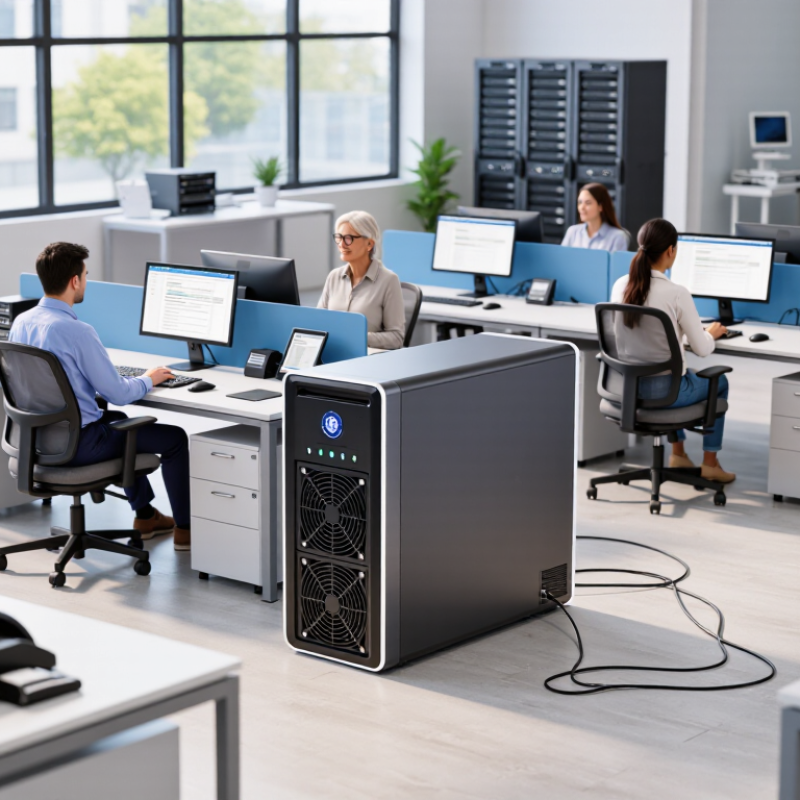
Why Choose a UPS System for Your Business?

What a UPS System Is and How It Works

A UPS system, or uninterruptible power supply, protects business equipment when electrical power becomes unstable or disappears. It sits between the utility supply and critical devices such as servers, network switches, medical equipment, and control systems. The goal is not to provide unlimited electricity. It creates a controlled window for safe operation or shutdown.

In normal conditions, the UPS passes power to connected equipment while charging its batteries. Many systems also filter voltage fluctuations and reduce electrical noise. When the utility supply fails, the battery sends direct current to an inverter. The inverter changes it into stable alternating current for the equipment. This transition can happen quickly enough to keep sensitive devices running. Short interruption. No flashing screens.

Different UPS designs respond in different ways. Standby models switch to battery power after a fault, while online models continuously regenerate the output. Online systems usually offer stronger protection, but they can cost more and waste more energy. Capacity and runtime also require careful calculation. A larger battery does not automatically solve every problem. Load size, battery age, temperature, and maintenance all matter.

In one server room, a UPS may support only ten minutes, which is enough for an orderly shutdown. That assumption should be tested, not trusted. Regular battery checks, alarm reviews, and controlled power-failure tests reveal weaknesses before an outage does.


The Business Risks of Power Interruptions

Why Choose a UPS System for Your Business?

The Business Risks of Power Interruptions

A power interruption rarely arrives at a convenient moment. A short outage can stop servers, payment terminals, production controls, and security systems without warning. Even a brief voltage drop may corrupt files or force equipment into an unsafe restart. During facility assessments, I have seen staff lose hours rebuilding work after an interruption lasting less than a minute. The visible outage is only part of the problem. Delayed orders, missed calls, spoiled inventory, and frustrated customers can continue affecting operations long after electricity returns. Critical systems also need time to shut down correctly. A UPS system supplies temporary power and helps stabilize voltage while backup generation starts or equipment closes safely.

Protection requires more than installing a cabinet and forgetting it. Battery age, load growth, ventilation, and maintenance records all influence reliability. It is easy to overestimate protection. A small UPS may support office computers but fail under added network equipment or manufacturing loads. Regular testing can reveal weak batteries before an emergency exposes them. The right capacity should reflect actual demand, future expansion, and the acceptable shutdown window. Monitoring also helps teams identify repeated voltage disturbances that may signal wider electrical issues. A UPS cannot prevent every business loss, but it can reduce the chain reaction caused by an unstable power supply. Sometimes, the overlooked risk is not the outage itself, but the assumption that recovery will be automatic.

Why Choose a UPS System for Your Business? - The Business Risks of Power Interruptions
Power Event Typical Electrical Characteristic Potential Business Impact How a UPS Helps Risk Level Without Protection Relevant Technical Reference
Momentary interruption Loss of supply lasting from fractions of a second to several seconds. Server resets, interrupted transactions, corrupted in-process data, and disruption to communications equipment. Maintains the load during the interruption and provides time for orderly transfer to standby generation when required. High IEEE 1159 power-quality event classifications; IEC 62040-3 UPS performance requirements.
Voltage sag Short-duration reduction in RMS voltage, commonly caused by faults, motor starting, or heavy load changes. Equipment shutdowns, control-system faults, nuisance alarms, and reduced production reliability. Regulates or reconstructs the output voltage so sensitive equipment receives a stable supply. High IEEE 1159 defines voltage sags as reductions in RMS voltage lasting from 0.5 cycle to 1 minute.
Voltage swell Short-duration increase in RMS voltage, often associated with fault clearing or sudden load removal. Stress or damage to power supplies, reduced component life, and unexpected equipment trips. Conditions the input and limits the effect of abnormal voltage on connected loads. Medium to High IEEE 1159 defines voltage swells as increases in RMS voltage lasting from 0.5 cycle to 1 minute.
Complete power outage Total loss of utility power for seconds, minutes, or longer. Business downtime, lost productivity, missed service-level targets, interrupted customer access, and potential data loss. Supplies stored battery energy immediately and bridges the gap until generator power is available or systems are shut down safely. Very High UPS autonomy is determined by battery capacity, connected load, operating temperature, and system design.
Overvoltage Sustained voltage above the equipment’s normal operating range. Excessive heat in power supplies, premature component aging, and equipment failure. Provides voltage regulation and, in double-conversion designs, electrically separates the load from many input disturbances. Medium to High IEC 62040-3 covers UPS output performance and operating characteristics.
Undervoltage Sustained voltage below the equipment’s normal operating range. Motor overheating, reduced equipment performance, control instability, and unexpected shutdowns. Boosts or regenerates the output voltage to maintain an acceptable supply for protected equipment. Medium to High Power-quality effects are addressed in IEEE 1159 and equipment compatibility practices.
Frequency variation Deviation of the AC supply frequency from its nominal value. Timing errors, unstable operation of frequency-sensitive equipment, and problems with certain motors or control systems. Uses an inverter-based output to provide a controlled frequency within the UPS operating specification. Medium UPS frequency-performance requirements are specified in IEC 62040-3.
Electrical noise and transients High-frequency interference or short-duration impulses superimposed on the normal AC waveform. Communication errors, data corruption, false alarms, and accelerated degradation of sensitive electronics. Filters or reconstructs the power waveform and helps isolate connected loads from disturbances. Medium IEEE 1159 identifies high-frequency noise and transients as power-quality disturbances.
Harmonic distortion Waveform distortion caused by nonlinear loads such as switching power supplies, drives, and rectifiers. Neutral-conductor heating, transformer stress, reduced efficiency, and malfunction of sensitive equipment. Selected UPS systems reduce the impact of distorted input power and can provide a cleaner output waveform. Medium IEEE 519 provides recommended practices and requirements for harmonic control in power systems.
Generator or transfer delay Short interruption while an emergency power source starts and the electrical load is transferred. Computers, networking equipment, security systems, and industrial controls may reboot before backup generation is available. Provides no-break or limited-break ride-through, depending on UPS topology and configuration. High Emergency and standby power arrangements are addressed by NFPA 110; UPS performance is addressed by IEC 62040-3.
Planning note: Actual business impact depends on load criticality, outage frequency, system redundancy, battery autonomy, maintenance practices, and recovery procedures. A UPS reduces interruption risk but does not replace electrical maintenance, surge protection, backup generation, data backup, or a tested business-continuity plan.

Key Benefits of Using a UPS System

A UPS system protects business continuity when utility power becomes unstable. It supplies temporary electricity during outages, giving servers and network equipment time to keep running or shut down safely. In practice, this can prevent corrupted files, interrupted transactions, and lost customer calls. Voltage regulation also reduces stress from brief surges and dips. That protection matters in offices, clinics, warehouses, and small data rooms.

The main benefit is controlled downtime. Staff can save work, finish a payment, or move equipment to a safe state. Battery runtime depends on load, battery age, temperature, and maintenance. More runtime is not automatically better. An oversized system may raise purchase and operating costs without improving resilience. A professional assessment should match capacity, expected outage length, and critical devices. Monitoring software can report battery health, overload conditions, and replacement dates before failure becomes visible.

UPS systems also support predictable maintenance. Scheduled tests reveal weak batteries and poor connections while the business is operating normally. A bypass function can help technicians service equipment without cutting power, when properly designed and installed. Yet a UPS is not a cure-all. It cannot repair faulty wiring or replace generators during extended outages. I have seen plans fail because teams tested equipment once, then ignored it for years. Regular inspections and documented shutdown procedures make the protection more reliable.

How to Choose the Right UPS for Your Business

Choosing the right UPS for a business starts with measured risk, not a catalog rating. The U.S. Department of Energy estimates that power interruptions cost the American economy up to $150 billion annually. Uptime Institute’s 2024 Annual Outage Analysis reported that 54% of serious outages cost more than $100,000. Even a short outage can stop servers, corrupt files, or interrupt production.

Measure the actual load in kilowatts and apparent power before selecting capacity. Add growth headroom, but avoid excessive oversizing. A UPS operating far below its efficient range may waste energy.

Online double-conversion systems suit sensitive servers, medical equipment, and industrial controls because they continuously regulate voltage and frequency. Line-interactive units may fit smaller offices with stable utility power.

Runtime matters too. Specify the minutes needed for an orderly shutdown, not an unrealistic full-day backup.

Look beyond batteries. Check bypass arrangements, monitoring protocols, maintenance access, ventilation, and replacement intervals. Lithium-based batteries can reduce floor space, while valve-regulated lead-acid batteries may offer a familiar maintenance model.

Requirements vary by site. A neat spreadsheet can still mislead. Real facilities are messier.

Test the UPS under realistic loads, including startup surges and future equipment. Independent inspection and documented maintenance improve reliability, but neither removes every failure risk. Choose a system that matches business consequences, electrical conditions, and the people available to operate it.

UPS Maintenance, Safety, and Long-Term Value

A UPS system protects more than servers. It supports safe shutdowns, stable operations, and clearer maintenance planning. Uptime Institute’s 2023 Global Data Center Survey found that 60% of respondents experienced an outage within three years. Power problems remain a major contributor. A UPS can bridge short interruptions and filter voltage disturbances before they damage sensitive equipment.

Maintenance determines whether that protection works at 2:00 a.m. Technicians should inspect batteries, terminals, cooling paths, alarms, and bypass circuits. Battery temperature matters. A warm equipment room can quietly shorten battery life. NFPA 70B, 2023 edition, frames electrical maintenance as part of a reliable safety program. Records should include test dates, measured values, replaced parts, and unresolved warnings. Small details matter.

A UPS also creates long-term value through controlled risk. It may prevent corrupted files, emergency labor, missed orders, and unsafe manual switching. Yet installation alone is not enough. Some businesses postpone battery replacement because the system appears healthy. That is a weak assumption. Battery capacity can decline before visible alarms appear. A practical review should compare load growth, runtime targets, maintenance costs, and failure consequences. Uptime Institute reports that many outages exceed $100,000 in total impact. The exact cost varies, but the operational lesson is uncomfortable: reliability is cheaper when planned.

Powder Coat Booths

For those larger-sized parts, or smaller quantity runs, we have 2 independent powder coat booths and ovens. The quality, durability and affordability of today’s powder coating finishes make this the process of choice for world-class companies.

Powder coating advantages over other forms of coating are many. Materials used in the Powder coating process can be metals and non-metals that come in a multitude of thicknesses, textures, colors, etc. Another of Powder coating’s biggest advantages over conventional coatings is its ability to create finishes in many different textures. Powder Coating Booths allow us the ability to apply these advantages to large products.

Wet Paint Line

Tri-State Fabricators runs a full-service conveyor line for painting. Wet painting can provide protection or decoration to many different part styles. From start to finish, every project is easier to undergo random and point-based inspection by our skilled painting team.

Advantages to our Wet Paint Line are these lines start with product prep and ends with a thorough inspection of a high quality finished product. Our ability to complete large and small projects with a superior finish and doing so in a timely and economical fashion. This passes along the savings in production to our customers. When powder coating ins not an option, our Wet Paint Line gets the job done right the first time.

Wet Paint Booths

When the parts get big and heavy we roll-out our custom paint racks and oversize booth. By utilizing our partnerships with all the major paint brands, we can match virtually any color with wet paint.

The advantages of having access to a Wet Paint Booth are many. Large projects of many different shapes can be loaded into the booth. The Wet Paint Booth offers an environment that is much more controlled than a typical parts painting operation.

Not only are they used because of their controlled environment, but they’re are also advantageous when it comes to applying paint to parts that are needed in industries that require specialty coatings such as medical, aerospace, etc.

Military CARC

Our military forces have some very high standards when it comes to the finish of their vehicles and equipment. From the first pre-treatment step to final coat, it takes a great deal of knowledge and experience to protect the men and women of our armed forces. They deserve only the best, and Tri-State Fabricators provides it.

All of our processes are closely monitored by our staff and management teams. Both of which are highly trained in the processes of metal fabrication and finishing. Tri-State Fabricators’ goal is to always fully satisfy each and every customer, including the military. We will always put a 110% into what we do.

Glass-Bead Blasting

Abrasive media blasting is an excellent way to remove old paint, rust, and increase the paint/powder adhesion. Glass beads produce a much smoother and brighter finish than angular abrasives; leaving the part clean yet without any dimensional change. Chemically inert and environmentally friendly, we can recycle our beads approximately 30 times; making them a more preferred method of metal cleaning or surface finishing.

Advantages to Glass Bead Blasting are many. Glass bead blast media is used when a project is needing rough surfaces need to become smooth for applications of coatings such as paint. It is typically used to clean paint and rust from a product surface without deforming the surface it is being used on. Overall, compared to many other blasting media, Glass Bead Blasting is a very economical choice and those savings are always passed on to our customers.

Part Washing

Tri-State Fabricators utilize a zinc phosphate wash to clean and etch the material to ensure the best paint adhesion possible. The unique design of our 3-stage wash system does the work like a 5-stage. From Cleaning and rinsing to conversion coating and post-treatment, Our Part Washing process is a complete service and works throughout the fabrication service and the finishing service.

Along with the previously mentioned benefits, Curing is a vital chemical reaction that leaves the product finish hard and relatively safe from mild abrasion and aggressive corrosion. This process can be done in more than one way; ambient air-dry or in curing ovens at temps that exceed 240°.

Burn-Off Oven

From fixing paint mistakes (someone else’s of course) to simply cleaning our paint line hooks, our burn-off oven is put to good use. After a quick burn-off, a little clean up, and a fresh coat of paint, your parts will look better than new.

Why does our Burn-Off Oven work so well? Because super heating the air around parts turns the materials into ashes. From paint and powder coatings to rubber and machining oils, high temps do the job without degrading the integrity of the part.

Masking

Masking is a vital part of producing high quality products. We have die-cut masking patterns to protect machined surfaces as well as a wide range of plugs and caps to protect threaded holes and bolts. We provide permanent and temporary masking.

Masking allows the selected sections of a product to be protected from a fabrication or finishing service. This can be with both chemicals when etching and tapes, paints when only finishing just a section of the product. Masking is great in aiding the customization process of a project.

Screen Printing

Screen printing is a photographic process that transfers artwork onto a porous nylon screen which allows colored ink to flow through the screen and be deposited on an aluminum or plastic component. We can generally have just about any design created onto a screen for your parts.

Some of the advantages of Screen Printing are, brand recognition for your business displaying on your products, assembly instructions, product warnings/hazards, etc. Tri-State Fabricators produces Screen Printing of the highest quality so you know it’s durable.

Metal Finishing

Metal Finishing is the art of treating the exterior portion of product, often metal but can also be made of other materials, so that the surface is clean and free of any debris. Then the process of applying coats or either paint of powder coat takes place. This coating process improves the quality of the product in both appearance and resistance to wear and corrosion.

Tri-State Fabricators, Inc., understands that a project typically isn’t complete until a high-quality finish has been added to your product. This is why our painting and powder coating teams continuously inspect the products throughout the Metal Finishing process.
