Why Choose DC Molded Case Circuit Breaker OEM Manufacturer?
Choosing a Dc Molded Case Circuit Breaker Oem Manufacturer is more than comparing catalog prices. It is about trusting the protection behind every energized cabinet, battery rack, and solar storage system. A reliable manufacturer understands that direct current behaves differently from alternating current. The arc does not naturally cross zero. It must be interrupted deliberately.
Jerry Smith, a respected electrical safety professional, once said, “Safety is not expensive; it is priceless.” That principle fits DC breaker selection closely. An experienced OEM manufacturer can match frame size, rated voltage, interrupting capacity, trip curves, terminal design, and enclosure requirements. These details matter when a fault occurs beside a hot battery string. Seconds matter.
OEM cooperation also improves traceability. Engineers can review drawings, insulation distances, thermal performance, and repeated test results before production. The best suppliers document changes and explain limitations clearly. That is real expertise.
Not every low-cost breaker is a bad choice. Not every premium supplier is perfect. That deserves reflection. Some projects over-specify protection, while others overlook ambient temperature or cable length. A capable DC Molded Case Circuit Breaker OEM Manufacturer helps expose those gaps before installation.
This outline examines why OEM selection influences safety, consistency, customization, certification support, and long-term operating value. It also considers factory experience, quality controls, response speed, and technical communication. Reliable protection begins with honest engineering.
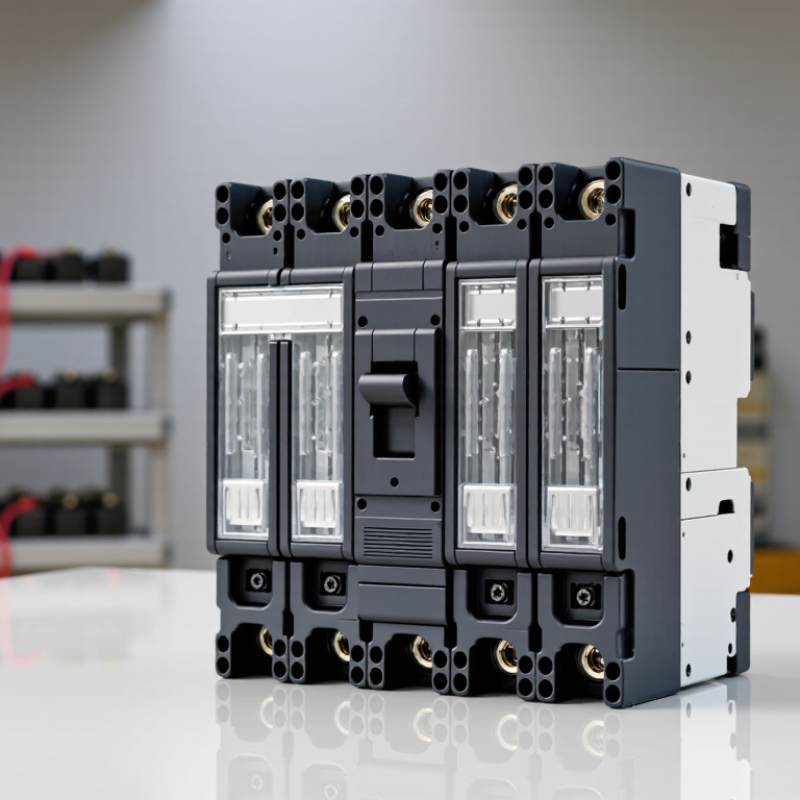
DC Molded Case Circuit Breakers: Definition and Core Functions
Why Choose DC Molded Case Circuit Breaker OEM Manufacturer?
A DC molded case circuit breaker protects direct-current circuits from overloads and short circuits. Unlike AC systems, DC current has no natural zero crossing. Its arc can continue longer and requires stronger interruption control. The breaker combines insulated housing, contacts, arc-control components, and thermal-magnetic or electronic trip units. These parts work together to interrupt dangerous current quickly.
Its core functions include circuit protection, manual isolation, and reliable switching. Engineers must check rated DC voltage, continuous current, breaking capacity, polarity, and temperature derating. Incorrect polarity can reduce interruption performance.
The International Energy Agency’s Global EV Outlook 2024 reports that public charging points grew by more than 40% in 2023, exceeding four million worldwide. Energy storage and charging systems therefore need dependable DC protection. The IEA Electricity 2024 report also expects data-center electricity demand to exceed 1,000 TWh by 2026. More DC power equipment will likely follow. However, higher demand does not make every breaker suitable.
Tips: Ask an OEM manufacturer for verified short-circuit tests, thermal-rise data, and coordination curves. Confirm the product’s DC breaking capacity at the actual system voltage. Check operation after repeated switching, not only during a laboratory demonstration. A compact enclosure may save panel space, but heat has nowhere to hide. Field conditions can be imperfect. That matters. A reliable OEM should support sample testing, customized terminals, and documented quality control before volume production.
How OEM Manufacturers Design DC Molded Case Circuit Breakers
Designing a DC molded case circuit breaker begins with the application, not the enclosure. An OEM engineering team reviews system voltage, continuous current, short-circuit capacity, load type, and ambient temperature. Battery storage, solar arrays, and industrial drives create different interruption demands. DC current does not naturally cross zero, so the arc can continue longer than an AC arc. This detail shapes the entire design.
Engineers select contact materials, magnetic trip settings, insulation distances, and arc chutes together. The arc chamber may use multiple plates to divide, cool, and lengthen the arc. A carefully shaped magnetic field helps move the arc away from the contacts. Thermal protection responds to sustained overloads, while magnetic protection reacts to severe faults. Electronic trip units can add adjustable settings, communication, and measurement functions. Small errors matter.
OEM manufacturers usually build prototypes and test them under overload, short-circuit, endurance, and temperature conditions. They inspect contact wear after repeated operations, not only the first successful interruption. A breaker may perform well in a laboratory yet struggle inside a hot, crowded cabinet. Engineers therefore review terminal heating, cable clearance, vibration, and installation torque. Field feedback often exposes assumptions that calculations miss. Sometimes the better design is less compact, easier to inspect, and more tolerant of human error.
Why Choose a DC Molded Case Circuit Breaker OEM Manufacturer?
OEM manufacturers design DC MCCBs around voltage class, current rating, arc-extinguishing performance, insulation distance, and short-circuit interruption requirements. The chart presents representative, non-brand-specific DC voltage classes and commonly specified breaking-capacity levels.
These reference values are typical engineering design points rather than universal limits. The final combination of voltage, current, and breaking capacity must be verified against the applicable system design and IEC 60947-2 requirements.
Key Benefits of Choosing a DC MCCB OEM Manufacturer
Why Choose a DC Molded Case Circuit Breaker OEM Manufacturer?
Choosing a DC MCCB OEM manufacturer can improve protection, compatibility, and project control. The IEA’s Renewables 2024 report expects global renewable capacity to grow by about 5,500 GW by 2030. This expansion increases demand for reliable protection in solar arrays, battery storage, charging stations, and industrial control systems.
A capable OEM can tailor rated voltage, current, trip curves, pole configuration, and communication functions. These details matter in a crowded DC cabinet. DC arcs behave differently from AC arcs, so interruption performance requires careful design and testing. IEC 60947-2 provides a recognized framework for low-voltage circuit-breaker performance, including short-circuit and endurance tests. Buyers should request test records, temperature-rise data, and production traceability. Documentation matters.
Field installation also reveals the value of technical support. An OEM can adjust mounting dimensions, terminal positions, and accessory interfaces before mass production. This reduces wiring changes and installation delays. A lower unit price can mislead. Poor coordination may create nuisance trips, overheating, or expensive redesigns. IEA’s Electricity 2024 report projects global electricity demand growth of 3.4% annually from 2024 to 2026, increasing pressure on dependable distribution equipment. Still, customization is not automatically better. Every modification needs verification against ratings, standards, and actual operating conditions. That part is sometimes underestimated.
Quality, Safety, and Compliance Factors to Evaluate
Why Choose DC Molded Case Circuit Breaker OEM Manufacturer?
Quality, safety, and compliance should guide every DC circuit breaker purchase. The International Energy Agency’s Electricity 2024 report forecasts global electricity demand will grow by an average of 3.4% annually through 2026. This growth increases pressure on battery storage, data centers, transportation, and renewable energy systems. A dependable OEM manufacturer should provide stable trip performance, accurate current ratings, and durable housings for real operating conditions.
Compliance is more than a certificate in a folder. Ask for test records aligned with IEC 60947-2 or applicable regional standards. Verify short-circuit capacity, insulation performance, temperature-rise results, and mechanical endurance. Independent laboratory evidence improves credibility. However, paperwork alone cannot prove every production batch is consistent. Factory audits, incoming-material controls, and traceable serial records matter. I have seen specifications look excellent while unclear testing details created avoidable purchasing risks.
Tips: Request sample units before signing a large order. Check terminal heating after load testing. Confirm whether protection settings remain accurate after repeated operations. Also review the OEM’s corrective-action process. A supplier that admits small weaknesses and fixes them may be more reliable than one promising perfection. Evaluation should include engineering support, inspection plans, packaging quality, and response time. These practical details often decide whether a DC breaker performs safely inside a crowded cabinet.
How to Select the Right DC MCCB OEM Partner
Why Choose a DC Molded Case Circuit Breaker OEM Manufacturer?
How to Select the Right DC MCCB OEM Partner
Choosing a DC MCCB OEM partner requires more than comparing unit prices. Start with the application. Confirm the system voltage, continuous current, short-circuit level, poles, and installation environment. A reliable manufacturer should explain how its breaker handles direct current arc extinction. DC arcs behave differently from AC arcs. That detail matters in battery storage, solar, and transport equipment.
Ask for test records, product traceability, and clear technical drawings. The partner should support thermal-magnetic or electronic trip options, auxiliary contacts, shunt trips, and adjustable protection settings. Request samples before approving a large order. Check terminal temperature rise, trip accuracy, insulation performance, and mechanical endurance. A serious OEM team will discuss testing limits honestly, rather than promising everything. This is where selection sometimes goes wrong.
Tips: Build a written specification sheet. Include rated voltage, current, breaking capacity, pole arrangement, enclosure conditions, and target certification. Compare test methods, not only certificates. Review production controls, incoming material checks, and final inspection records. Ask how design changes are documented. Keep one approved sample for future comparison.
Communication also shows engineering maturity. Can the manufacturer answer questions with drawings and measured data? Can it provide stable lead times and replacement support? A lower quote may hide tooling fees, limited customization, or weak after-sales response. Small details matter, such as screw torque marks and labeling clarity. They are easy to overlook. Do not.