Choosing a Lithium Battery Pack for global sourcing is not simply a price decision. It is a decision about energy density, safety, consistency, and long-term supply reliability. Buyers often compare quotations first. That can be a costly habit.
A well-designed pack can power medical devices, warehouse equipment, portable electronics, and electric mobility systems with less weight and longer operating time. Lithium-ion cells also support flexible formats, including cylindrical 18650 and 21700 designs. However, performance depends on more than the cells. The battery management system, enclosure, wiring, charging profile, and thermal controls all matter. Small details become important during international transportation.
As battery pioneer John B. Goodenough stated, “The battery is the most important component of an electric vehicle.” His observation applies more broadly to many powered products. The battery can determine product weight, customer experience, maintenance frequency, and even commercial success.
Global sourcing requires evidence, not attractive samples alone. Request cell specifications, capacity test data, cycle-life records, production traceability, and inspection procedures. Confirm relevant transport and product requirements, including UN 38.3 testing and applicable IEC standards. Requirements vary by destination and application.
A lower quotation may hide weaker cells or inconsistent assembly. That risk is easy to underestimate. I would not assume that every certified-looking document proves reliable production. An independent pre-shipment inspection can reveal loose connectors, damaged insulation, or incorrect labeling.
The strongest supplier is not always the largest. It is the one that communicates clearly, documents limitations, and repeats stable quality. Global sourcing works better when technical review comes before negotiation. Reliability costs something. So does ignoring it.
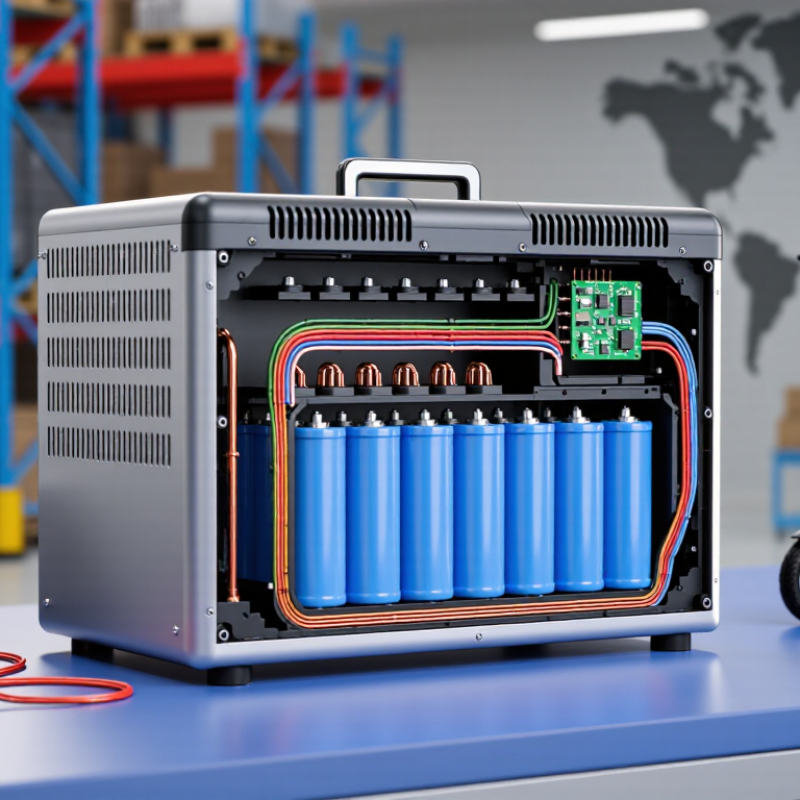
A lithium battery pack is a group of lithium cells connected to deliver usable electrical power. It combines cells, wiring, protection circuits, and a protective enclosure. The cells store energy through reversible chemical reactions. A battery management system monitors voltage, temperature, and current. It can balance cells and stop unsafe charging or discharging. Without this control, performance and service life may suffer. The outer case protects the pack from vibration, moisture, and accidental impact.
For global sourcing, buyers should define voltage, capacity, dimensions, and operating temperature clearly. Connector type and cable length also affect installation. A credible supplier should provide test reports, safety data, and traceable production records. These documents help buyers compare products beyond attractive quotations. Specifications alone can mislead. Real output changes with temperature, discharge rate, and aging. A pack rated for 10 hours may deliver less under heavy equipment loads.
Experienced buyers inspect sample packs before approving larger orders. They check weight, labels, weld quality, insulation, and charging behavior. Small faults can become expensive field failures. No design is perfect. A pack may lose capacity after repeated heat exposure, even when it passes initial testing. Packaging and shipping conditions deserve equal attention. Destination rules differ, so required markings and transport documents must be verified early. Clear communication about testing methods reduces misunderstandings between engineers, suppliers, and import teams.
Global sourcing depends on predictable energy, not only low purchase prices. Lithium battery packs support this goal through high energy density, stable output, and flexible integration. A compact pack can power warehouse scanners, portable equipment, and backup systems during long shipping cycles. In practical sourcing work, buyers should review cell quality, protection circuits, cycle data, and traceable test records. A missing document can delay an otherwise ready shipment.
Battery packs also simplify international supply planning. Standardized pack designs can fit different devices and reduce repeated engineering work. Suppliers should provide clear specifications, safety testing evidence, packaging details, and transport information. Requirements may vary by destination, so buyers must verify current customs, labeling, recycling, and transport rules. A lower unit price can mislead. Weak documentation may create higher costs later. No sourcing plan is perfect, especially when forecasts change suddenly.
For international buyers, a lithium battery pack offers more than compact energy storage. The International Energy Agency’s Global EV Outlook 2024 reports that electric-car battery demand exceeded 750 GWh in 2023. Demand also grew by about 40% year on year. This expanding market can support broader supplier access, clearer price comparisons, and steadier production planning. High energy density may reduce carton size, shipping volume, and replacement frequency. Small details matter. A smaller pack can simplify warehouse handling and field installation.
The numbers are persuasive. The risks still deserve attention. The IEA’s Global Critical Minerals Outlook 2024 notes that battery-material refining remains geographically concentrated. Buyers should avoid relying on one region or one production site. Request batch-level capacity data, cycle-life results, temperature testing, and traceable quality records. Transport documents should include applicable UN 38.3 test evidence, while safety evaluation may reference IEC 62133-2 requirements. These checks improve reliability, but they do not guarantee perfect performance. Cold storage, uneven charging, and long idle periods can reduce real-world capacity. A lower quotation may therefore become an expensive compromise. My practical view is simple: compare total ownership cost, not only watt-hours or unit price. No report can predict every warehouse, climate, or operator habit. That limitation should remain visible during sourcing reviews.
Why Choose a Lithium Battery Pack for Global Sourcing?
Supplier selection matters more than the battery label. The International Energy Agency’s Global EV Outlook 2024 reported that global electric-vehicle battery demand reached about 750 GWh in 2023, rising approximately 40% year on year. BloombergNEF’s 2023 Battery Price Survey recorded an average lithium-ion pack price of 139 dollars per kWh, a 14% decline from 2022. These figures show market momentum, not supplier reliability. Numbers can mislead.
Before choosing a supplier, request verifiable production evidence. Check quality systems, factory audits, cell traceability, and independent test reports. Confirm compliance with applicable transport and product standards, including UN 38.3 and relevant IEC requirements. Ask for cycle-life results under your actual temperature, load, and charging conditions. A brochure rarely reveals capacity loss at 45°C. Inspect the battery management system, protection settings, capacity tolerance, and firmware control. Test it yourself.
Global sourcing also requires practical risk checks. Compare warranty exclusions, replacement procedures, spare-part availability, lead times, and customs documentation. Ask whether the quoted capacity is nominal or usable. Confirm the supplier’s monthly output with recent records, not promises. A pilot order can expose inconsistent welding, weak packaging, or delayed technical responses. The cheapest pack may become expensive after rework, downtime, and rejected shipments. This is easy to underestimate. A supplier should explain raw-material traceability and end-of-life handling clearly. I would still leave room for doubt: even a strong audit represents one moment, not permanent performance.
Battery pack cost is a key factor when evaluating global suppliers. Lower benchmark prices can improve sourcing flexibility, but buyers should also verify safety certifications, cell traceability, warranty terms, production capacity, and total landed cost.
Global average lithium-ion battery pack price, 2015–2024, in USD per kWh. Source: BloombergNEF Lithium-Ion Battery Price Survey 2024.
Why choose a lithium battery pack for global sourcing? The answer depends on compliance, safety, and logistics—not capacity alone. The International Energy Agency’s Global EV Outlook 2024 reports that electric-car battery demand exceeded 750 GWh in 2023, rising about 40% year on year. This growth increases supplier pressure and makes traceable documentation essential.
A responsible sourcing review should request the UN 38.3 test summary, cell specifications, production records, and pack-level safety data. IEC 62133-2 testing helps evaluate risks such as overcharge, short circuits, vibration, and thermal abuse. A battery management system should also control voltage, temperature, and charging limits. A certificate is not a guarantee. During supplier audits, one weak protection component can undermine an otherwise impressive test file.
Logistics create another practical challenge. The IATA Dangerous Goods Regulations generally restrict standalone lithium-ion batteries to cargo aircraft and limit their state of charge to 30% under applicable conditions. Packaging must prevent movement, terminal damage, and accidental short circuits. Markings and transport documents must match the actual battery configuration. The IEA data shows strong market momentum, but regulations still differ by destination. A spreadsheet can hide a weak cell, an incomplete test record, or an unsuitable route. Suppliers should verify requirements before production, not after cartons reach the warehouse.
| Data Dimension | Global Requirement or Benchmark | Typical Scope | Evidence to Request from a Supplier | Sourcing Significance |
|---|---|---|---|---|
| Battery chemistry | Lithium-ion rechargeable cells, including lithium nickel manganese cobalt oxide and lithium iron phosphate chemistries, must be selected according to the required energy density, cycle life, thermal behavior, and operating temperature. | Consumer electronics, industrial equipment, mobility products, energy storage, and medical devices. | Cell specification sheet, chemistry declaration, safety data, rated capacity, nominal voltage, and operating limits. | The chemistry affects product performance, shipping classification, enclosure design, and end-market certification. |
| UN 38.3 transport testing | Lithium cells and batteries offered for international transport generally require successful testing under the UN Manual of Tests and Criteria, Part III, subsection 38.3. | Air, sea, road, and rail transport of lithium cells and batteries. | UN 38.3 test summary identifying the tested cell or battery type, rated watt-hours, test revision, and manufacturer information. | Without the required test evidence, carriers, customs authorities, or logistics providers may reject the shipment. |
| Air transport energy threshold | For air-shipping classification, lithium-ion battery energy is calculated in watt-hours: Wh = nominal voltage × ampere-hours. Batteries above 100 Wh generally require stricter dangerous-goods procedures and are not accepted as ordinary passenger baggage. | Standalone batteries, batteries packed with equipment, and batteries contained in equipment. | Wh calculation, packing instruction classification, shipper declaration where applicable, and carrier acceptance confirmation. | Battery capacity directly influences freight cost, available routes, packaging, documentation, and lead time. |
| Air-cargo state of charge | Under current international air-transport rules, many standalone lithium-ion battery shipments must be offered at a state of charge not exceeding 30%, subject to the applicable packing instruction and carrier requirements. | Standalone rechargeable lithium-ion batteries transported by air. | Packing instruction, battery SoC confirmation, dangerous-goods documentation, and carrier approval if required. | A documented pre-shipment discharge process can reduce rejection risk and improve air-freight planning. |
| International safety standard | IEC 62133-2 addresses safety requirements and tests for portable sealed secondary lithium cells and batteries used in portable applications. | Portable rechargeable battery packs and products using them. | Independent laboratory test report, certificate or CB scheme documentation, cell model identification, and production configuration. | Recognized safety testing can support market access and reduce repeated evaluation by distributors or importers. |
| Industrial battery safety | IEC 62619 specifies safety requirements and tests for secondary lithium cells and batteries used in industrial applications. | Stationary systems, automated equipment, motive applications, and other industrial battery systems. | Applicable test reports, battery-system risk assessment, BMS specifications, and protection-device validation. | The standard helps buyers assess protection against overcharge, over-discharge, short circuit, and abnormal operating conditions. |
| Battery management system | A suitable BMS should monitor cell voltage, pack current, temperature, state of charge, and fault conditions, with protection limits matched to the cell specification. | Multi-cell battery packs and rechargeable systems with electronic controls. | BMS schematic, protection thresholds, balancing method, firmware revision, fault-response test records, and communication protocol. | A verified BMS improves safety, usable capacity, service life, and compatibility with the finished product. |
| European market obligations | Products placed on the European Union market may be affected by the Batteries Regulation (EU) 2023/1542, including requirements related to sustainability, labeling, producer responsibility, and battery information. | Portable batteries, electric-vehicle batteries, industrial batteries, and products containing batteries. | Material and supply-chain data, labeling artwork, recycling information, due-diligence records, and conformity documentation where applicable. | Compliance planning should begin before mass production because documentation and labeling requirements can affect product design. |
| United States market access | U.S. requirements may include applicable transportation rules, product-safety evaluations, labeling, recycling obligations, and state-level requirements. The exact obligation depends on product type and destination. | Imported battery packs, consumer products, industrial equipment, and energy-storage systems. | Product classification, transport documents, safety reports, labels, recycling information, and destination-state compliance review. | A country-specific compliance matrix prevents a product approved for one U.S. state or use case from being incorrectly treated as universally compliant. |
| Packaging and short-circuit protection | Cells and batteries must be protected against damage, movement, and accidental short circuit during transport. Packaging must comply with the applicable dangerous-goods packing instruction. | All international shipments, especially loose cells and standalone battery packs. | Packaging specification, drop or vibration validation where applicable, terminal protection method, inner-pack design, and package photographs. | Correct packaging reduces fire, damage, leakage, customs, and carrier-rejection risks. |
| Dangerous-goods labeling | Depending on the transport mode and classification, shipments may require lithium battery marks, Class 9 dangerous-goods labels, UN identification numbers, handling labels, and documentation. | Air, sea, road, and multimodal shipments. | Approved label artwork, package marking procedure, shipping declaration, emergency contact details, and trained personnel records. | Accurate marks and documents help maintain customs clearance and uninterrupted delivery schedules. |
| Sea-freight planning | Sea transport remains subject to the International Maritime Dangerous Goods Code, including classification, packaging, marking, documentation, and stowage requirements. | Containerized and multimodal shipments of lithium cells and batteries. | IMDG classification, dangerous-goods declaration, container packing certificate where required, and carrier booking approval. | Sea freight can reduce transport cost for large volumes but usually requires longer planning and document lead times than air freight. |
| Traceability and quality control | A controlled battery supply chain should identify cell lots, production dates, pack configuration, test results, firmware versions, and final inspection status. | All battery packs, especially customized or high-volume products. | Incoming inspection records, cell matching data, capacity and internal-resistance results, serial-number records, and corrective-action reports. | Traceability supports recalls, warranty analysis, root-cause investigations, and consistent production quality. |
| End-of-life management | Many jurisdictions require battery collection, recycling, producer registration, or financing of end-of-life management, with obligations varying by market and battery category. | Imported and locally sold battery-powered products. | Recycling symbols, dismantling information, material composition, producer-responsibility records, and market-specific registrations. | Early planning can reduce compliance costs and support environmentally responsible global sourcing. |

Note: Transport and market-access requirements depend on battery chemistry, watt-hour rating, configuration, packaging, destination, and shipping mode. Regulations and carrier policies should be verified for each shipment before dispatch.


For those larger-sized parts, or smaller quantity runs, we have 2 independent powder coat booths and ovens. The quality, durability and affordability of today’s powder coating finishes make this the process of choice for world-class companies.
Powder coating advantages over other forms of coating are many. Materials used in the Powder coating process can be metals and non-metals that come in a multitude of thicknesses, textures, colors, etc. Another of Powder coating’s biggest advantages over conventional coatings is its ability to create finishes in many different textures. Powder Coating Booths allow us the ability to apply these advantages to large products.
Tri-State Fabricators runs a full-service conveyor line for painting. Wet painting can provide protection or decoration to many different part styles. From start to finish, every project is easier to undergo random and point-based inspection by our skilled painting team.
Advantages to our Wet Paint Line are these lines start with product prep and ends with a thorough inspection of a high quality finished product. Our ability to complete large and small projects with a superior finish and doing so in a timely and economical fashion. This passes along the savings in production to our customers. When powder coating ins not an option, our Wet Paint Line gets the job done right the first time.
When the parts get big and heavy we roll-out our custom paint racks and oversize booth. By utilizing our partnerships with all the major paint brands, we can match virtually any color with wet paint.
The advantages of having access to a Wet Paint Booth are many. Large projects of many different shapes can be loaded into the booth. The Wet Paint Booth offers an environment that is much more controlled than a typical parts painting operation.
Not only are they used because of their controlled environment, but they’re are also advantageous when it comes to applying paint to parts that are needed in industries that require specialty coatings such as medical, aerospace, etc.
Our military forces have some very high standards when it comes to the finish of their vehicles and equipment. From the first pre-treatment step to final coat, it takes a great deal of knowledge and experience to protect the men and women of our armed forces. They deserve only the best, and Tri-State Fabricators provides it.
All of our processes are closely monitored by our staff and management teams. Both of which are highly trained in the processes of metal fabrication and finishing. Tri-State Fabricators’ goal is to always fully satisfy each and every customer, including the military. We will always put a 110% into what we do.
Abrasive media blasting is an excellent way to remove old paint, rust, and increase the paint/powder adhesion. Glass beads produce a much smoother and brighter finish than angular abrasives; leaving the part clean yet without any dimensional change. Chemically inert and environmentally friendly, we can recycle our beads approximately 30 times; making them a more preferred method of metal cleaning or surface finishing.
Advantages to Glass Bead Blasting are many. Glass bead blast media is used when a project is needing rough surfaces need to become smooth for applications of coatings such as paint. It is typically used to clean paint and rust from a product surface without deforming the surface it is being used on. Overall, compared to many other blasting media, Glass Bead Blasting is a very economical choice and those savings are always passed on to our customers.
Tri-State Fabricators utilize a zinc phosphate wash to clean and etch the material to ensure the best paint adhesion possible. The unique design of our 3-stage wash system does the work like a 5-stage. From Cleaning and rinsing to conversion coating and post-treatment, Our Part Washing process is a complete service and works throughout the fabrication service and the finishing service.
Along with the previously mentioned benefits, Curing is a vital chemical reaction that leaves the product finish hard and relatively safe from mild abrasion and aggressive corrosion. This process can be done in more than one way; ambient air-dry or in curing ovens at temps that exceed 240°.
From fixing paint mistakes (someone else’s of course) to simply cleaning our paint line hooks, our burn-off oven is put to good use. After a quick burn-off, a little clean up, and a fresh coat of paint, your parts will look better than new.
Why does our Burn-Off Oven work so well? Because super heating the air around parts turns the materials into ashes. From paint and powder coatings to rubber and machining oils, high temps do the job without degrading the integrity of the part.
Masking is a vital part of producing high quality products. We have die-cut masking patterns to protect machined surfaces as well as a wide range of plugs and caps to protect threaded holes and bolts. We provide permanent and temporary masking.
Masking allows the selected sections of a product to be protected from a fabrication or finishing service. This can be with both chemicals when etching and tapes, paints when only finishing just a section of the product. Masking is great in aiding the customization process of a project.
Screen printing is a photographic process that transfers artwork onto a porous nylon screen which allows colored ink to flow through the screen and be deposited on an aluminum or plastic component. We can generally have just about any design created onto a screen for your parts.
Some of the advantages of Screen Printing are, brand recognition for your business displaying on your products, assembly instructions, product warnings/hazards, etc. Tri-State Fabricators produces Screen Printing of the highest quality so you know it’s durable.
Metal Finishing is the art of treating the exterior portion of product, often metal but can also be made of other materials, so that the surface is clean and free of any debris. Then the process of applying coats or either paint of powder coat takes place. This coating process improves the quality of the product in both appearance and resistance to wear and corrosion.
Tri-State Fabricators, Inc., understands that a project typically isn’t complete until a high-quality finish has been added to your product. This is why our painting and powder coating teams continuously inspect the products throughout the Metal Finishing process.