Why Choose Long Windows for Global Building Projects?
Global building projects involve more than aesthetic decisions. They must respond to climate, building codes, transport limits, and daily human use. Long Windows can create broad daylight lines across offices, hotels, schools, and homes. Yet their value depends on careful design, not impressive dimensions alone. A 3.6-meter glazed opening may brighten a corridor, but it can also increase heat gain and cleaning demands. This balance deserves practical attention.
Architects, façade engineers, and contractors assess orientation, glass performance, frame strength, drainage, and local installation skills. On a coastal site, salt-laden air may challenge exposed hardware. In a cold region, poor edge insulation can produce condensation beside the frame. Reliable specifications should identify thermal values, wind resistance, safety glazing, and maintenance access. Independent testing and documented supplier performance add confidence, especially when teams work across languages and time zones. Site mock-ups can reveal alignment problems before hundreds of units arrive.
The strongest case for Long Windows is therefore project-specific. They can connect occupants with gardens, streets, or distant views, while supporting a calm, spacious interior. However, not every wall needs a continuous glass band. Smaller openings may perform better in harsh climates or privacy-sensitive rooms. That is an uncomfortable point, but it improves decision-making. This article examines why long window systems suit some global projects, how professionals evaluate their risks, and where another solution may be wiser. Good design is not about making glass longer. It is about making performance dependable.
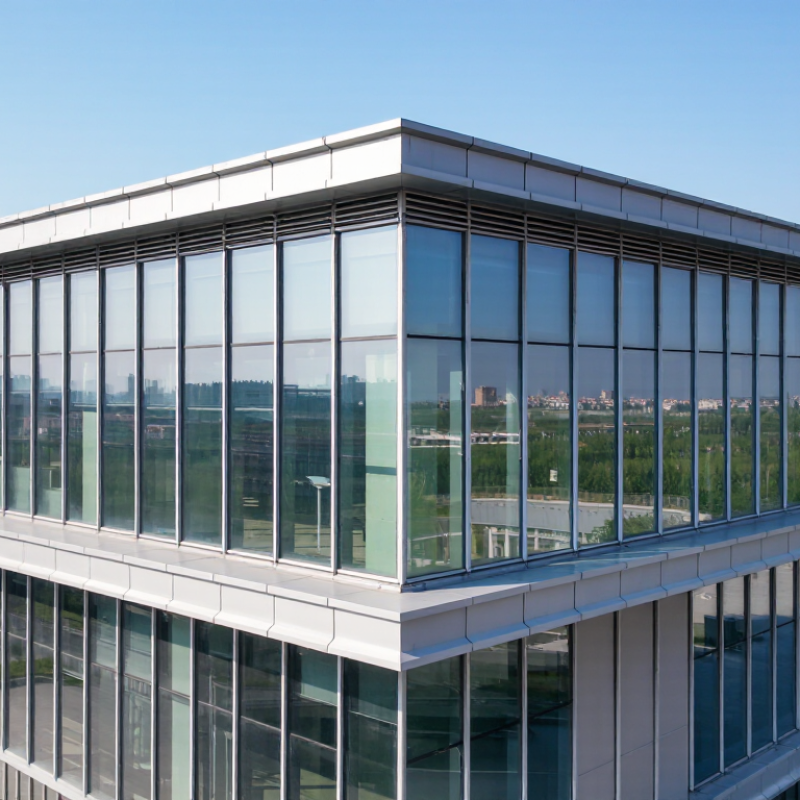
Long Windows Defined: 20–40% Window-to-Wall Ratios in Practice
Why Choose Long Windows for Global Building Projects?
Long Windows Defined: 20–40% Window-to-Wall Ratios in Practice
Long windows are not simply oversized openings. In practice, they often create a window-to-wall ratio between 20 and 40 percent. This range can provide useful daylight while preserving the wall’s thermal and structural role. A 20 percent ratio may suit a hot, bright climate. A 40 percent ratio can support deeper daylight in offices or apartments. The right figure depends on orientation, latitude, glazing performance, and room depth. It is a starting point, not a promise.
On a coastal project, a 30 percent ratio may bring soft morning light through a narrow façade. On a west-facing elevation, the same area can create glare and afternoon heat. Shading changes everything. External louvers, low-emissivity glass, operable sections, and insulated frames affect the final result. So does window height. Tall openings can spread light farther across a floor, while low sills improve views and ventilation. Small details matter. They often decide comfort.
Reliable design checks daylight, solar gain, overheating, condensation, acoustic needs, and cleaning access. Local energy codes should guide the final specification across different climate zones. I would not treat 40 percent as automatically better. More glass can increase cooling loads, embodied impacts, and maintenance demands. Early simulation and mock-up testing can reveal these risks. Yet models remain imperfect. Occupants open blinds, furniture blocks light, and weather changes. A practical design leaves room for those awkward realities, instead of trusting a perfect ratio alone.
Why Choose Long Windows for Global Building Projects?
Long Windows Defined: 20–40% Window-to-Wall Ratios in Practice
Window-to-wall ratio (WWR) is the percentage of an exterior wall area occupied by windows. Based on a reference exterior wall area of 1,000 m², a 20% WWR provides 200 m² of glazing, while a 40% WWR provides 400 m². Long windows can use this glazing area in wider horizontal openings to support daylight distribution and exterior views, while the appropriate ratio depends on climate, orientation, shading, insulation, and energy-performance requirements.
Daylight Metrics: EN 17037 Illuminance Targets for Extended Glazing
Why Choose Long Windows for Global Building Projects?
Long windows can spread daylight deeper across a room, especially when placed near work areas. Yet a larger opening does not guarantee better visual comfort. In daylight reviews, I have seen bright window edges beside dim rear desks. The geometry matters more than the glass area alone.
EN 17037 assesses daylight provision using target illuminance levels, commonly 300 lux, 500 lux, or 750 lux. The assessment considers how much of the reference plane reaches the target during daylight hours. A practical design aim is often 300 lux across at least half the evaluated area for half the daylight period. Long windows can support this distribution, but interior depth, ceiling reflectance, shading, and orientation remain critical. Climate also changes the answer. A solution for northern Europe may cause overheating in a tropical office. The IEA reports that buildings consume about 30% of global final energy, making daylight control relevant to lighting and cooling demand.
Tips: Model the whole room, not only the façade. Test glare near the window and daylight at the rear desk. Include local weather files. Review both sunny and cloudy hours. Do not trust one perfect render. EN 17037 results should be checked against real occupancy patterns, blinds, furniture, and seasonal conditions. Some assumptions will be wrong. That is useful. It shows where the design needs another test.
Sources: EN 17037:2018, Daylight in Buildings; International Energy Agency, Buildings, 2024.
Energy Trade-Offs: DOE Data on U-Values, Solar Gain, and Glazing
Long windows can make a global building feel brighter and more connected to its surroundings. Yet glazing changes the energy balance. The U.S. Department of Energy states that windows can represent 25–30% of residential heating and cooling energy use. A lower U-value reduces heat transfer through the glass and frame. However, large areas still increase total heat flow.
Consider a 3-by-1.8-meter window. Its 5.4 square meters can admit useful winter sun, but also create summer overheating. Solar heat gain coefficient, or SHGC, measures this effect. Higher SHGC can support cold-climate heating, while lower SHGC usually helps hot climates. DOE guidance recommends evaluating U-factor and SHGC together, not separately. That detail is often missed.
The National Fenestration Rating Council reports these values through standardized product ratings, allowing designers to compare assemblies more reliably. Lawrence Berkeley National Laboratory’s WINDOW modeling tools also show how frame depth, glass layers, coatings, and spacer design affect performance. For a long façade, a low-e double-glazed unit may not perform like a triple-glazed unit under the same climate conditions. Orientation matters too. East and west façades can receive difficult morning and afternoon sun.
The calculation is never perfect. Internal blinds may remain closed, reducing daylight benefits. A carefully modeled window can still perform poorly when shading controls are ignored. Regional weather files, installation quality, and occupant behavior deserve equal attention.
Facade Design: ASHRAE 90.1 Criteria for Global Window Performance
Why Choose Long Windows for Global Building Projects?
Facade Design: ASHRAE 90.1 Criteria for Global Window Performance
Long windows can bring deeper daylight, wider views, and a lighter facade appearance. Yet larger glass areas also increase heat transfer and solar gain. ASHRAE 90.1 evaluates fenestration through factors such as U-factor, solar heat gain coefficient, visible transmittance, and air leakage. These values should match the project’s climate zone, orientation, and building type.
ASHRAE 90.1 is not a universal global building law. It is a technical reference that may be adopted or adapted by local authorities. A reliable design team should confirm the applicable edition and compare it with regional energy codes. Window performance also depends on frames, spacers, shading, installation quality, and perimeter seals. A strong glass specification can still fail when thermal bridges remain around the opening. Whole-building energy modeling is more dependable than judging glass alone.
Tips: Test long-window layouts on east and west elevations early. Review summer glare beside winter heat loss. Keep realistic interior blinds in the model. It is easy to promise daylight benefits and overlook cooling demand. That mistake deserves a second review. For global projects, document U-factor and SHGC by assembly, not by glass only. Confirm laboratory ratings, field tolerances, and local compliance before construction.





