


Why Choose Melamine Faced Plywood for Global Projects?
Global construction is demanding more than attractive surfaces. Projects need stable dimensions, consistent quality, faster installation, and predictable maintenance. Melamine Faced Plywood responds to these needs with a decorative resin surface bonded to a strong plywood core. It offers scratch resistance, easier cleaning, and uniform appearance across furniture, interiors, retail fixtures, and transport spaces.
Industry data supports this direction. The FAO Forestry Production and Trade database records global wood-based panel production at hundreds of millions of cubic metres annually. Its 2023 Forest Products Annual Market Review also highlights Asia-Pacific’s dominant role in panel manufacturing and consumption. Meanwhile, Grand View Research values the global plywood market at approximately USD 57.8 billion in 2023. These figures suggest strong international demand, but they do not guarantee equal product quality.
Dr. Nadir Ayrilmis, a recognized wood-composites researcher, states, “Surface performance cannot compensate for a weak or unsuitable core.” That warning matters on global projects. A panel may look perfect under showroom lighting, yet fail around poorly sealed edges, excessive humidity, or careless handling. Project teams should verify core composition, formaldehyde class, surface wear resistance, thickness tolerance, and certification before ordering. Small details matter.
Melamine Faced Plywood is not a magic board. It is a specification-driven material. When manufacturers provide traceable documentation and consistent production controls, it can reduce finishing work, simplify cleaning, and create a reliable visual standard across different locations. The right choice still depends on climate, use intensity, design requirements, and installation practice.
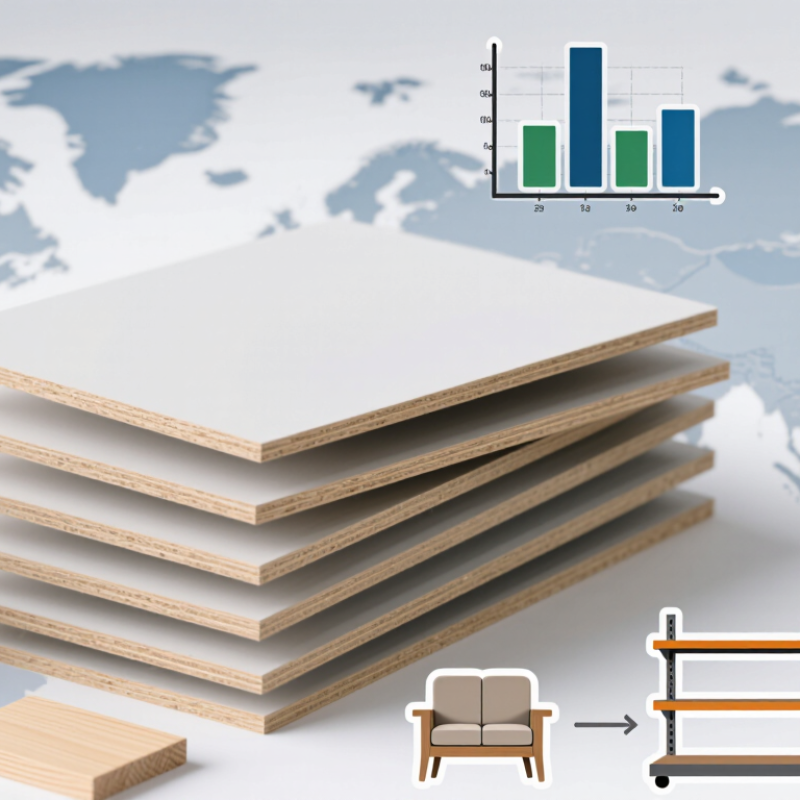
Melamine faced plywood is an engineered panel with a plywood core and a decorative paper layer saturated with melamine-formaldehyde resin. Heat and pressure bond this layer to one or both faces. The result feels smooth, looks consistent, and resists everyday stains, moisture splashes, and abrasion better than unfinished plywood. It is not solid melamine, though. The plywood core still controls much of its strength, screw holding, and dimensional stability.
The USDA Forest Products Laboratory describes plywood as cross-laminated veneers bonded in alternating directions. This structure helps panels perform reliably across changing climates. In practice, a cabinet panel shipped from a dry region to a humid site may still move slightly. That detail is easy to underestimate. Joint design, edge sealing, and acclimatization remain important. Surface appearance also depends on paper quality, pressing temperature, and core defects, not only on the printed pattern.
For global projects, documented emissions and sourcing matter. The U.S. Environmental Protection Agency sets a 0.05 ppm formaldehyde emission limit for hardwood plywood under TSCA Title VI. The European E1 classification uses a chamber limit of 0.124 mg/m³ under EN 717-1. These figures help buyers compare compliance evidence instead of trusting vague “low emission” claims. The FAO Global Forest Resources Assessment 2020 recorded about 4.06 billion hectares of forests worldwide, reinforcing the need for legal and traceable wood supply. Melamine faced plywood can simplify maintenance in offices, retail interiors, and accommodation spaces, but it is not waterproof. That distinction deserves attention.
Melamine faced plywood starts with carefully selected wood veneers. Each veneer is peeled or sliced, then dried to a controlled moisture level. Workers arrange the layers with alternating grain directions. This cross-grain structure improves strength and reduces movement. Thin adhesive lines bond the veneers under pressure. The result is a stable plywood panel.
The surface comes from decorative paper impregnated with melamine resin. During hot pressing, heat and pressure fuse this paper to the plywood. The resin hardens into a smooth, sealed finish. It can resist everyday scratches, stains, and moderate moisture exposure. However, it is not waterproof. Edge sealing still matters, especially in kitchens, laboratories, and humid regions. Factory teams usually inspect thickness, flatness, surface bonding, and moisture content. Some projects also require formal emission and performance testing.
Tips: Specify the core grade, panel thickness, surface texture, and acceptable color variation before production. Ask for samples from different batches. Lighting can change how the finish appears. Store panels flat, dry, and away from direct sunlight. Allow them to acclimate before installation. In my experience, rushed acclimatization causes avoidable movement later. I once underestimated edge protection on a high-use cabinet project. The faces remained clean, but exposed corners suffered early damage. This is a useful reminder: melamine quality cannot compensate for poor detailing.
Melamine faced plywood offers a practical balance of appearance, durability, and installation speed for global projects. Its factory-applied surface creates a consistent finish across panels, reducing color variation between production batches. This matters when furniture, wall panels, or commercial interiors are produced in different countries. The smooth coating also supports routine cleaning in offices, hotels, schools, and retail spaces.
Less site finishing means fewer delays. Workers can cut, edge, and assemble panels with limited painting equipment. That can reduce dust, drying time, and coordination problems between trades. Plywood provides a stable structural base, while the melamine layer resists everyday scratches, stains, and light abrasion. Shipping also becomes simpler when the panels arrive ready for fabrication. Small details matter here. Protected corners and moisture-resistant packaging can prevent expensive damage during long transport.
It is not a perfect material. Standard melamine faced plywood should not be treated as waterproof, especially at exposed edges or cut-outs. Humid climates may require sealed edges, suitable adhesives, and careful storage before installation. Performance also depends on the plywood grade, surface thickness, bonding quality, and formaldehyde classification. These specifications should be verified against the project’s local standards before ordering. A finish that performs well in a dry office may need more protection in a coastal hotel. That assumption can fail. Teams should test samples, review maintenance routines, and confirm that the selected panel matches the actual site conditions.
Common performance benchmarks used when specifying decorative melamine-faced panels for international projects
Melamine-faced plywood combines a factory-applied decorative surface with a structural plywood core. Typical specifications may include an E1 formaldehyde emission limit of no more than 0.124 mg/m³, stain resistance rated at level 5, light fastness rated at level 4 or higher, and abrasion resistance of at least 350 cycles. Exact requirements vary by region, product construction, and project specification.
Reference frameworks: EN 717-1, EN 14323, and common European decorative panel specifications.
In international construction, melamine faced plywood is used where interiors need a clean surface, stable panels, and predictable installation. Common applications include hotel wardrobes, office partitions, school furniture, retail shelving, kitchen cabinetry, and prefabricated wall units. It also suits healthcare interiors when the selected surface can withstand frequent cleaning. Site teams often choose it because panels arrive finished, reducing painting, drying time, and dust during fit-out.
The location still matters. In humid coastal projects, designers should specify suitable plywood grades, sealed edges, and tested moisture resistance. A decorative face alone does not make a panel waterproof. That assumption needs testing. The Global Status Report for Buildings and Construction 2023 states that buildings and construction create about 37% of global energy and process-related emissions. Efficient prefabrication and longer-lasting interior components can therefore support lower waste, although they do not solve every carbon issue. The FAO Yearbook of Forest Products 2023 continues to classify plywood within the major wood-based panel sector, showing its established role in global material supply. Procurement teams should verify legal timber documentation, emissions testing, fire performance, and local installation standards. Requirements differ across Europe, Asia, the Middle East, and North America. Small details matter. A poorly sealed cut edge, damaged corner, or incompatible cleaning chemical can shorten service life. In my experience, the best results come from matching the facing, core, adhesive, and maintenance plan to the building’s actual climate and use.
| International Project Area | Typical Locations | Common Applications | Typical Thickness | Suitable Exposure | Key Specification Checks |
|---|---|---|---|---|---|
| Residential interiors | Europe, North America, East Asia, Australia and the Middle East | Kitchen carcasses, wardrobes, shelving, storage units and interior partitions | 12–25 mm for furniture components; 6–12 mm for backs and doors | Dry interior | Low-emission formaldehyde classification, screw-holding strength, edge finishing and color consistency |
| Commercial offices | Global office fit-outs, coworking spaces and business centers | Workstations, reception counters, cabinets, acoustic wall elements and shelving | 16–25 mm for desks and cabinets; 9–18 mm for wall elements | Dry interior | Surface abrasion resistance, cleanability, dimensional stability and compliance with the project’s interior finish requirements |
| Hotels and serviced apartments | Urban hotels, resorts and long-stay accommodation projects worldwide | Guest-room furniture, minibar units, closet interiors, bathroom vanity carcasses and headboards | 16–25 mm for casework; 9–18 mm for decorative panels | Dry or humid interior | Use a moisture-resistant plywood core in humid areas; check edge sealing, stain resistance and cleaning-chemical compatibility |
| Retail and hospitality fit-outs | Shopping centers, restaurants, cafés and airports | Display shelving, counters, wall cladding, service stations and point-of-sale fixtures | 12–25 mm, depending on span and loading | Dry interior | Impact resistance, abrasion class, visible-face quality, fire-performance requirements and ease of replacement |
| Healthcare and education interiors | Hospitals, clinics, laboratories, schools and universities | Storage cabinets, classroom furniture, nurse stations, lockers and interior wall panels | 16–25 mm for heavy-use furniture; 9–18 mm for panels | Dry or controlled humid interior | Low-emission classification, cleanability, smooth sealed edges, resistance to frequent cleaning and project-specific fire requirements |
| Manufactured housing and modular construction | Prefab housing, modular offices and construction systems in Europe, Asia and Oceania | Built-in furniture, kitchen modules, wardrobes, service cupboards and interior partitions | 12–25 mm for modular components | Dry interior | Consistent panel dimensions, CNC machinability, repeatable drilling performance, packaging protection and moisture control during transport |
| Transport interiors | Rail coaches, ships, recreational vehicles and specialty vehicles | Cabinet fronts, partitions, storage modules and interior decorative panels | 9–18 mm for weight-sensitive components; 16–25 mm for structural casework | Controlled interior | Weight, vibration resistance, bonding quality, flame-smoke-toxicity requirements and compliance with transport-sector regulations |
| Wet-room supporting furniture | Bathrooms, laundry rooms, kitchens and coastal-region interiors | Vanity units, sink cabinets, utility storage and kitchen furniture near water sources | 16–25 mm for carcasses; 9–18 mm for doors and panels | Humid interior only | Specify a suitable moisture-resistant core, seal all cut edges and joints, and prevent standing water or prolonged direct wetting |
| Exterior or semi-exterior construction | Outdoor shelters, façades, balconies and exposed construction areas | Generally not recommended for exposed finished surfaces unless the complete panel system is specifically engineered for exterior use | Project-specific | Not for ordinary exposure | Melamine facing alone does not make plywood weatherproof; use a tested exterior system with suitable core, coating, joints, fasteners and drainage |
Buyers should evaluate quality through evidence, not surface appearance. A smooth white face can hide weak bonding, core voids, or uneven thickness. Request the technical datasheet, batch number, production date, and third-party test results. Check thickness tolerance, moisture content, screw-holding strength, surface abrasion, and edge quality. In practical inspections, inspect cut edges and drilled holes. These areas often reveal internal defects faster than the finished panel.
Formaldehyde compliance deserves special attention. The World Health Organization’s 2010 indoor-air-quality guideline sets a 30-minute formaldehyde limit of 0.1 mg/m³. For products entering the United States, EPA TSCA Title VI limits hardwood plywood emissions to 0.05 ppm. Ask for laboratory reports using recognized methods, such as ASTM E1333 or ASTM D6007. A supplier’s declaration alone is not enough. It may describe the factory, not the delivered batch.
For European projects, buyers should review EN 13986 documentation and the required emission class. Also verify the plywood standard, adhesive type, fire performance, and durability rating. Chain-of-custody records can support responsible sourcing claims, but certificates must match the actual manufacturer and product code. Do not accept an expired report. I have seen projects delayed because test samples used a different core structure. That mistake is easy to prevent. Confirm sample identity, testing date, laboratory accreditation, and packaging labels before shipment.


For those larger-sized parts, or smaller quantity runs, we have 2 independent powder coat booths and ovens. The quality, durability and affordability of today’s powder coating finishes make this the process of choice for world-class companies.
Powder coating advantages over other forms of coating are many. Materials used in the Powder coating process can be metals and non-metals that come in a multitude of thicknesses, textures, colors, etc. Another of Powder coating’s biggest advantages over conventional coatings is its ability to create finishes in many different textures. Powder Coating Booths allow us the ability to apply these advantages to large products.
Tri-State Fabricators runs a full-service conveyor line for painting. Wet painting can provide protection or decoration to many different part styles. From start to finish, every project is easier to undergo random and point-based inspection by our skilled painting team.
Advantages to our Wet Paint Line are these lines start with product prep and ends with a thorough inspection of a high quality finished product. Our ability to complete large and small projects with a superior finish and doing so in a timely and economical fashion. This passes along the savings in production to our customers. When powder coating ins not an option, our Wet Paint Line gets the job done right the first time.
When the parts get big and heavy we roll-out our custom paint racks and oversize booth. By utilizing our partnerships with all the major paint brands, we can match virtually any color with wet paint.
The advantages of having access to a Wet Paint Booth are many. Large projects of many different shapes can be loaded into the booth. The Wet Paint Booth offers an environment that is much more controlled than a typical parts painting operation.
Not only are they used because of their controlled environment, but they’re are also advantageous when it comes to applying paint to parts that are needed in industries that require specialty coatings such as medical, aerospace, etc.
Our military forces have some very high standards when it comes to the finish of their vehicles and equipment. From the first pre-treatment step to final coat, it takes a great deal of knowledge and experience to protect the men and women of our armed forces. They deserve only the best, and Tri-State Fabricators provides it.
All of our processes are closely monitored by our staff and management teams. Both of which are highly trained in the processes of metal fabrication and finishing. Tri-State Fabricators’ goal is to always fully satisfy each and every customer, including the military. We will always put a 110% into what we do.
Abrasive media blasting is an excellent way to remove old paint, rust, and increase the paint/powder adhesion. Glass beads produce a much smoother and brighter finish than angular abrasives; leaving the part clean yet without any dimensional change. Chemically inert and environmentally friendly, we can recycle our beads approximately 30 times; making them a more preferred method of metal cleaning or surface finishing.
Advantages to Glass Bead Blasting are many. Glass bead blast media is used when a project is needing rough surfaces need to become smooth for applications of coatings such as paint. It is typically used to clean paint and rust from a product surface without deforming the surface it is being used on. Overall, compared to many other blasting media, Glass Bead Blasting is a very economical choice and those savings are always passed on to our customers.
Tri-State Fabricators utilize a zinc phosphate wash to clean and etch the material to ensure the best paint adhesion possible. The unique design of our 3-stage wash system does the work like a 5-stage. From Cleaning and rinsing to conversion coating and post-treatment, Our Part Washing process is a complete service and works throughout the fabrication service and the finishing service.
Along with the previously mentioned benefits, Curing is a vital chemical reaction that leaves the product finish hard and relatively safe from mild abrasion and aggressive corrosion. This process can be done in more than one way; ambient air-dry or in curing ovens at temps that exceed 240°.
From fixing paint mistakes (someone else’s of course) to simply cleaning our paint line hooks, our burn-off oven is put to good use. After a quick burn-off, a little clean up, and a fresh coat of paint, your parts will look better than new.
Why does our Burn-Off Oven work so well? Because super heating the air around parts turns the materials into ashes. From paint and powder coatings to rubber and machining oils, high temps do the job without degrading the integrity of the part.
Masking is a vital part of producing high quality products. We have die-cut masking patterns to protect machined surfaces as well as a wide range of plugs and caps to protect threaded holes and bolts. We provide permanent and temporary masking.
Masking allows the selected sections of a product to be protected from a fabrication or finishing service. This can be with both chemicals when etching and tapes, paints when only finishing just a section of the product. Masking is great in aiding the customization process of a project.
Screen printing is a photographic process that transfers artwork onto a porous nylon screen which allows colored ink to flow through the screen and be deposited on an aluminum or plastic component. We can generally have just about any design created onto a screen for your parts.
Some of the advantages of Screen Printing are, brand recognition for your business displaying on your products, assembly instructions, product warnings/hazards, etc. Tri-State Fabricators produces Screen Printing of the highest quality so you know it’s durable.
Metal Finishing is the art of treating the exterior portion of product, often metal but can also be made of other materials, so that the surface is clean and free of any debris. Then the process of applying coats or either paint of powder coat takes place. This coating process improves the quality of the product in both appearance and resistance to wear and corrosion.
Tri-State Fabricators, Inc., understands that a project typically isn’t complete until a high-quality finish has been added to your product. This is why our painting and powder coating teams continuously inspect the products throughout the Metal Finishing process.

