


Why Choose Metallized Film Capacitors for Global Sourcing?

Global sourcing decisions often begin with price, availability, and supplier reach. Metallized Film Capacitors require a wider view. Their performance depends on dielectric material, metallization quality, self-healing behavior, winding tension, and sealing methods. These details can decide whether a capacitor survives a hot inverter cabinet or fails after repeated voltage pulses.

John D. Prymak, a recognized capacitor-industry specialist, has emphasized, “Reliability begins with understanding the application, not merely selecting a part.” That principle fits global procurement closely. A capable supplier should explain rated voltage, capacitance tolerance, dissipation factor, insulation resistance, and expected service life. Clear test records matter. So do traceable materials and consistent production controls.

Look closely.

A sourcing team may compare two visually similar components. One may use thicker metallization, better edge margins, and stronger moisture protection. The difference might appear only after thermal cycling, vibration, or thousands of switching events. Metallized Film Capacitors can also offer low losses, compact construction, and reliable self-healing performance for power electronics, renewable-energy systems, motor drives, and industrial controls.

Still, global sourcing is not automatically safer or cheaper. Freight delays, communication gaps, changing specifications, and weak after-sales support can erase an attractive quotation. I may be placing too much confidence in certifications alone; factory audits and sample testing remain necessary. This article examines why buyers choose Metallized Film Capacitors internationally, while questioning the assumptions behind cost, quality, and supplier reliability. It focuses on practical evidence, not impressive claims.
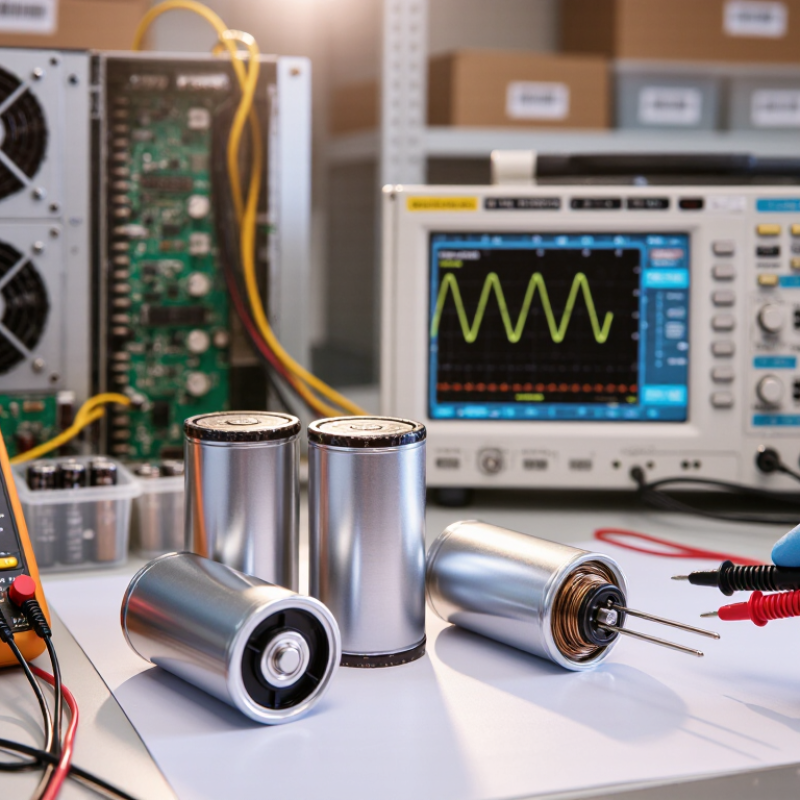
Why Choose Metallized Film Capacitors for Global Sourcing?

What Are Metallized Film Capacitors?

A metallized film capacitor is a passive component made from a thin polymer film coated with an extremely fine metal layer. The film commonly uses polypropylene or polyester. It is wound or stacked, then sealed inside a protective case. When voltage is applied, the metal coating stores electrical energy across the insulating film.

The metal layer is remarkably thin. If a small defect causes breakdown, the surrounding coating can evaporate and isolate the damaged area. Engineers call this self-healing. It helps maintain operation, but it does not make the capacitor indestructible. That distinction matters during global sourcing. Temperature, humidity, ripple current, and mechanical stress can gradually reduce performance. According to Grand View Research’s 2024 Film Capacitor Market report, the global market was estimated at about USD 2 billion in 2023, with continued growth expected through 2030. The report connects demand with power electronics, renewable energy, and electric mobility.

Electrical specifications need close reading. Capacitance alone is insufficient. Buyers should compare rated voltage, dielectric type, maximum temperature, dissipation factor, insulation resistance, and expected service life. IEC 60384-1 provides a widely used framework for fixed capacitors and supports more consistent qualification. Still, one assumption deserves review: a larger capacitance value is not automatically better. A compact capacitor with lower losses may outperform a larger part in a high-frequency circuit. Endurance data under actual operating conditions remains more valuable than a convenient catalog number.


How Metallized Film Capacitors Work

A metallized film capacitor stores electrical energy inside a thin plastic film. One surface carries an extremely light metal coating, usually aluminum or zinc. This coating acts as the electrode. The film separates the electrodes and prevents direct current from passing through.

When voltage reaches the capacitor, electrons gather on one metallized layer. The opposite layer develops an equal charge with reversed polarity. Together, these layers create an electric field inside the film. Capacitance depends on film area, thickness, and dielectric properties. Thinner films usually provide higher capacitance, but manufacturing tolerance becomes more demanding.

A useful feature is self-healing. If a tiny defect causes a local breakdown, the nearby metal coating vaporizes around the fault. The damaged spot becomes electrically isolated, while the capacitor continues operating. The event is small, but repeated faults can reduce service life. That detail is easy to overlook.

In practical testing, temperature, humidity, ripple current, and switching frequency all affect performance. I would not select a part by capacitance alone. Engineers also check voltage derating, dissipation factor, insulation resistance, and pulse capability. A capacitor may look suitable on paper yet heat unexpectedly in a real circuit. Metallized film designs offer low losses and stable operation, but their performance depends heavily on construction quality and application conditions. This matters when sourcing globally, because test methods and quality controls must be compared carefully.

Key Benefits for Global Sourcing

Global sourcing teams increasingly need capacitors that remain stable across demanding power systems. Metallized polypropylene film capacitors offer low losses, high insulation resistance, and strong pulse performance. Their self-healing structure can isolate minor dielectric faults, supporting longer service life.

That matters. The International Energy Agency’s Global EV Outlook 2024 recorded almost 14 million electric car sales in 2023. Its Renewables 2024 report also noted about 510 GW of renewable capacity additions that year.

These systems require reliable DC-link and inverter components. Film capacitors fit this demand because they tolerate high ripple currents and frequent switching.

Their lighter construction can also reduce cabinet weight and shipping costs.

Global sourcing brings additional advantages. Standardized film designs simplify qualification across multiple factories. Suppliers can provide voltage, capacitance, and terminal options for regional equipment platforms. IEC 61071 testing gives buyers a useful technical reference during audits. Still, the choice is not automatically safer. Humidity, edge damage, winding tension, and poor storage can reduce field reliability. A low quoted price may hide stricter inspection needs.

Not always. Experienced procurement teams should request endurance data, batch traceability, accelerated-life results, and clear derating curves. They should compare landed cost, not unit price alone.

The analysis may feel incomplete without reviewing failure samples and logistics risks. That extra work often exposes weaknesses before production begins, although no sourcing plan removes every uncertainty.

Factors to Consider When Selecting Suppliers

Choosing a supplier for metallized film capacitors requires more than comparing unit prices. The film thickness, dielectric material, capacitance tolerance, and rated voltage must match the application. Ask for test data, not only a product sheet. Measure twice.

An experienced supplier should explain loss angle, insulation resistance, self-healing behavior, and temperature performance in practical terms. Request samples from regular production, then test them under expected voltage and heat. Small errors matter. A capacitor that performs well at room temperature may drift inside a sealed power supply. I have learned that sample approval means little without batch traceability and consistent inspection records.

Supplier reliability also depends on manufacturing discipline. Review quality certificates, calibration records, incoming material checks, and final electrical testing. Confirm how rejected units are isolated and reported. Production capacity deserves careful attention too. A low quotation may become expensive when delivery slips or packaging causes moisture damage. Check lead times, minimum order quantities, export documents, and protective packaging before signing an agreement. Factory audits can reveal details that online presentations miss, such as crowded storage areas or unclear lot labels. Some evaluations may feel excessive, but weak documentation is difficult to repair after a shipment leaves the factory. Ask how the supplier handles design changes, field complaints, and urgent replacement requests. Their response often shows more than polished marketing language.

Why Choose Metallized Film Capacitors for Global Sourcing? - Factors to Consider When Selecting Suppliers

Sourcing Factor Recommended Benchmark Why It Matters Evidence to Request Evaluation Priority
Dielectric Material Use polypropylene (PP) for low dielectric loss and strong pulse or AC performance; use polyester (PET) where compact size and cost efficiency are more important. The dielectric affects temperature capability, dissipation factor, insulation resistance, voltage endurance, and physical size. Material specification, dielectric-loss data, insulation-resistance results, and application recommendations. High
Self-Healing Capability Metallized-film construction should provide localized self-healing after minor dielectric breakdowns without requiring replacement of the entire capacitor. Self-healing can improve operational reliability and reduce the risk of catastrophic short circuits, although repeated faults may reduce capacitance over time. Self-healing test method, capacitance-loss limits after testing, and long-duration endurance reports. High
Capacitance Range Select suppliers capable of covering the required value range, commonly from nanofarads for filtering to hundreds of microfarads for DC-link and power applications. A wider qualified range can reduce the number of suppliers, simplify purchasing, and improve design continuity. Product data sheets, value-range charts, tolerance options, and sample measurement results. Medium
Rated Voltage Confirm rated DC or AC voltage, peak-voltage capability, ripple conditions, and required safety margin for the actual circuit. Voltage derating and transient exposure strongly influence service life, especially in inverters, motor drives, power supplies, and renewable-energy systems. Voltage-rating tables, impulse-test results, partial-discharge data where applicable, and application derating guidance. High
Temperature Performance Common product categories cover approximately 85°C, 105°C, or 125°C maximum operating temperature; select the rating with adequate thermal margin. Higher ambient and hotspot temperatures accelerate aging and can reduce expected operating life. Temperature-life curves, maximum hotspot guidance, thermal test reports, and storage-temperature limits. High
Electrical Losses Prioritize low dissipation factor and low equivalent series resistance for high-frequency or high-ripple-current applications. Lower losses reduce internal heating and help maintain efficiency in switching converters, filters, and resonant circuits. Dissipation-factor values at specified frequencies and temperatures, ESR data, and ripple-current curves. High
Applicable Standards The supplier should identify relevant IEC requirements, such as IEC 60384-1 for fixed capacitors and IEC 60384-14 for capacitors connected to the mains where applicable. Standards support consistent testing, safety assessment, and regulatory acceptance across international markets. Declaration of conformity, test reports from recognized laboratories, certification scope, and revision-controlled specifications. High
Quality Management A documented quality-management system certified to ISO 9001 is a practical baseline; automotive programs may require additional sector-specific controls. Controlled processes reduce variation in metallization, winding, end-spray, encapsulation, and final electrical testing. Current certificate, audit summary, process-control plan, nonconformance procedure, and corrective-action records. High
Reliability Testing Require endurance, damp-heat, temperature-cycling, insulation-resistance, and voltage-proof testing appropriate to the intended application. Laboratory endurance data helps distinguish stable designs from products that only meet initial specifications. Test conditions, sample size, duration, failure criteria, raw-data summaries, and periodic requalification records. High
Traceability Each production lot should be traceable to material batches, manufacturing date, inspection results, and shipment records. Traceability supports faster containment, root-cause analysis, warranty management, and regulatory reporting. Lot-code format, certificate of conformity, inspection records, retention policy, and recall procedure. High
Dimensional Compatibility Verify case dimensions, terminal spacing, lead configuration, mounting method, creepage, clearance, and vibration resistance before approval. Mechanical mismatch can create assembly delays, increased parasitic inductance, or insufficient electrical clearance. Controlled drawings, 3D models, tolerance tables, mounting instructions, and first-article inspection results. Medium
Minimum Order Quantity For initial qualification, seek sample quantities from approximately 20 to 100 pieces; negotiate production MOQ according to annual demand and custom tooling requirements. Flexible sampling lowers qualification risk, while predictable production quantities improve inventory planning. Sample policy, standard MOQ, custom-part MOQ, tooling charges, and price-break schedule. Medium
Lead Time and Capacity Compare quoted production lead time, monthly capacity, safety-stock policy, and recovery plan; standard products often have shorter lead times than custom designs. Stable supply is essential when capacitors are used in long-life equipment or products with limited second-source availability. Capacity statement, historical on-time-delivery data, production-loading policy, and business-continuity plan. High
Export and Packaging Controls Packaging should protect against moisture, mechanical shock, contamination, and terminal damage during international transport. Improper packaging can cause lead deformation, insulation damage, corrosion, or moisture-related failures before assembly. Packaging specification, moisture-control method, drop-test results, labeling format, and export documentation process. Medium
Environmental Compliance Confirm compliance with applicable substance restrictions, including RoHS and REACH requirements for the destination market. Compliance documentation reduces customs, customer-approval, and product-liability risks. Material declarations, restricted-substance test reports, supplier declarations, and change-notification procedures. High
Total Cost of Ownership Evaluate unit price together with freight, duties, tooling, testing, rejects, inventory, warranty exposure, and expected service life. The lowest quoted price may not provide the lowest installed or lifecycle cost if reliability and logistics performance are weaker. Incoterms, landed-cost model, warranty terms, defect-rate data, payment terms, and engineering-support charges. High
Note: The benchmarks shown are general sourcing guidelines. Final acceptance criteria should be based on the capacitor’s rated voltage, capacitance, frequency, ripple current, thermal conditions, mechanical design, destination-market regulations, and applicable product standards.

Applications and Sourcing Considerations by Industry

Why Choose Metallized Film Capacitors for Global Sourcing?

Metallized film capacitors serve demanding industrial applications because they offer stable capacitance, low losses, and reliable pulse handling. In motor drives, they support DC-link filtering and help reduce voltage ripple. Solar inverters and wind converters use them near switching stages, where heat and electrical stress remain constant. Their self-healing behavior can isolate minor dielectric faults, although it should not replace proper circuit protection.

In automotive electronics, these capacitors appear in onboard chargers, power steering systems, and battery management hardware. Designers usually check vibration resistance, temperature range, insulation performance, and service life. Consumer appliances may need smaller parts, quieter operation, and controlled costs. Medical and measurement equipment demands tighter electrical tolerances and stronger production traceability. A small mismatch matters.

Global sourcing requires more than comparing unit prices. Buyers should request full datasheets, production samples, aging-test results, and clear tolerance information. Confirm compliance documentation for the destination market, including material declarations and relevant safety approvals. Ask how suppliers control film thickness, metallization quality, winding tension, and moisture protection. These details affect performance after shipment, not just during inspection.

Packaging also deserves attention. Vacuum sealing, dry storage, and shock-resistant cartons can reduce damage during long transport. Lead times should include testing and customs delays. Dual sourcing may improve resilience, but qualification work takes time. A perfect specification rarely exists; engineers may need to balance ripple current, size, cost, and availability. That tradeoff should be recorded before purchase orders are released.

Powder Coat Booths

For those larger-sized parts, or smaller quantity runs, we have 2 independent powder coat booths and ovens. The quality, durability and affordability of today’s powder coating finishes make this the process of choice for world-class companies.

Powder coating advantages over other forms of coating are many. Materials used in the Powder coating process can be metals and non-metals that come in a multitude of thicknesses, textures, colors, etc. Another of Powder coating’s biggest advantages over conventional coatings is its ability to create finishes in many different textures. Powder Coating Booths allow us the ability to apply these advantages to large products.

Wet Paint Line

Tri-State Fabricators runs a full-service conveyor line for painting. Wet painting can provide protection or decoration to many different part styles. From start to finish, every project is easier to undergo random and point-based inspection by our skilled painting team.

Advantages to our Wet Paint Line are these lines start with product prep and ends with a thorough inspection of a high quality finished product. Our ability to complete large and small projects with a superior finish and doing so in a timely and economical fashion. This passes along the savings in production to our customers. When powder coating ins not an option, our Wet Paint Line gets the job done right the first time.

Wet Paint Booths

When the parts get big and heavy we roll-out our custom paint racks and oversize booth. By utilizing our partnerships with all the major paint brands, we can match virtually any color with wet paint.

The advantages of having access to a Wet Paint Booth are many. Large projects of many different shapes can be loaded into the booth. The Wet Paint Booth offers an environment that is much more controlled than a typical parts painting operation.

Not only are they used because of their controlled environment, but they’re are also advantageous when it comes to applying paint to parts that are needed in industries that require specialty coatings such as medical, aerospace, etc.

Military CARC

Our military forces have some very high standards when it comes to the finish of their vehicles and equipment. From the first pre-treatment step to final coat, it takes a great deal of knowledge and experience to protect the men and women of our armed forces. They deserve only the best, and Tri-State Fabricators provides it.

All of our processes are closely monitored by our staff and management teams. Both of which are highly trained in the processes of metal fabrication and finishing. Tri-State Fabricators’ goal is to always fully satisfy each and every customer, including the military. We will always put a 110% into what we do.

Glass-Bead Blasting

Abrasive media blasting is an excellent way to remove old paint, rust, and increase the paint/powder adhesion. Glass beads produce a much smoother and brighter finish than angular abrasives; leaving the part clean yet without any dimensional change. Chemically inert and environmentally friendly, we can recycle our beads approximately 30 times; making them a more preferred method of metal cleaning or surface finishing.

Advantages to Glass Bead Blasting are many. Glass bead blast media is used when a project is needing rough surfaces need to become smooth for applications of coatings such as paint. It is typically used to clean paint and rust from a product surface without deforming the surface it is being used on. Overall, compared to many other blasting media, Glass Bead Blasting is a very economical choice and those savings are always passed on to our customers.

Part Washing

Tri-State Fabricators utilize a zinc phosphate wash to clean and etch the material to ensure the best paint adhesion possible. The unique design of our 3-stage wash system does the work like a 5-stage. From Cleaning and rinsing to conversion coating and post-treatment, Our Part Washing process is a complete service and works throughout the fabrication service and the finishing service.

Along with the previously mentioned benefits, Curing is a vital chemical reaction that leaves the product finish hard and relatively safe from mild abrasion and aggressive corrosion. This process can be done in more than one way; ambient air-dry or in curing ovens at temps that exceed 240°.

Burn-Off Oven

From fixing paint mistakes (someone else’s of course) to simply cleaning our paint line hooks, our burn-off oven is put to good use. After a quick burn-off, a little clean up, and a fresh coat of paint, your parts will look better than new.

Why does our Burn-Off Oven work so well? Because super heating the air around parts turns the materials into ashes. From paint and powder coatings to rubber and machining oils, high temps do the job without degrading the integrity of the part.

Masking

Masking is a vital part of producing high quality products. We have die-cut masking patterns to protect machined surfaces as well as a wide range of plugs and caps to protect threaded holes and bolts. We provide permanent and temporary masking.

Masking allows the selected sections of a product to be protected from a fabrication or finishing service. This can be with both chemicals when etching and tapes, paints when only finishing just a section of the product. Masking is great in aiding the customization process of a project.

Screen Printing

Screen printing is a photographic process that transfers artwork onto a porous nylon screen which allows colored ink to flow through the screen and be deposited on an aluminum or plastic component. We can generally have just about any design created onto a screen for your parts.

Some of the advantages of Screen Printing are, brand recognition for your business displaying on your products, assembly instructions, product warnings/hazards, etc. Tri-State Fabricators produces Screen Printing of the highest quality so you know it’s durable.

Metal Finishing

Metal Finishing is the art of treating the exterior portion of product, often metal but can also be made of other materials, so that the surface is clean and free of any debris. Then the process of applying coats or either paint of powder coat takes place. This coating process improves the quality of the product in both appearance and resistance to wear and corrosion.

Tri-State Fabricators, Inc., understands that a project typically isn’t complete until a high-quality finish has been added to your product. This is why our painting and powder coating teams continuously inspect the products throughout the Metal Finishing process.
