


Why Choose a Sanitation Vehicle Locking Cylinder?

Why Choose a Sanitation Vehicle Locking Cylinder?

A sanitation vehicle faces conditions that ordinary vehicle locks rarely experience. Daily washdowns, road salt, moisture, dust, vibration, and repeated handling can weaken exposed locking hardware. A Sanitation Vehicle Locking Cylinder is designed for this demanding environment. It can help secure side compartments, tool cabinets, rear doors, and service panels without interrupting routine collection work.

Fleet-security specialist Evan Brooks explains, “A reliable lock should protect the vehicle without slowing the people who depend on it.” That balance matters. Drivers often work with gloves, limited visibility, and strict schedules. A cylinder with smooth operation, strong corrosion resistance, and consistent key control can reduce unnecessary delays. It also supports safer storage of tools, maintenance equipment, and vehicle documents.

The practical details deserve attention. Stainless-steel components may perform better around water and cleaning chemicals. Protected keyways can reduce contamination. A replaceable cylinder can simplify future maintenance. However, no locking system is perfect. Poor installation, neglected lubrication, or an unsuitable key system can still create problems. That assumption is easy to miss.

Choosing the right cylinder requires more than checking price or appearance. Fleet managers should consider door thickness, mounting space, operating temperature, cleaning routines, and replacement requirements. They should also test the lock with real gloves and realistic movement. Small details matter. A thoughtful choice can improve access control, reduce service interruptions, and support long-term fleet reliability. The best result is not the most complicated lock. It is the one that works predictably, day after day.
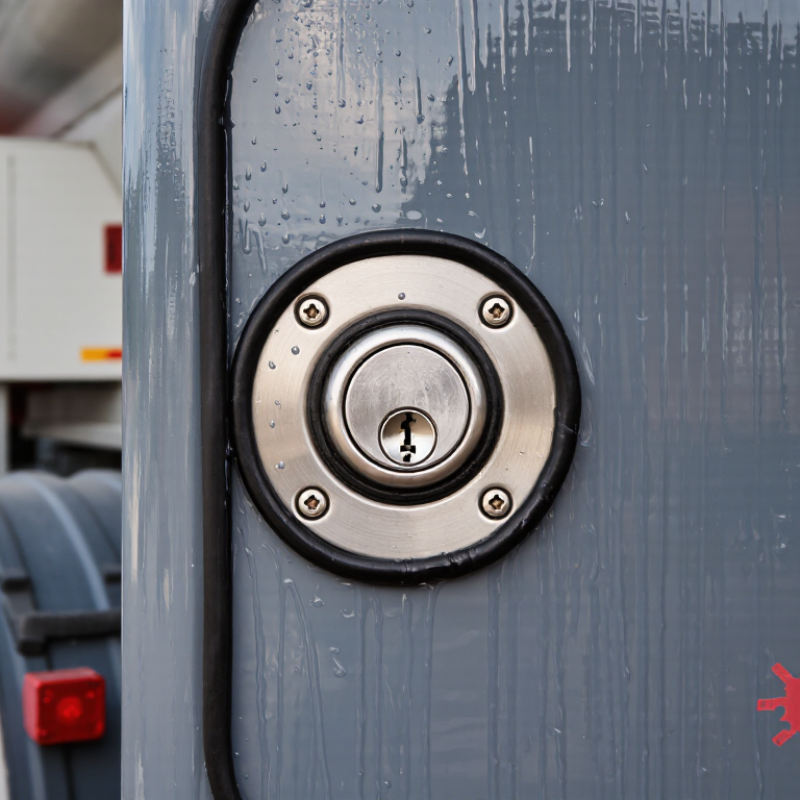
Why Choose a Sanitation Vehicle Locking Cylinder?

What Is a Sanitation Vehicle Locking Cylinder?

A sanitation vehicle locking cylinder is the compact mechanism that secures a refuse body door, service hatch, tool compartment, or container latch. It uses a rotating core, actuator, and locking cam to hold the panel firmly during collection and transport. Some designs operate with a physical key, while others connect to pneumatic or electronic controls. Its real value is simple: the door should stay closed over rough roads, vibration, dust, and repeated stops.

The working environment is demanding. UNEP’s Global Waste Management Outlook 2024 estimates that municipal solid waste will rise from 2.3 billion tonnes in 2023 to 3.8 billion tonnes by 2050. This growth means sanitation fleets may face more daily cycles and greater maintenance pressure. A suitable cylinder should resist moisture, grit, cleaning chemicals, and temperature changes. Stainless or treated metal components can help, but sealing quality matters just as much. Small gaps collect trouble.

In practical inspections, technicians should check key rotation, latch alignment, spring return, and signs of corrosion. A stiff cylinder is not always a failed cylinder; a misaligned door may be the real cause. That detail is easy to miss. The U.S. Environmental Protection Agency reported 292.4 million tons of municipal solid waste generated in 2018, showing the scale behind everyday collection work. Choosing a sanitation vehicle locking cylinder therefore requires matching the mechanism to door weight, operating frequency, exposure, and service access. No cylinder is maintenance-free.

Why Choose a Sanitation Vehicle Locking Cylinder? – What Is a Sanitation Vehicle Locking Cylinder?
Evaluation Dimension Typical Configuration Heavy-Duty Configuration Why It Matters on a Sanitation Vehicle
Primary Function Secures service doors, tool compartments, electrical cabinets, and access panels. Secures high-use doors, hopper access points, rear panels, and equipment compartments. A locking cylinder prevents unauthorized access while allowing authorized operators to open vehicle compartments quickly.
Cylinder Type Cam-lock cylinder with a rotating cam and removable key. Tubular, shuttered, or protected cam-lock design with reinforced housing. The cylinder type should match the door thickness, available clearance, required security level, and operating frequency.
Cylinder Body Material Nickel-plated or zinc-alloy body for general outdoor service. Stainless steel body, commonly grade 304 or grade 316, where corrosion exposure is severe. Stainless steel offers better resistance to moisture, road salt, cleaning chemicals, and repeated washdown than unprotected carbon steel.
Environmental Protection Dust cover, sealing washer, and protected keyway. Sealed face, drainage features, protective shutter, and gasketed mounting arrangement. Protection helps reduce contamination from dust, mud, waste residue, and high-pressure cleaning water. The required IP rating should be confirmed for the complete assembly under IEC 60529.
Corrosion Exposure Suitable for normal outdoor exposure when cleaned and lubricated correctly. Designed for frequent exposure to water, salt spray, alkaline cleaners, and organic residue. Sanitation vehicles operate in wet and contaminated environments, so corrosion resistance directly affects service life and key operation.
Operating Temperature Common outdoor operating range: approximately −20°C to 60°C, subject to the supplier’s specification. Extended-temperature versions may be selected for colder climates or high-temperature equipment zones. Temperature affects lubricant viscosity, seal flexibility, and the ease of inserting and turning the key.
Key Control Single-key or keyed-differently configuration for individual compartments. Keyed-alike or controlled-key configuration for fleet-wide maintenance access. A controlled key system can simplify fleet servicing while limiting access to maintenance personnel.
Security Level Basic mechanical deterrence for low-risk storage compartments. Restricted keyway, shielded face, anti-drill features, or stronger cam and housing construction. Security requirements depend on the value of stored tools, electrical equipment, chemicals, and operational controls.
Vibration Resistance Retaining nut, spring washer, and correctly fitted cam. Locking fastener, anti-rotation feature, reinforced cam, and vibration-resistant mounting. Continuous road vibration can loosen fasteners or change cam alignment if the cylinder is not installed correctly.
Door Compatibility Suitable for thin sheet-metal doors and standard cabinet panels. Suitable for reinforced doors, thicker panels, multi-point rods, or linkage-operated latches. Before selection, verify panel thickness, cylinder length, cam rotation, cam offset, mounting-hole diameter, and latch clearance.
Cleaning Compatibility Compatible with routine wiping and low-pressure cleaning when the keyway is protected. Better suited to repeated washdown when seals, drainage, and material compatibility are properly specified. Cleaning procedures should avoid forcing abrasive particles or high-pressure water directly into the keyway unless the assembly is rated for that exposure.
Maintenance Requirement Periodic inspection, removal of debris, and application of a lock-compatible lubricant. Scheduled inspection of seals, mounting hardware, cam alignment, and keyway condition. Routine maintenance helps prevent stiff operation, corrosion-related seizure, misalignment, and unplanned vehicle downtime.
Failure Prevention Use a dust cap and avoid excessive key force. Use a protected cylinder, correct cam adjustment, drainage path, and a lubricant approved for the lock materials. A cylinder should not be used to compensate for a misaligned or overloaded door latch; the door and latch must operate freely first.
Installation Considerations Align the cylinder, cam, washer, and retaining nut according to the installation drawing. Use specified torque, anti-rotation provisions, sealed mounting surfaces, and post-installation function testing. Correct installation ensures that the key turns smoothly and that the cam fully engages without binding or excessive force.
Best Application Side lockers, toolboxes, inspection panels, and general utility compartments. Waste hoppers, rear access doors, chemical storage areas, electrical enclosures, and frequently washed compartments. Choosing the cylinder according to exposure, access frequency, security risk, and door construction provides a better balance of durability and cost.

How Does a Sanitation Vehicle Locking Cylinder Work?

Why Choose a Sanitation Vehicle Locking Cylinder?

A sanitation vehicle locking cylinder controls access to service compartments, tool cabinets, and waste containers. When the key turns, the cylinder rotates a connected cam or tailpiece. That movement retracts or engages the latch. Simple, but important. A properly fitted cylinder keeps doors closed during vibration, sharp turns, and repeated loading work.

In practical inspections, technicians check the keyway, retaining nut, cam alignment, and surrounding seal. Moisture, cleaning chemicals, and road dust can enter small gaps. Over time, they may cause stiffness or corrosion. A weather-resistant cylinder reduces these risks, but no cylinder is maintenance-free. I have seen a strong lock fail because its cam was installed slightly off-center. The lesson is clear: fit matters as much as material quality. Smooth rotation and consistent locking are useful signs, yet they should not replace scheduled inspections.

Tips: Keep the keyway clean and avoid forcing a stiff key. Check the cylinder after pressure washing, especially around the door seal. Apply only a lubricant suitable for the cylinder material. Confirm that the latch fully engages before driving. Small checks prevent larger service delays.

Why Choose a Sanitation Vehicle Locking Cylinder?

How Does a Sanitation Vehicle Locking Cylinder Work?

A typical sanitation vehicle locking cylinder uses a key-driven plug and internal pin tumblers. When the correct key aligns the pins at the shear line, the plug can rotate and operate the cam or latch that secures the vehicle compartment. The chart shows a typical 90-degree operating cycle; the exact rotation angle may vary by vehicle and lock design.

This mechanism provides controlled access, supports secure compartment closure, and can be combined with corrosion-resistant materials and protective seals for demanding outdoor and wet-service environments.

Why Are Locking Cylinders Essential for Sanitation Vehicles?

Why Are Locking Cylinders Essential for Sanitation Vehicles?

Sanitation vehicles work around waste, moisture, dust, and frequent cleaning. Their storage compartments need more than a simple latch. A locking cylinder helps protect tools, spare parts, protective equipment, and cleaning supplies from unauthorized access during daily routes.

Security also supports hygiene control. A closed compartment keeps stored items away from road dirt, rainwater, and accidental contact with contaminated surfaces. In practical fleet maintenance, small hardware failures often create larger delays. A jammed cylinder can leave equipment unavailable at the start of a shift. A loose lock can allow vibration to damage the door or its contents.

Choose a cylinder designed for repeated outdoor use. Corrosion-resistant materials, sealed keyways, and smooth operation matter after hundreds of washdowns. The lock should remain usable with wet gloves, but it should not open easily through careless handling. That balance requires careful installation and regular checks.

No cylinder stays perfect forever. Inspect it.

Look for rust, unusual resistance, bent keys, and loose mounting points. Cleaning the keyway may help, although excessive lubricant can collect grit. This detail is easy to overlook. In cold or coastal environments, inspection should happen more often. A reliable locking cylinder does not replace good access procedures, but it gives operators a stronger physical barrier and clearer control over vehicle compartments.

Key Benefits of Using a Dedicated Locking Cylinder

Why Choose a Sanitation Vehicle Locking Cylinder?

A sanitation vehicle works through dust, moisture, vibration, and frequent cleaning. These conditions can quickly expose weaknesses in ordinary locking hardware. A dedicated locking cylinder is designed for this demanding environment. Clean access matters. Its sealed construction can help reduce water and debris entering the mechanism. This supports smoother operation around service doors, storage compartments, and waste-handling areas.

In fleet maintenance, reliable access control saves time during every shift. A dedicated cylinder gives authorized operators consistent key operation, even when gloves are wet or hands are tired. Durable materials can resist corrosion caused by cleaning chemicals and road moisture. The right cylinder also helps standardize keys across compatible vehicle compartments. That simplifies inspections and reduces confusion during handovers. Small details matter here.

Security is another practical benefit. A properly fitted cylinder can discourage unauthorized access to tools, containers, and service equipment. It should match the door design and receive regular checks for wear. A loose mounting point or damaged seal can undermine good hardware. The cylinder is not a magic fix. Poor installation, neglected lubrication, or badly managed keys can still create problems. In my view, selection should consider operating temperature, cleaning routines, door thickness, and expected usage. Testing the cylinder after installation is wise, although busy teams may overlook it. That missed step deserves more attention.

How to Choose the Right Sanitation Vehicle Locking Cylinder

Choosing the Right Sanitation Vehicle Locking Cylinder

A sanitation vehicle locking cylinder must match the vehicle’s daily work, not only its door size. Start by checking the existing cylinder dimensions, cam shape, mounting method, and key rotation angle. A few millimeters can cause poor engagement. Measure the lock after removing dirt and grease, because buildup can distort your inspection. Stainless steel or corrosion-resistant materials are useful around wash water, disinfectants, and road salt. However, material claims should be verified through technical documents, not assumed from appearance.

Consider how often the vehicle is opened during a shift. A refuse truck may need a cylinder designed for repeated operation, while a service van may prioritize stronger resistance to vibration and tampering. Look for sealed keyways, smooth operation, protected caps, and stable performance after temperature changes. Test the cylinder with gloves if operators commonly work outdoors. The key should turn without forcing it. That detail matters.

Security also depends on installation and maintenance. A well-made cylinder can fail when the cam is misaligned or fasteners are loose. Ask for documented testing, replacement key control, and clear maintenance instructions. Avoid choosing only by the lowest price. It may reduce purchase cost but increase downtime later. No cylinder is perfect. Dirt still wins sometimes. Review the cleaning schedule, access routine, and failure history before making the final choice. A practical trial on one vehicle can reveal problems that specifications miss.

Powder Coat Booths

For those larger-sized parts, or smaller quantity runs, we have 2 independent powder coat booths and ovens. The quality, durability and affordability of today’s powder coating finishes make this the process of choice for world-class companies.

Powder coating advantages over other forms of coating are many. Materials used in the Powder coating process can be metals and non-metals that come in a multitude of thicknesses, textures, colors, etc. Another of Powder coating’s biggest advantages over conventional coatings is its ability to create finishes in many different textures. Powder Coating Booths allow us the ability to apply these advantages to large products.

Wet Paint Line

Tri-State Fabricators runs a full-service conveyor line for painting. Wet painting can provide protection or decoration to many different part styles. From start to finish, every project is easier to undergo random and point-based inspection by our skilled painting team.

Advantages to our Wet Paint Line are these lines start with product prep and ends with a thorough inspection of a high quality finished product. Our ability to complete large and small projects with a superior finish and doing so in a timely and economical fashion. This passes along the savings in production to our customers. When powder coating ins not an option, our Wet Paint Line gets the job done right the first time.

Wet Paint Booths

When the parts get big and heavy we roll-out our custom paint racks and oversize booth. By utilizing our partnerships with all the major paint brands, we can match virtually any color with wet paint.

The advantages of having access to a Wet Paint Booth are many. Large projects of many different shapes can be loaded into the booth. The Wet Paint Booth offers an environment that is much more controlled than a typical parts painting operation.

Not only are they used because of their controlled environment, but they’re are also advantageous when it comes to applying paint to parts that are needed in industries that require specialty coatings such as medical, aerospace, etc.

Military CARC

Our military forces have some very high standards when it comes to the finish of their vehicles and equipment. From the first pre-treatment step to final coat, it takes a great deal of knowledge and experience to protect the men and women of our armed forces. They deserve only the best, and Tri-State Fabricators provides it.

All of our processes are closely monitored by our staff and management teams. Both of which are highly trained in the processes of metal fabrication and finishing. Tri-State Fabricators’ goal is to always fully satisfy each and every customer, including the military. We will always put a 110% into what we do.

Glass-Bead Blasting

Abrasive media blasting is an excellent way to remove old paint, rust, and increase the paint/powder adhesion. Glass beads produce a much smoother and brighter finish than angular abrasives; leaving the part clean yet without any dimensional change. Chemically inert and environmentally friendly, we can recycle our beads approximately 30 times; making them a more preferred method of metal cleaning or surface finishing.

Advantages to Glass Bead Blasting are many. Glass bead blast media is used when a project is needing rough surfaces need to become smooth for applications of coatings such as paint. It is typically used to clean paint and rust from a product surface without deforming the surface it is being used on. Overall, compared to many other blasting media, Glass Bead Blasting is a very economical choice and those savings are always passed on to our customers.

Part Washing

Tri-State Fabricators utilize a zinc phosphate wash to clean and etch the material to ensure the best paint adhesion possible. The unique design of our 3-stage wash system does the work like a 5-stage. From Cleaning and rinsing to conversion coating and post-treatment, Our Part Washing process is a complete service and works throughout the fabrication service and the finishing service.

Along with the previously mentioned benefits, Curing is a vital chemical reaction that leaves the product finish hard and relatively safe from mild abrasion and aggressive corrosion. This process can be done in more than one way; ambient air-dry or in curing ovens at temps that exceed 240°.

Burn-Off Oven

From fixing paint mistakes (someone else’s of course) to simply cleaning our paint line hooks, our burn-off oven is put to good use. After a quick burn-off, a little clean up, and a fresh coat of paint, your parts will look better than new.

Why does our Burn-Off Oven work so well? Because super heating the air around parts turns the materials into ashes. From paint and powder coatings to rubber and machining oils, high temps do the job without degrading the integrity of the part.

Masking

Masking is a vital part of producing high quality products. We have die-cut masking patterns to protect machined surfaces as well as a wide range of plugs and caps to protect threaded holes and bolts. We provide permanent and temporary masking.

Masking allows the selected sections of a product to be protected from a fabrication or finishing service. This can be with both chemicals when etching and tapes, paints when only finishing just a section of the product. Masking is great in aiding the customization process of a project.

Screen Printing

Screen printing is a photographic process that transfers artwork onto a porous nylon screen which allows colored ink to flow through the screen and be deposited on an aluminum or plastic component. We can generally have just about any design created onto a screen for your parts.

Some of the advantages of Screen Printing are, brand recognition for your business displaying on your products, assembly instructions, product warnings/hazards, etc. Tri-State Fabricators produces Screen Printing of the highest quality so you know it’s durable.

Metal Finishing

Metal Finishing is the art of treating the exterior portion of product, often metal but can also be made of other materials, so that the surface is clean and free of any debris. Then the process of applying coats or either paint of powder coat takes place. This coating process improves the quality of the product in both appearance and resistance to wear and corrosion.

Tri-State Fabricators, Inc., understands that a project typically isn’t complete until a high-quality finish has been added to your product. This is why our painting and powder coating teams continuously inspect the products throughout the Metal Finishing process.

