


Why Do You Need a Check Valve?

A Check Valve may look like a small fitting, but its failure can send water, oil, or compressed air backward through a system. That can damage pumps, disturb process control, and trigger water hammer. The risk is easy to miss: a valve can be correctly installed and still perform poorly if its type, size, or closing behavior does not match the flow conditions.

The U.S. Department of Energy’s Improving Pumping System Performance sourcebook reports that pumping systems account for nearly 20% of global electricity demand. That figure is not a measure of check-valve savings; it shows why dependable flow management matters across energy-intensive systems. Valve Handbook author Philip L. Skousen offers a useful engineering perspective: in paraphrase, reverse-flow protection depends on selecting a valve suited to the system, not merely fitting one into the line. A spring-assisted model, for example, may close differently from a swing check when flow slows. Small details matter. So does maintenance.

This guide explains when a Check Valve is needed, how it prevents reverse flow, and what to consider when choosing one. It also looks at common trade-offs, including pressure loss, installation orientation, and the risk of slam. A check valve is not a cure-all. Real systems vary, and operating data should inform the choice. That is worth remembering.
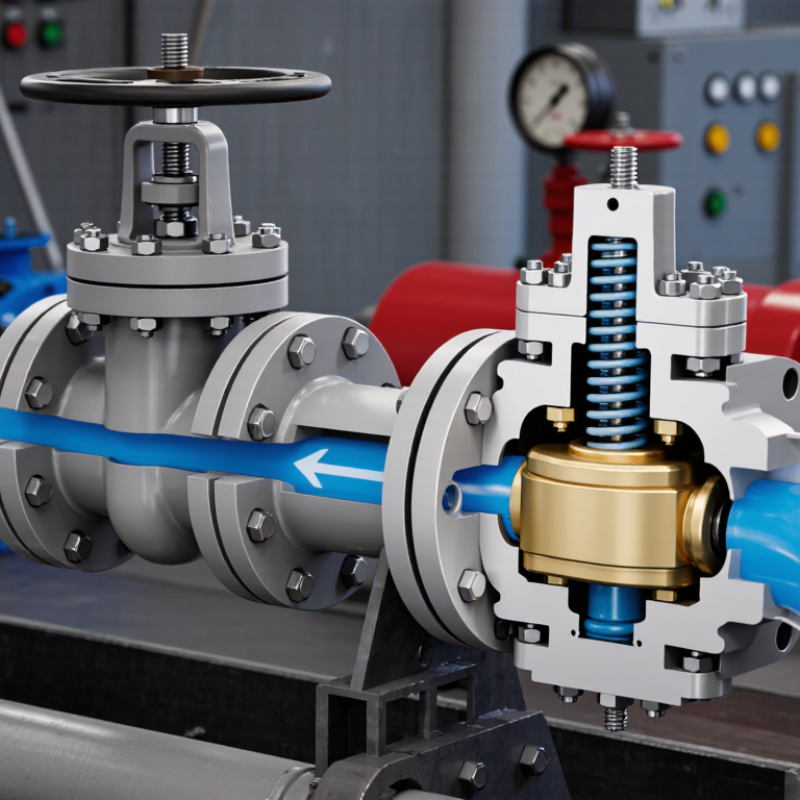
Why Do You Need a Check Valve?

What Is a Check Valve?

A check valve is a mechanical device that allows fluid to flow in one direction and restricts reverse flow. Unlike a hand-operated valve, it responds automatically to changes in pressure or flow. When forward pressure drops, an internal part—often a disc, ball, or flap—moves back toward its seat. No handle is needed.

The exact movement depends on the design. A swing check uses a hinged disc. A spring-loaded model may close quickly, while a lift check moves along a guide. The right choice depends on the fluid, pressure, pipe layout, and operating conditions. In a pump line, a check valve can limit reverse flow when the pump stops.

It may help protect pumps and other equipment, but it is not an isolation valve. A worn seat can still let fluid slip backward. Not foolproof. Sizing and installation matter, too. It is tempting to treat check valves as simple safeguards, yet real piping systems are rarely so tidy. Check technical specifications and inspect the valve according to its service conditions.


How Does a Check Valve Work?

Why Do You Need a Check Valve? How Does a Check Valve Work?

A check valve allows fluid to travel in one direction and resists flow in the opposite direction. Inside, a disc, ball, or flap responds to pressure from the moving fluid. When upstream pressure is strong enough, the moving part lifts or swings open. Fluid passes through. When flow slows or reverses, the part returns to its seat and blocks the path. No manual lever is needed.

Small pressure changes matter. In a household water line, forward flow may push a spring-loaded disc aside. If pressure drops, the spring helps close the valve. Other designs rely on gravity, so their position during installation matters. A valve fitted backward can restrict flow or fail to prevent reverse movement. Check the flow arrow and installation instructions. It’s easy to miss.

Closure is not always silent. A fast-moving column of water can make a valve snap shut, causing a pressure surge or tapping noise. This is called water hammer. The right valve depends on the fluid, flow rate, pressure, and piping layout; one design does not suit every system. In real installations, performance can be less tidy than a diagram suggests. debris, wear, or a damaged seat may prevent a tight seal, so inspection and maintenance still matter.

Why Do You Need a Check Valve? - How Does a Check Valve Work?

Topic How It Works Why It Matters
Basic purpose A check valve allows fluid to flow in the intended direction and closes when flow reverses. It helps prevent reverse flow that could damage equipment, contaminate a supply, or disrupt a process.
Opening action Forward-flow pressure moves an internal element—such as a disc, ball, or plate—away from its seat. The valve opens automatically; it generally does not require a handwheel or external actuator.
Closing action When forward flow stops or reverses, the moving element returns to the seat. Gravity, a spring, or reverse pressure may assist, depending on the design. Prompt closure can reduce reverse flow, though closure speed and effectiveness depend on the valve and system conditions.
Swing check valve A hinged disc swings open with forward flow and swings back toward the seat as flow slows or reverses. Often used in larger pipelines where the layout and operating conditions suit a swinging closure element.
Lift check valve A disc or piston lifts from its seat under forward pressure and returns to the seat when that pressure falls or reverses. Commonly selected for applications where its guided, linear movement and installation arrangement are appropriate.
Ball check valve A ball moves away from the seat to permit forward flow and returns to the seat to restrict reverse flow. Its suitability depends on the fluid, solids content, orientation, and the valve’s specific construction.
Typical uses Check valves are used in systems such as pump discharge lines, water and wastewater piping, and process piping. They can help prevent a pump from being driven backward by returning fluid and help isolate flow direction between system sections.
Installation considerations Install in the direction indicated by the flow arrow and follow the manufacturer’s instructions for orientation and support. Some designs are orientation-sensitive. Incorrect installation can prevent proper opening or closing.
Important limitation A check valve is designed for one-way flow, not for precise flow regulation or dependable manual isolation. It may not provide a perfectly leak-tight seal. Use a suitable isolation valve where positive shutoff is required.
Selection factors Consider fluid type, pressure and temperature ratings, flow conditions, connection size, installation position, and closure characteristics. Correct selection helps ensure the valve is compatible with the system and reduces the risk of excessive pressure loss or damaging closure effects.

Note: Check-valve performance varies by design and operating conditions. Confirm material compatibility, ratings, and installation requirements against the valve’s technical documentation.

How Does a Check Valve Prevent Backflow?

A check valve lets liquid or gas move in one direction and closes when flow reverses. It works automatically, without a person turning a handle. When pressure pushes fluid forward, a disc, ball, or flap lifts from its seat. If the pump stops or downstream pressure rises, reverse flow pushes that moving part back against the seat. That is the basic action. A spring may help it close quickly, while some designs rely mainly on gravity and fluid pressure.

This closure can protect a pump from reverse rotation, limit drain-back in a pipe, or help keep contaminated water from flowing into a clean supply. Picture a pump switching off: without a working valve, water in a raised pipe may fall back and strain the system.

Small details matter. A valve must suit the fluid, pressure, temperature, and flow rate; an unsuitable model may chatter, leak, or restrict flow. Installation direction matters too. An arrow on the body usually indicates permitted flow, but checking the maker’s instructions is safer than guessing. A check valve is not a perfect seal, and debris or wear can prevent full closure. It is easy to assume that fitting one solves every backflow problem. In reality, placement and regular inspection still matter.

Where Are Check Valves Commonly Used?

Check valves are common wherever fluid should move in one direction. At a pump discharge, they help prevent water from flowing backward when the pump stops. That protects equipment and reduces pressure surges. In municipal water networks, they appear near pumps, storage tanks, and treatment equipment. The USGS reported that public water supplies withdrew about 39 billion gallons per day in 2015. That volume shows why dependable flow control matters across thousands of systems.

Wastewater lift stations use check valves to limit reverse flow through pump lines. A valve may sit in a damp, cramped chamber, where grit and debris can affect its operation. Inspection matters. The U.S. EPA’s 2023 Drinking Water Infrastructure Needs Survey estimated $625 billion in drinking-water infrastructure needs over 20 years. That figure is not a valve-spending estimate, but it reflects the scale of systems that depend on reliable piping and components.

Check valves also serve heating and cooling loops, fire-protection piping, and industrial process lines. In a boiler room, they can help stop hot water from circulating in the wrong direction. In a process plant, they may protect pumps from backflow between operating cycles. Their location should match the flow path and operating conditions; one valve type will not suit every service. Still, placement can be overlooked. A valve that is difficult to inspect may fail unnoticed.

What Factors Guide Check Valve Selection?

A check valve allows fluid to move in one direction and helps limit reverse flow when a pump stops. That can reduce backspin, pressure disturbances, and contamination risks in a line. Selection starts with the actual service, not just pipe size. Identify the fluid, its temperature, operating pressure, and flow rate. Water, oil, and abrasive mixtures behave differently inside a valve. Direction matters.

Next, compare the valve’s pressure drop with the system’s available pressure. An undersized or poorly matched valve may restrict flow. A valve that opens too easily can chatter when flow is low, causing noise and wear. Check the cracking pressure, the minimum pressure needed to open the valve, against the pump’s performance. Also consider installation position: some designs depend on gravity, while others can work in horizontal or vertical piping. Check the manufacturer’s orientation and operating limits.

Choose the closing mechanism for the consequences of reverse flow. A spring-assisted design may close quickly, while a swing design can suit steadier flow with less restriction. The best choice is not always obvious. A calculation may miss short start-up surges or changes in fluid behavior. Review the expected operating range, available maintenance access, and the cost of a leak or shutdown. Then confirm the selection against reliable technical data and, where conditions are uncertain, a qualified engineer’s review.

Powder Coat Booths

For those larger-sized parts, or smaller quantity runs, we have 2 independent powder coat booths and ovens. The quality, durability and affordability of today’s powder coating finishes make this the process of choice for world-class companies.

Powder coating advantages over other forms of coating are many. Materials used in the Powder coating process can be metals and non-metals that come in a multitude of thicknesses, textures, colors, etc. Another of Powder coating’s biggest advantages over conventional coatings is its ability to create finishes in many different textures. Powder Coating Booths allow us the ability to apply these advantages to large products.

Wet Paint Line

Tri-State Fabricators runs a full-service conveyor line for painting. Wet painting can provide protection or decoration to many different part styles. From start to finish, every project is easier to undergo random and point-based inspection by our skilled painting team.

Advantages to our Wet Paint Line are these lines start with product prep and ends with a thorough inspection of a high quality finished product. Our ability to complete large and small projects with a superior finish and doing so in a timely and economical fashion. This passes along the savings in production to our customers. When powder coating ins not an option, our Wet Paint Line gets the job done right the first time.

Wet Paint Booths

When the parts get big and heavy we roll-out our custom paint racks and oversize booth. By utilizing our partnerships with all the major paint brands, we can match virtually any color with wet paint.

The advantages of having access to a Wet Paint Booth are many. Large projects of many different shapes can be loaded into the booth. The Wet Paint Booth offers an environment that is much more controlled than a typical parts painting operation.

Not only are they used because of their controlled environment, but they’re are also advantageous when it comes to applying paint to parts that are needed in industries that require specialty coatings such as medical, aerospace, etc.

Military CARC

Our military forces have some very high standards when it comes to the finish of their vehicles and equipment. From the first pre-treatment step to final coat, it takes a great deal of knowledge and experience to protect the men and women of our armed forces. They deserve only the best, and Tri-State Fabricators provides it.

All of our processes are closely monitored by our staff and management teams. Both of which are highly trained in the processes of metal fabrication and finishing. Tri-State Fabricators’ goal is to always fully satisfy each and every customer, including the military. We will always put a 110% into what we do.

Glass-Bead Blasting

Abrasive media blasting is an excellent way to remove old paint, rust, and increase the paint/powder adhesion. Glass beads produce a much smoother and brighter finish than angular abrasives; leaving the part clean yet without any dimensional change. Chemically inert and environmentally friendly, we can recycle our beads approximately 30 times; making them a more preferred method of metal cleaning or surface finishing.

Advantages to Glass Bead Blasting are many. Glass bead blast media is used when a project is needing rough surfaces need to become smooth for applications of coatings such as paint. It is typically used to clean paint and rust from a product surface without deforming the surface it is being used on. Overall, compared to many other blasting media, Glass Bead Blasting is a very economical choice and those savings are always passed on to our customers.

Part Washing

Tri-State Fabricators utilize a zinc phosphate wash to clean and etch the material to ensure the best paint adhesion possible. The unique design of our 3-stage wash system does the work like a 5-stage. From Cleaning and rinsing to conversion coating and post-treatment, Our Part Washing process is a complete service and works throughout the fabrication service and the finishing service.

Along with the previously mentioned benefits, Curing is a vital chemical reaction that leaves the product finish hard and relatively safe from mild abrasion and aggressive corrosion. This process can be done in more than one way; ambient air-dry or in curing ovens at temps that exceed 240°.

Burn-Off Oven

From fixing paint mistakes (someone else’s of course) to simply cleaning our paint line hooks, our burn-off oven is put to good use. After a quick burn-off, a little clean up, and a fresh coat of paint, your parts will look better than new.

Why does our Burn-Off Oven work so well? Because super heating the air around parts turns the materials into ashes. From paint and powder coatings to rubber and machining oils, high temps do the job without degrading the integrity of the part.

Masking

Masking is a vital part of producing high quality products. We have die-cut masking patterns to protect machined surfaces as well as a wide range of plugs and caps to protect threaded holes and bolts. We provide permanent and temporary masking.

Masking allows the selected sections of a product to be protected from a fabrication or finishing service. This can be with both chemicals when etching and tapes, paints when only finishing just a section of the product. Masking is great in aiding the customization process of a project.

Screen Printing

Screen printing is a photographic process that transfers artwork onto a porous nylon screen which allows colored ink to flow through the screen and be deposited on an aluminum or plastic component. We can generally have just about any design created onto a screen for your parts.

Some of the advantages of Screen Printing are, brand recognition for your business displaying on your products, assembly instructions, product warnings/hazards, etc. Tri-State Fabricators produces Screen Printing of the highest quality so you know it’s durable.

Metal Finishing

Metal Finishing is the art of treating the exterior portion of product, often metal but can also be made of other materials, so that the surface is clean and free of any debris. Then the process of applying coats or either paint of powder coat takes place. This coating process improves the quality of the product in both appearance and resistance to wear and corrosion.

Tri-State Fabricators, Inc., understands that a project typically isn’t complete until a high-quality finish has been added to your product. This is why our painting and powder coating teams continuously inspect the products throughout the Metal Finishing process.
