Why Are Zirconium Rings So Popular?
Why Are Zirconium Rings So Popular? The appeal starts with a striking contrast: a dark, industrial-looking band can feel smooth, balanced, and understated on the hand. Zirconium rings are often chosen for their distinctive black finish, modern style, and resistance to everyday corrosion. Yet their popularity is not only about appearance. Buyers also compare comfort, price, maintenance, and how a ring fits their daily routine.
The market context is growing, though zirconium-specific sales figures are hard to verify. Grand View Research estimated the global jewelry market at US$353.26 billion in 2023 and projected continued growth through 2030. That report covers jewelry broadly; it does not establish zirconium-ring demand on its own. This distinction matters. A large market is not proof that one material is universally preferred. Still, it helps explain why shoppers have more choices, from polished precious metals to contemporary alternative materials.
There is one important sourcing limit: without a verifiable interview or published quotation, I cannot responsibly attribute a zirconium-ring claim to a named specialist. A made-up expert quote would weaken trust, not strengthen it. The practical questions remain clear. How does the finish wear? Does the band suit the wearer’s work and habits? And is the dramatic black surface worth choosing over a traditional metal? Small details matter. A ring can look perfect under display lighting, then feel different after a full day of use.
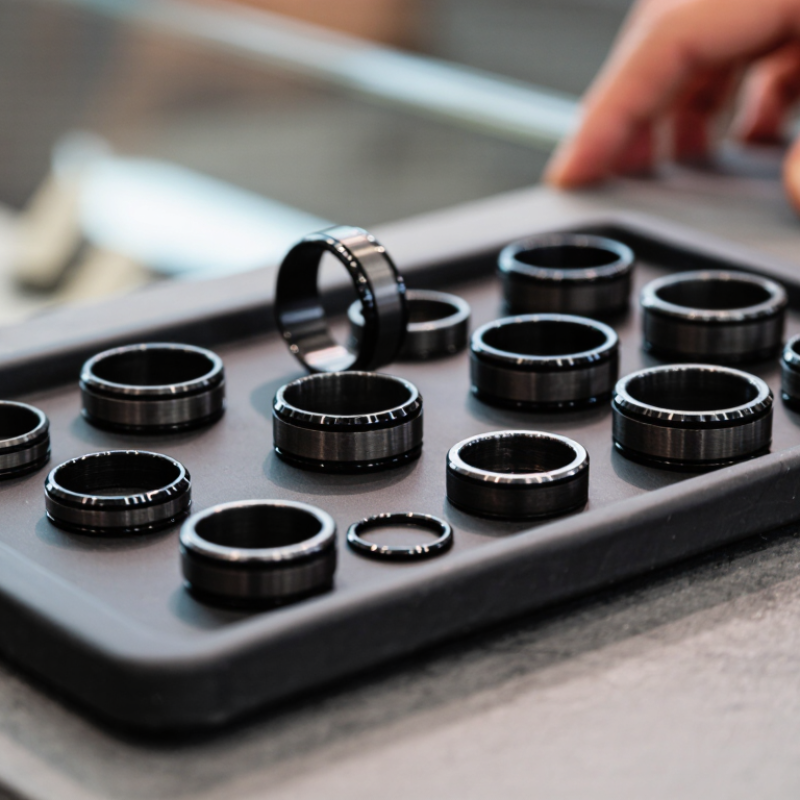
What Zirconium Rings Are and How They Are Made
Zirconium rings begin with zirconium metal, a lightweight, silvery material. Many familiar dark styles are made by shaping the metal into a band, then heating it under controlled conditions. Oxygen reacts with the surface and forms a hard, black zirconium-oxide layer. The ring is not simply a piece of black ceramic. Beneath the dark exterior is metal. Not ceramic. That distinction matters if the finish is scratched or damaged: a lighter area may show through, depending on the ring’s construction.
Before heating, makers cut, turn, and smooth a metal blank to create the ring’s profile. Edges are rounded, the inner surface is polished, and the size is checked. Small differences matter; a sharp inner edge can feel uncomfortable all day. The oxidation step needs close control, since heat and surface preparation affect the final color and texture. Some designs keep the natural silver-colored surface instead of using a dark finish. Details vary by maker, so “zirconium” alone does not describe the exact process. The result can feel solid and clean-lined, though no finish is immune to hard impacts.
Why Are Zirconium Rings So Popular? — What Zirconium Rings Are and How They Are Made | Topic | What Is True About Zirconium Rings | Why It Matters to Wearers |
| The base material | Zirconium is a metallic element. Jewelry rings are made from zirconium metal, not from zircon, which is a separate mineral. | The name can be confusing; knowing the material helps distinguish these rings from gemstone or ceramic jewelry. |
| Natural color and black finish | Uncoated zirconium metal is gray-silver. A controlled oxidation process can create a dark surface layer of zirconium oxide, giving many rings their black appearance. | The distinctive dark finish offers a modern look without the ring being black metal all the way through. |
| How a ring is made | A typical process shapes zirconium stock into a ring blank, machines and finishes its profile, then applies a controlled surface-oxidation treatment when a black finish is desired. Exact methods vary by maker. | The combination of machining and surface treatment creates the ring’s shape, fit, and final appearance. |
| Density and feel | Zirconium’s density is about 6.5 g/cm³, so it is substantially less dense than gold and much less dense than tungsten carbide. | Many people appreciate the comparatively light feel, especially in a wider band. |
| Corrosion resistance | Zirconium forms a protective oxide film on its surface and is known for strong corrosion resistance in many environments. | This property contributes to its appeal as a material for everyday jewelry, though care and wear can still affect a ring’s finish. |
| Finish and wear | The black appearance is a surface oxide rather than a solid-black core. Abrasion or damage to the treated surface may expose lighter-colored metal underneath. | Understanding the finish helps set realistic expectations and encourages avoiding rough impacts and abrasive cleaning. |
| Design versatility | Zirconium rings can be made with different band profiles, polished or matte surfaces, and contrasting inlays or accent materials. | The dark finish and range of design options suit both understated and more distinctive styles. |
| Why they are popular | Commonly cited attractions include the dark contemporary look, relatively light feel, corrosion resistance, and availability of varied designs. | These features make zirconium an appealing alternative for people seeking a distinctive ring material beyond traditional precious metals. |
Key Physical and Practical Properties of Zirconium
Zirconium rings balance a solid feel with everyday practicality. The Royal Society of Chemistry’s zirconium profile lists a density of 6.52 g/cm³ and a melting point of 1,855°C. Those figures describe the metal, not a finished ring, but they help explain its strength and substantial feel without tungsten-like weight. A useful distinction.
The International Zirconium Association’s technical materials describe zirconium’s resistance to corrosion, linked to a protective oxide film that forms on its surface. Jewelers can also create a dark finish by oxidizing the surface, giving some rings a charcoal-black appearance. A pale polished ring feels cool against the finger; a dark one can show scratches or finish wear with use. Not invincible. Zirconium is often chosen by people seeking a nickel-free option, though sensitivities and alloy composition still matter. Its hardness can make resizing difficult, so a precise fit is worth discussing before purchase. These trade-offs are easy to overlook when a ring is judged only by its color.
Why Are Zirconium Rings So Popular?
A comparison of the density of common ring metals (g/cm³)
Zirconium has a middle-range density: it is denser than titanium but much lighter than gold. Its appeal also comes from practical qualities such as corrosion resistance and biocompatibility. Values shown are approximate densities of the elemental metals; finished ring alloys can differ.
Design Options and Common Uses for Zirconium Rings
Zirconium rings come in more styles than their dark, modern reputation suggests. Black zirconium gets its color through heat treatment, which forms a dark oxide surface. Natural gray finishes are also available, with polished or brushed textures that catch light differently. Small design choices matter. A satin center, for example, can soften the shine of polished edges.
Design options often include flat or domed profiles, narrow or wide bands, and beveled edges. Some rings pair zirconium with wood, ceramic, or metal inlays. These combinations add contrast, but they can change how a ring feels and wears. A raised inlay may collect dust more easily. Easy to overlook.
Zirconium rings are commonly chosen as wedding bands, everyday jewelry, or understated statement pieces. Their low weight and resistance to corrosion suit frequent wear, though finish and construction affect durability. Black surfaces can develop visible marks at edges over time. Resizing may also be difficult, so accurate sizing matters before purchase. Try the ring at different times of day; fingers can swell slightly with heat or activity.
Why Zirconium Rings Appeal to Many Wearers
Why Zirconium Rings Appeal to Many Wearers
Zirconium rings appeal to people who want a dark, understated look without choosing a conventional precious metal. Their black surface comes from heating the metal, which forms a ceramic-like oxide layer. The result can look almost ink-dark under soft light, with a smooth, cool feel against the finger. It is distinctive, but not flashy. That matters to wearers who prefer a ring that sits quietly beside a watch or work clothes. Some designs leave a bright metallic edge exposed, creating contrast without adding stones.
The appeal is practical, too. Zirconium is relatively light, so a broad band may feel less cumbersome than its size suggests. The Royal Society of Chemistry lists its density as 6.52 grams per cubic centimetre, a useful point of comparison when considering everyday comfort.
The USGS 2024 Mineral Commodity Summaries reports global zirconium-mineral concentrate production at roughly 1.4 million metric tons in 2023; this is a supply figure, not a measure of ring sales. That distinction is easy to miss. Zirconium rings can resist corrosion, but their dark finish may scratch or change with wear, and repairs can be less straightforward than with common precious metals. Someone who expects a ring to stay perfectly pristine may be disappointed. Someone who likes subtle character may not be.
Care, Sizing, and Important Buying Considerations
Zirconium rings appeal to many people because they feel substantial without looking traditional, and black finishes create a crisp contrast against skin.
Their care is fairly simple, but the finish deserves attention. Wash the ring with lukewarm water, mild soap, and a soft cloth, then dry it fully.
Avoid abrasive pads and harsh cleaners, especially if the ring has a colored finish or inlay. Black zirconium usually gets its color from a hardened surface layer; a deep scratch may expose lighter metal underneath.
That can be surprising. A jeweler can assess whether repair is practical.
Sizing needs care before purchase. Zirconium rings are often difficult or impossible to resize, so do not guess from a ring worn on another finger. Have the intended finger measured when your hands are warm and relaxed; fingers can swell in heat or after exercise.
Wider bands may feel tighter than narrow ones, and a comfort-fit interior can change how a ring sits. Try the exact width and profile if possible.
I once assumed two rings in the same size would feel alike. They did not.
Check the seller’s sizing guide, return window, and care instructions before ordering. Ask whether the ring contains inlays, whether its finish can be renewed, and what happens if the fit is wrong. A confident purchase should include clear answers, not just a polished product photo.





