


What Is a WMS Warehouse System and How Does It Work?

A Wms Warehouse System is the operational brain behind a modern warehouse. It connects receiving, storage, picking, packing, and shipping in one controlled environment. When a truck arrives, workers can scan cartons, verify quantities, and assign locations within minutes. The system records each movement, creating a clearer inventory history than handwritten notes or isolated spreadsheets.

In practice, a Wms Warehouse System uses barcode scanners, mobile terminals, warehouse maps, and inventory rules. It may recommend a shelf near the packing area for fast-moving products. It can also guide a picker through the shortest practical route, reducing unnecessary walking. Managers gain dashboards showing stock levels, order progress, delays, and employee workload. These details support better decisions, but software cannot repair inaccurate data or careless processes. That limitation is easy to underestimate.

Reliable implementation usually begins with clean product records, defined storage locations, and trained warehouse staff. Experienced teams test receiving and picking workflows before expanding system access. They also compare system reports with physical counts, because a digital record can still be wrong. Integration with enterprise resource planning, transportation, and e-commerce platforms may improve visibility across the supply chain. However, every connection adds maintenance responsibilities and possible failure points. This guide explains how a Wms Warehouse System works, where it creates measurable value, and which practical weaknesses deserve attention before adoption. Warehouses are not perfectly predictable. A thoughtful system should support people, not pretend to replace their judgment.
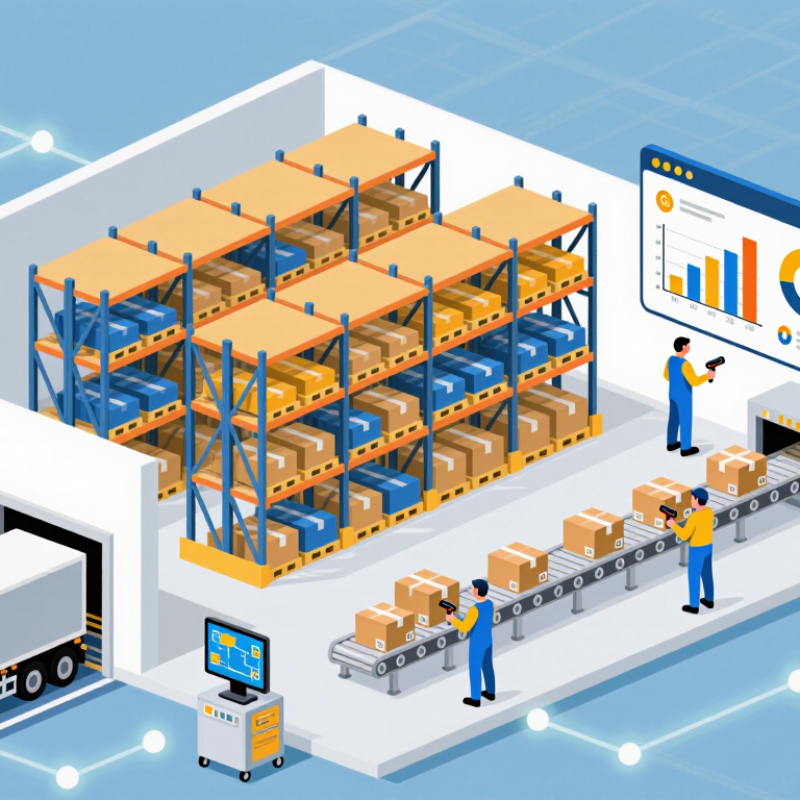
What Is a WMS Warehouse System and How Does It Work?

What Is a WMS Warehouse System?

What Is a WMS Warehouse System?

A WMS, or Warehouse Management System, is software that controls daily warehouse operations. It records where goods arrive, where they are stored, and when they leave. Workers can scan a carton at receiving, view an assigned shelf, and confirm each picking step on a handheld device. The system connects inventory data with orders, labor, storage locations, and shipping tasks.

A WMS usually works through rules and real-time updates. When stock arrives, it creates a digital receipt and suggests a suitable location. During picking, it can select items by order priority, distance, or expiry date. After packing, it updates available inventory and sends shipment information to other systems. The Material Handling Institute’s 2024 Annual Industry Report surveyed more than 2,000 supply-chain professionals. Its findings show that digital tools remain a major investment priority. A WMS supports that shift, but it cannot repair inaccurate item data or poor warehouse processes. That limitation is easy to underestimate.

Tips: Start with clean product records, clear location labels, and practical workflows. Test the system with real orders, including damaged cartons and short picks. Train workers beside the storage racks, not only in a classroom. Review accuracy, picking time, and order delays every week. A perfect system is unlikely. Continuous adjustment is more realistic.

What Is a WMS Warehouse System and How Does It Work?
Category Data Dimension What It Covers Typical Data or Operating Logic
System Definition Warehouse Management System A software system used to control, record, and optimize warehouse activities and inventory movements. Manages receiving, putaway, storage, replenishment, picking, packing, shipping, counting, and reporting.
Primary Objective Inventory and order control Provides accurate, timely visibility into inventory quantities, locations, status, and order progress. Centralizes transaction records and updates inventory after each confirmed warehouse movement.
Inbound Process Receiving Records products arriving at the warehouse and compares physical receipts with expected inbound information. Common data includes item identifier, received quantity, lot or serial number, supplier reference, arrival time, and condition.
Inbound Process Putaway Assigns received inventory to suitable storage locations according to warehouse rules and available capacity. Location selection can consider item dimensions, storage conditions, product compatibility, turnover rate, and space availability.
Inventory Control Location management Maintains a digital map of warehouse areas, aisles, racks, shelves, bins, staging zones, and other locations. Each location may have an identifier, capacity, status, zone, storage restrictions, and current inventory balance.
Inventory Control Stock status Separates inventory according to whether it is available, reserved, damaged, quarantined, under inspection, or in transit. Available quantity is not necessarily equal to physical quantity because reserved or restricted stock may not be allocatable.
Inventory Control Lot and serial tracking Tracks inventory by batch, lot, serial number, expiration date, or other traceability attributes when required. Supports traceability, recall management, expiration control, and compliance-related warehouse records.
Outbound Process Order allocation Reserves suitable inventory for customer, production, transfer, or replenishment orders. Allocation rules may use stock availability, order priority, expiration date, lot requirements, and fulfillment location.
Outbound Process Picking Creates instructions for warehouse workers or automated equipment to retrieve products from storage locations. Common picking methods include single-order picking, batch picking, zone picking, wave picking, and cluster picking.
Outbound Process Packing and shipping Verifies picked items, prepares shipments, records packaging details, and confirms goods leaving the warehouse. Records may include packed quantity, package dimensions, weight, shipment reference, destination, and dispatch time.
Automation Barcode and RFID scanning Captures item, location, container, and transaction information electronically during warehouse operations. Scanning reduces manual entry and can improve transaction accuracy when labels, devices, and procedures are properly maintained.
Automation Material-handling equipment Connects warehouse processes with equipment such as conveyors, sorters, storage systems, mobile robots, or automated guided vehicles. The WMS may send work tasks to equipment and receive status updates, completion messages, exceptions, or error conditions.
Replenishment Forward-pick replenishment Moves inventory from reserve storage to picking locations before available picking stock reaches an operational limit. Replenishment triggers may include minimum quantity, maximum quantity, demand forecast, open orders, or scheduled work waves.
Inventory Accuracy Cycle counting Counts selected inventory regularly instead of relying only on a single full physical inventory count. Count frequency can be based on item value, movement frequency, risk level, variance history, or operational importance.
Task Management Work assignment Converts warehouse requirements into tasks and assigns them to workers, equipment, or automated processes. Task prioritization may consider due time, travel distance, warehouse zone, worker qualification, equipment availability, and order priority.
Integration Enterprise and commerce systems Exchanges orders, product information, inventory balances, shipment confirmations, and other business data with connected systems. Common integration methods include application programming interfaces, file exchange, message queues, and structured business documents.
Integration Transportation coordination Shares shipment details with transportation or delivery processes to support dispatch planning and shipment visibility. Relevant information can include carrier service level, route or delivery reference, package count, weight, destination, and status.
Performance Inventory accuracy Measures how closely recorded inventory matches the physically verified quantity. A common calculation is: accurate inventory records divided by total inventory records, multiplied by 100.
Performance Order picking accuracy Measures whether the correct items and quantities are picked for released orders. A common calculation is: correctly picked order lines divided by total picked order lines, multiplied by 100.
Performance Order cycle time Measures the elapsed time between order release and order completion or shipment confirmation. Results are commonly analyzed by order type, warehouse zone, shift, priority, and processing stage.
Performance Dock-to-stock time Measures the time required to receive goods, complete verification, and make inventory available for storage or fulfillment. Shorter dock-to-stock time can improve inventory availability, but performance depends on receiving workload, inspection, labeling, and putaway capacity.
Core Workflow End-to-end operating sequence A WMS coordinates physical activities and system confirmations throughout the warehouse. Receive Verify Put Away Store Allocate Pick Pack Ship Reconcile
Operational Benefits Visibility and control Improves access to current warehouse information and creates a consistent record of inventory transactions. Benefits may include better location visibility, more structured work execution, improved traceability, and faster exception detection.
Implementation Factors Data and process readiness Successful operation depends on accurate master data, defined warehouse processes, reliable labeling, trained users, and system integration. Important preparation areas include item dimensions, units of measure, location master data, inventory opening balances, business rules, and exception procedures.
Note: WMS functions and workflows vary according to warehouse size, product characteristics, regulatory requirements, automation level, and operating model.

What Are the Core Components of a WMS?

A WMS warehouse system coordinates stock, people, locations, and orders through one operational record. Its core begins at receiving. Workers scan cartons, verify quantities, and assign storage locations using rules such as size, demand, and temperature. The inventory engine then tracks each item, lot, location, and movement in near real time. This matters because the 2024 annual report from a major material-handling trade association found that 55% of supply-chain leaders planned to increase technology investment. Visibility is no longer optional.

The next components manage putaway, replenishment, picking, packing, and shipping. A task engine can send the nearest worker to the next pick, while barcode or radio-frequency scanning confirms every movement. Integration tools connect the WMS with order systems, transport platforms, and warehouse equipment. Dashboards measure accuracy, throughput, labor time, and order cycle time. A 2023 global warehouse study reported that 73% of surveyed operations planned modernization within five years. Still, software cannot repair poor master data. A wrong product dimension can create a very efficient mistake.

Tips: Start with clean item records and location labels. Test receiving before optimizing picking. Keep exception workflows visible. Review failed scans weekly. Human judgment still matters, especially during stock discrepancies, equipment delays, and unusual orders. One practical weakness is often ignored: teams may follow the screen too literally. Train workers to question suspicious instructions, then record the reason for each correction.

What Is a WMS Warehouse System and How Does It Work?

Core Components of a Warehouse Management System

A WMS coordinates warehouse activities from receiving and putaway to inventory control, picking, packing, and shipping. The chart shows the number of standard operational functions represented in each core component. These functions commonly work together through barcode scanning, real-time inventory updates, task assignment, reporting, and integration with enterprise systems.

The values represent the standard functions listed for each component in this chart, not market-share or company-performance data.

How Does a WMS Manage Warehouse Operations?

A WMS manages warehouse operations by turning daily movements into controlled, trackable workflows. When goods arrive, workers scan cartons, verify quantities, and record damage before storage. The system then recommends a location based on size, weight, product demand, and available space. This reduces random placement and makes stock easier to find.

During picking, the WMS releases tasks according to order priority, walking distance, and labor availability. Workers receive clear instructions, such as “Aisle 4, Shelf B, Bin 06.” Each scan confirms the item and prevents many shipping errors. The system also updates inventory immediately after picking, packing, or dispatch. Supervisors can review dashboards showing open orders, stock accuracy, worker workloads, and delayed tasks. Real operations are less tidy. Poor labeling, rushed scans, or incorrect master data can still weaken performance.

Tips: Start with accurate item records and simple warehouse rules. Train workers with real cartons, not only classroom examples. Use cycle counts for high-movement items and investigate repeated variances. Review task times weekly, but do not judge productivity without considering congestion or equipment problems. A WMS provides useful evidence, yet managers must question unusual results. Automation is helpful, not magical. Small process changes often produce better results than complicated settings.

Which Technologies Support WMS Functionality?

A modern WMS works like a digital nervous system for warehouse operations. It connects scanners, sensors, software, workers, and automated equipment. Barcode readers identify cartons during receiving, picking, and dispatch. RFID can capture several tagged items without direct line-of-sight. Mobile terminals then convert location data into immediate work instructions. One misplaced carton can delay an entire outbound wave.

Cloud computing supports centralized data access across warehouses and transport teams. Application programming interfaces connect the WMS with order, purchasing, and transportation systems. Internet of Things sensors can report temperature, movement, or equipment status in real time. The Material Handling Industry’s 2024 Annual Industry Report found that 92% of respondents planned higher technology investment within three years. That figure signals urgency, not guaranteed success. Integration still fails when product data remains incomplete.

Artificial intelligence can forecast demand, sequence tasks, and detect unusual inventory movements. Machine learning improves gradually when operators correct bad recommendations. Robotics can move totes, while vision systems verify labels and damaged packages. Digital twins help teams test layout changes before moving physical shelving. The World Economic Forum’s Future of Jobs Report 2023 estimated that 44% of workers’ core skills could change by 2027. Training therefore remains part of WMS technology. An algorithm can be confidently wrong. Human review, cybersecurity controls, and regular data audits remain essential.

What Benefits and Challenges Does a WMS Provide?

What Is a WMS Warehouse System and How Does It Work?

A warehouse management system, or WMS, controls daily warehouse activities. It records receiving, putaway, picking, packing, and shipping. Workers scan items, locations, and quantities with handheld devices. The system then updates inventory records in near real time. Managers can view stock levels, order progress, and worker activity from one dashboard.

What Benefits and Challenges Does a WMS Provide?

A WMS can reduce picking errors and improve inventory accuracy. It can also shorten travel time by suggesting efficient storage locations. Clear task instructions help new workers learn routine processes faster. In a busy facility, these small improvements can protect delivery schedules and reduce avoidable labor costs. Better records also support purchasing decisions and safer stock control.

However, a WMS is not a magic fix. It depends on accurate product data, reliable scanning, and consistent worker training. A rushed setup may transfer old mistakes into a new system. Integration with accounting, transport, or order platforms can create delays. Costs may include software, devices, training, maintenance, and process redesign. Some warehouses also resist strict workflows at first. That resistance deserves attention, not blame. Even an advanced system cannot repair unclear procedures or poorly labeled shelves. Teams should test real orders, review exceptions, and adjust rules before full deployment. Small operational gaps can become expensive when thousands of orders move daily.

Powder Coat Booths

For those larger-sized parts, or smaller quantity runs, we have 2 independent powder coat booths and ovens. The quality, durability and affordability of today’s powder coating finishes make this the process of choice for world-class companies.

Powder coating advantages over other forms of coating are many. Materials used in the Powder coating process can be metals and non-metals that come in a multitude of thicknesses, textures, colors, etc. Another of Powder coating’s biggest advantages over conventional coatings is its ability to create finishes in many different textures. Powder Coating Booths allow us the ability to apply these advantages to large products.

Wet Paint Line

Tri-State Fabricators runs a full-service conveyor line for painting. Wet painting can provide protection or decoration to many different part styles. From start to finish, every project is easier to undergo random and point-based inspection by our skilled painting team.

Advantages to our Wet Paint Line are these lines start with product prep and ends with a thorough inspection of a high quality finished product. Our ability to complete large and small projects with a superior finish and doing so in a timely and economical fashion. This passes along the savings in production to our customers. When powder coating ins not an option, our Wet Paint Line gets the job done right the first time.

Wet Paint Booths

When the parts get big and heavy we roll-out our custom paint racks and oversize booth. By utilizing our partnerships with all the major paint brands, we can match virtually any color with wet paint.

The advantages of having access to a Wet Paint Booth are many. Large projects of many different shapes can be loaded into the booth. The Wet Paint Booth offers an environment that is much more controlled than a typical parts painting operation.

Not only are they used because of their controlled environment, but they’re are also advantageous when it comes to applying paint to parts that are needed in industries that require specialty coatings such as medical, aerospace, etc.

Military CARC

Our military forces have some very high standards when it comes to the finish of their vehicles and equipment. From the first pre-treatment step to final coat, it takes a great deal of knowledge and experience to protect the men and women of our armed forces. They deserve only the best, and Tri-State Fabricators provides it.

All of our processes are closely monitored by our staff and management teams. Both of which are highly trained in the processes of metal fabrication and finishing. Tri-State Fabricators’ goal is to always fully satisfy each and every customer, including the military. We will always put a 110% into what we do.

Glass-Bead Blasting

Abrasive media blasting is an excellent way to remove old paint, rust, and increase the paint/powder adhesion. Glass beads produce a much smoother and brighter finish than angular abrasives; leaving the part clean yet without any dimensional change. Chemically inert and environmentally friendly, we can recycle our beads approximately 30 times; making them a more preferred method of metal cleaning or surface finishing.

Advantages to Glass Bead Blasting are many. Glass bead blast media is used when a project is needing rough surfaces need to become smooth for applications of coatings such as paint. It is typically used to clean paint and rust from a product surface without deforming the surface it is being used on. Overall, compared to many other blasting media, Glass Bead Blasting is a very economical choice and those savings are always passed on to our customers.

Part Washing

Tri-State Fabricators utilize a zinc phosphate wash to clean and etch the material to ensure the best paint adhesion possible. The unique design of our 3-stage wash system does the work like a 5-stage. From Cleaning and rinsing to conversion coating and post-treatment, Our Part Washing process is a complete service and works throughout the fabrication service and the finishing service.

Along with the previously mentioned benefits, Curing is a vital chemical reaction that leaves the product finish hard and relatively safe from mild abrasion and aggressive corrosion. This process can be done in more than one way; ambient air-dry or in curing ovens at temps that exceed 240°.

Burn-Off Oven

From fixing paint mistakes (someone else’s of course) to simply cleaning our paint line hooks, our burn-off oven is put to good use. After a quick burn-off, a little clean up, and a fresh coat of paint, your parts will look better than new.

Why does our Burn-Off Oven work so well? Because super heating the air around parts turns the materials into ashes. From paint and powder coatings to rubber and machining oils, high temps do the job without degrading the integrity of the part.

Masking

Masking is a vital part of producing high quality products. We have die-cut masking patterns to protect machined surfaces as well as a wide range of plugs and caps to protect threaded holes and bolts. We provide permanent and temporary masking.

Masking allows the selected sections of a product to be protected from a fabrication or finishing service. This can be with both chemicals when etching and tapes, paints when only finishing just a section of the product. Masking is great in aiding the customization process of a project.

Screen Printing

Screen printing is a photographic process that transfers artwork onto a porous nylon screen which allows colored ink to flow through the screen and be deposited on an aluminum or plastic component. We can generally have just about any design created onto a screen for your parts.

Some of the advantages of Screen Printing are, brand recognition for your business displaying on your products, assembly instructions, product warnings/hazards, etc. Tri-State Fabricators produces Screen Printing of the highest quality so you know it’s durable.

Metal Finishing

Metal Finishing is the art of treating the exterior portion of product, often metal but can also be made of other materials, so that the surface is clean and free of any debris. Then the process of applying coats or either paint of powder coat takes place. This coating process improves the quality of the product in both appearance and resistance to wear and corrosion.

Tri-State Fabricators, Inc., understands that a project typically isn’t complete until a high-quality finish has been added to your product. This is why our painting and powder coating teams continuously inspect the products throughout the Metal Finishing process.

